Especially in large armies and formation fighting. it seems the advantages of having a "spike" or some sort of psedo weapon linked to your shield are much greater than having none yet most of the shields Ive seen online and in museums are plain and flat.
The common places where we can find spiked or bladed shields are in fiction or video games.
Many shields had a large metal boss at their centre, which could be used offensively by essentially "punching" someone with the shield.
Since it is quite hard to find a primary source that would state why people didn't fight with a style of shield that didn't really exist, one can really only speculate as to why that style of shield didn't exist. Speculation is just that - speculation - but informed speculation forms a surprising amount of the theories people use to describe how people fought in the past, especially when there is a lack of primary sources such as tactical manuals. As an example, there is some disagreement amongst historians as to the precise way Greek hoplites fought, because most of our ancient descriptions of hoplite combat are pretty vague. Historians have to work with those ancient sources, as well as examples of armour or artistic depictions of battles to put together a sort of tactical model, and naturally, speculation is involved.
Quite a lot of melee combat during ancient and medieval times was done by large blocks of men fighting in close ranks with little space between them. Often times, there would have been a bit of a "push" effect as men towards the rear of a formation would push into the people in front of them. Often times, soldiers might try to link their shields together in order to cover each other by forming a sort of shield wall.
Having sharp spikes or blades on the face or edge of a shield, as is common in fiction, would have been rather dangerous to soldiers in either scenario. It seems like a rather good way to impale the people who are fighting with you. I can't imagine, for example, Greek hoplites or Anglo-Saxon huscarls fighting with spiked shields without causing quite a lot of friendly injuries.
That being said, there was a style of dueling shield in central Europe during the renaissance that featured a prominent pointed end.
there arent any advantages to having a spike. itd get snapped off, caught on shit, and imbalance the shield. fantasy games also have giant shoulder pads, 7 foot long swords and armor with spikes/skulls everywhere. this doesnt mean its feasible
In early medieval Europe, you do see some shield bosses with rather sharp spikes, like this one (1-2nd century, Eastern Europe): http://www.naukawpolsce.pap.pl/Data/Thumbs/_plugins/information/397588/MTAyNHg3Njg,14811440_14688132.jpg
But this style quickly gives way to a more blunted tip, like this (English, 6th century): http://users.stlcc.edu/mfuller/canterbury/aMaidstoneMus/page16temple2027sm.jpg
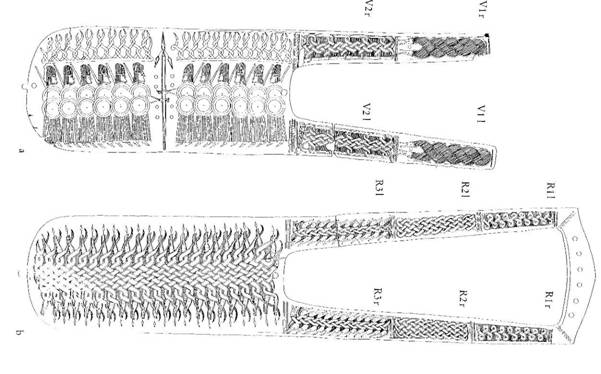
As /u/eighthgear suggests, this move away from spikes is probably related to the way these shields are being used. When you're fighting in a tightly massed formation (like that shown on the Trossingen lyre, from 6th c. Germany: http://www.michaeljking.com/trossingen-pictures.jpg ), the last thing you want is a spike in the back from one of your friends.
This excellent video, by members of a modern historical european martial arts group, shows why a shield spike might not be particularly useful even in single combat. https://m.youtube.com/watch?v=dkhpqAGdZPc . The shield, while an aggressive piece of equipment, is used more to control distance and the angles from which an attack can be delivered, rather than as a bludgeoning tool. This makes a lot of sense when you consider the relative thinness of the boards being used for these style of shields (less than 1cm on the edge, in the 6th century). While still surprisingly strong, they're not designed for clobbering an opponent.