If a soldier were injured terminally on the battlefield and asked to be put out of his misery how was that handled?
Was it allowed or disallowed? If so how often did this happen often?
Just something I've always wondered, feel free to post an answer for any side of WWII not just US.
Excellent question. I can only answer authoritatively for Germany, and even then only from a single perspective of opposition.
As you may know Hitler's infamy was not confined solely to the extermination of Jewish peoples. He targeted as well people in political opposition, other religious groups, and other ethnic groups: generally anyone Nazi ideologues found to be "undeutschen."
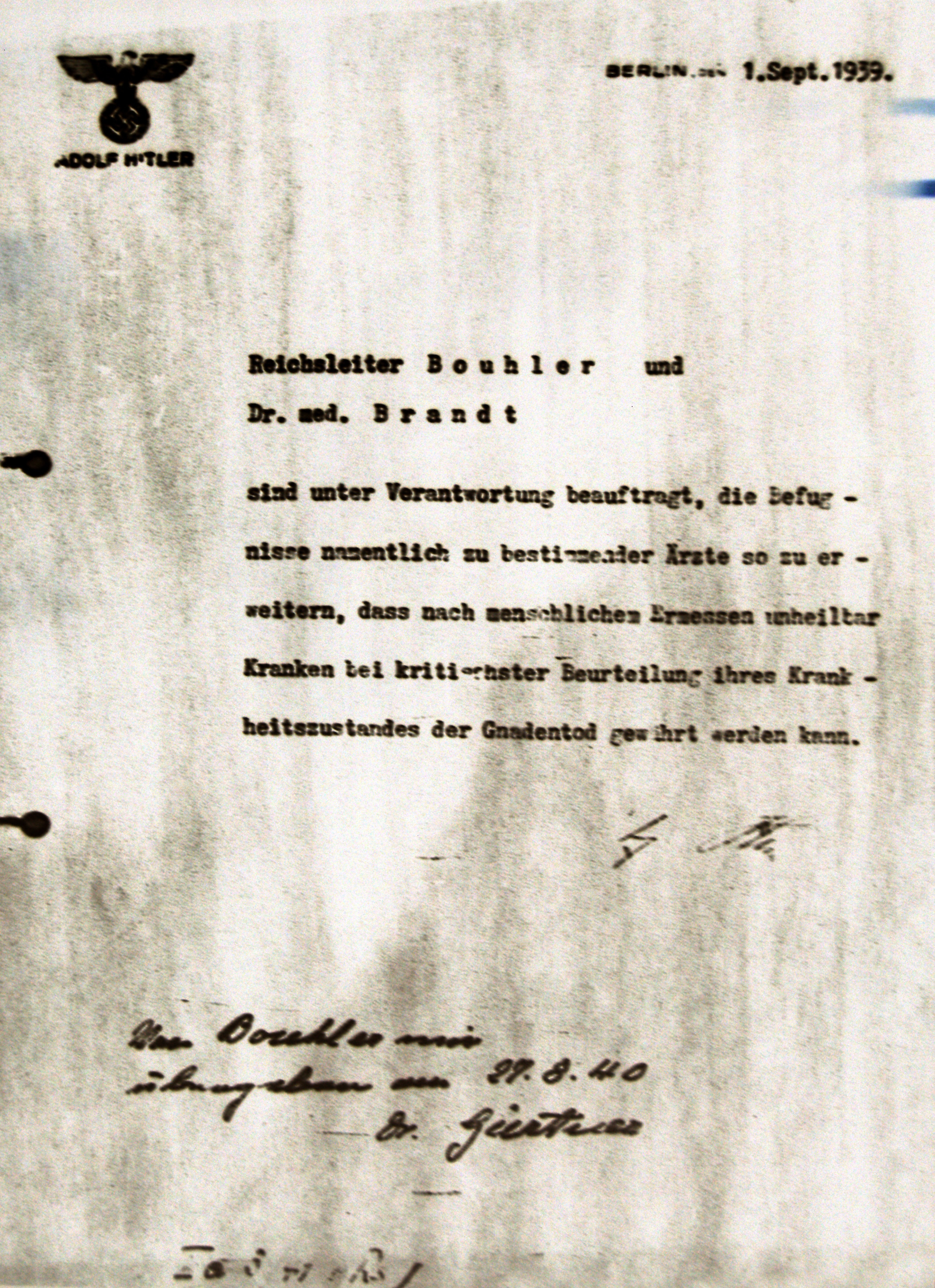
What may be lesser known is that the Nazis embarked as well on a eugenics inspired euthanasia program which targeted those that "on the basis of human judgement, are considered incurable."
Unlike some of the Nazi's more widely known atrocities, this program sparked sustained and unusually vocal criticism of the regime. The champion of this criticism was the Bishop of Muenster: Clemens August Von Graff. In a 1941 sermon delivered from the pulpit he made a stunning attack against the morality of the Nazi regime of murder. He said: "Cursed be men and the German people if we break the holy commandment ‘Thou shalt not kill’ which was given us by God on Mount Sinai with thunder and lightning, and which God our Creator imprinted on the human conscience from the beginning of time! Woe to us German people if we permit this heinous offense to be committed with impunity!"
This relates specifically to your question because in this same sermon and in others he invokes the plight of a wounded soldier to argue against euthanasia: "If all unproductive people may thus be violently eliminated, then woe to our brave soldiers who return home, wounded, maimed or sick."
If this interested you, I would absolutely recommend reading some of Bishop von Galen's sermons. They are composed of masterful moral rhetoric, delivered at a time when the world was sorely in need of such. My understanding is that Sophie and Hans Scholl were inspired to form their pacifist resistance after reading or hearing some of von Galen's speeches.