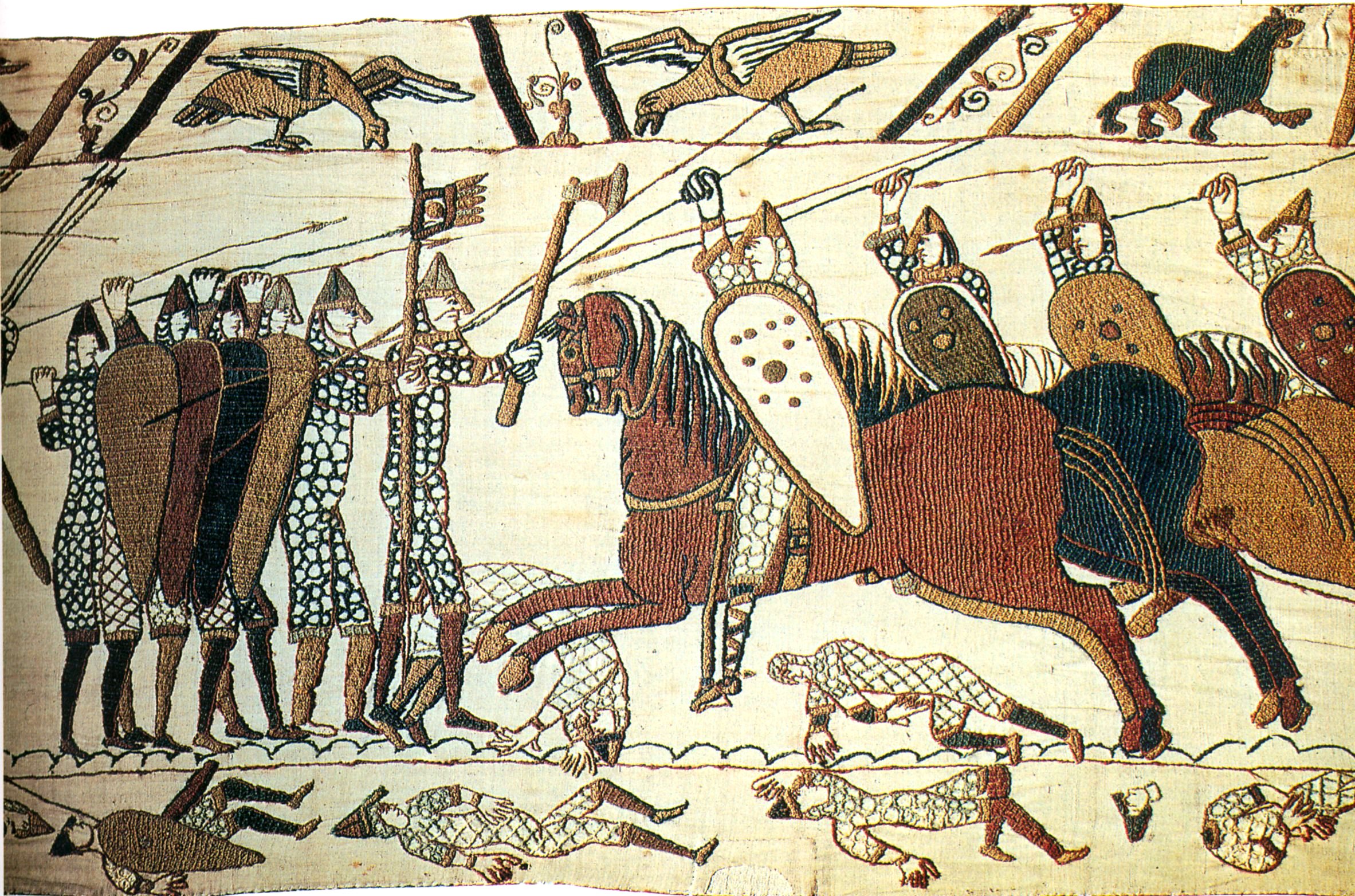
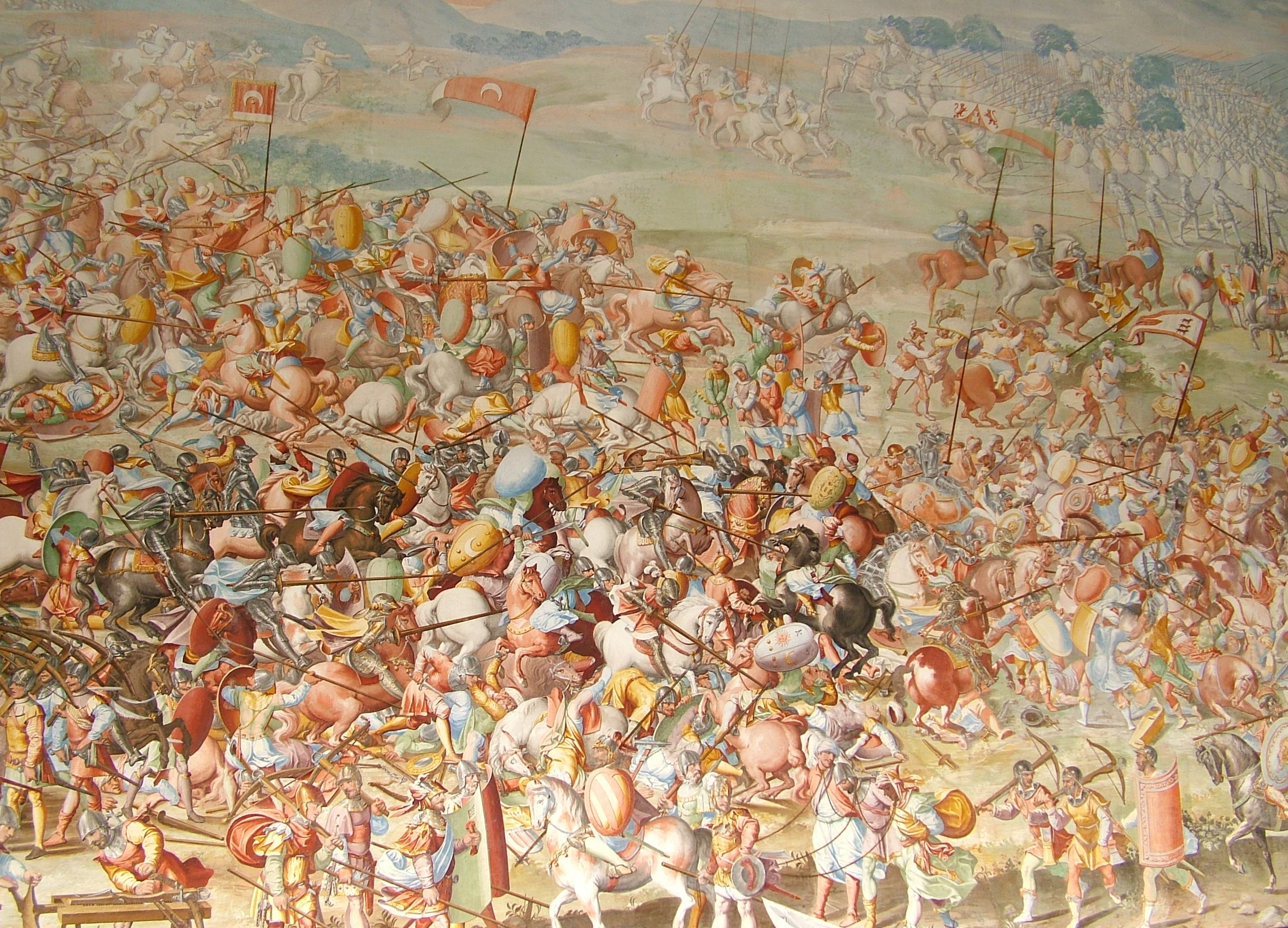
I know about the chunky wooden lances used for competition which were designed to splinter on an opponents shield with an impact, but what were combat lances like?
Were they made of harder wood? Once you had got your first hit could you use it again, or would it be stuck in the body of the guy you just killed? Would it break ideally when it struck? If not, why wouldn't the force of hitting a static target pull me from my horse?
Appearance wise, would the lances have been painted in livery like the colorful competition lances, or were they more functional? Would I have 'my lance' like I may own a sword, or were they disposable like arrows?
I eagerly await some lance expert's input!
Like this. http://www.nationalgallery.org.uk/paintings/paolo-uccello-the-battle-of-san-romano http://en.wikipedia.org/wiki/The_Battle_of_San_Romano#mediaviewer/File:Uccello_Battle_of_San_Romano_Uffizi.jpg http://en.wikipedia.org/wiki/The_Battle_of_San_Romano#mediaviewer/File:Paolo_Uccello_016.jpg https://ferrebeekeeper.files.wordpress.com/2011/07/aduerer_knight__1498.jpg They were made of hard wood and would either penetrate armour, or drive the victim off his horse, or to the ground if on foot. the kinetic energy of a couched lance, especially with a rest and properly designed supported high saddle would have been considerable. It could be pulled from the victims body fairly easily if the rider's horse kept moving forward, by the rider extending his arm, whilst still holding the lance, swinging his arm down so that the lance, still in his victims body, is now facing the riders rear. The horse's momentum forward would then draw the lance from the victims body. There are some examples here http://www.youtube.com/watch?v=fJnkH1YXY8E They are likely to be disposable, but still valuable.
Tournament lances were't just hollow, they were also blunt, as in very blunt (the tourney lance is on the left).
Combat lances looked more like heavy spears. Here's one more for good measure. Notice how they're tipped with metal. Like a spearhead.
As to the rest of your questions, in no particular order:
In most contemporary(ish) art, the lances are pretty nondescript. No doubt some of the fancier knights used fancy lances though. There's always been that guy who pays extra for the gold iPhone.
A lance is only really good for the initial impact. Once combat was actually joined, the knights would generally drop their lances and engage with hand weapons. Often those lances were irretrievable anyway, as they were shoved through the bodies of one or more of the enemy.
No doubt some lances did break in the charge (though they weren't designed to) and no doubt some knights were unhorsed by the impact, but in general the mounted man would have so much more force behind him that he would throw his target aside and then simply release the lance. And the impact would often knock over both the target and all the men around him as he flew backwards--the impact must have been terrifying to experience.
After the advent of the stirrup, the mounted man could effectively push the force of the impact down into his horse.
Lances were indeed disposable. Or at least single-use per battle. Many could be retrieved later, by whoever won the battle. If the cavalry withdrew for another charge, they probably had to be issued new lances (though I'm not actually sure how often knights charged multiple times in a battle...)
Though it wasn't part of the original question, I'll also add that some historians think the classical heavy knight charges were rare. Charges required the proper terrain (open field) and they were relatively easy to counter (pikes or long spears set into the ground--sort of like that scene in Braveheart) and thus medieval armies were likely to avoid the former and stock up on the latter. If that's the case, it's likely that knights generally fought on foot.
The stuff about the lances themselves have been answered adequately.
You wouldn't be pulled from your horse for a few reasons:
Your target isn't static. He'd fall down or move back when you hit him.
Your stirrups and saddle would help you keep your seat. Knights rode in saddles with exceptionally high pommels and cantles. Like this.
The knights would then ride with their feet far out in front of them and would brace against the cantle, which helped them absorb the shock of impact.