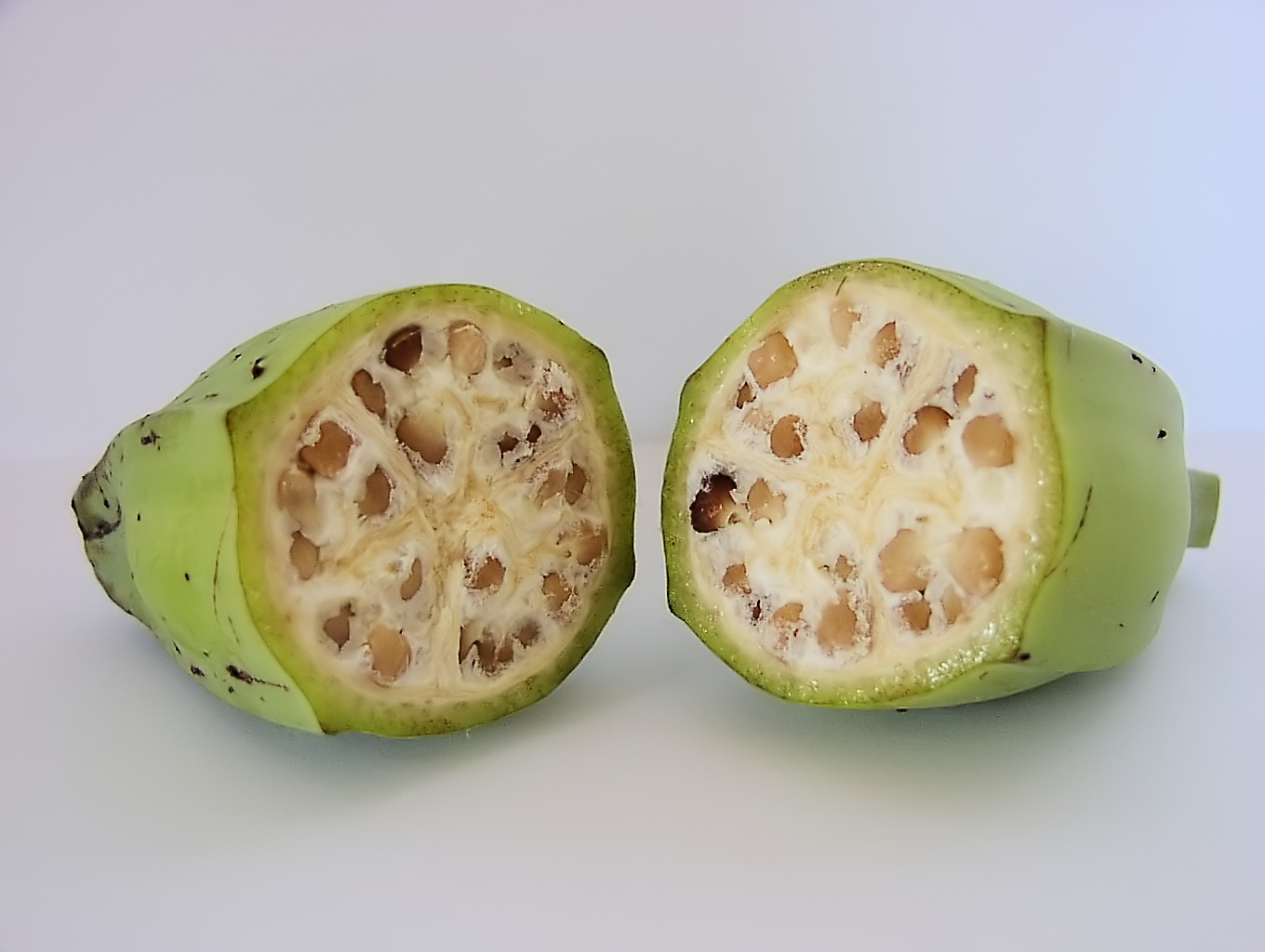
Or basically what consisted of an early humans diet during the hunter-gather phase?
Hunter-gatherers ate the same plants we do today, but in their wild forms. Most plants we eat today, including rice, sugarcane and potatoes, are domesticated versions. These were only domesticated after the advent of agriculture, so they were not available to hunter-gatherers before agriculture, but their wild forms were.
A "wild state" means that the very features that have made them staples today, such as high yield, good nutrient profile, pleasant taste -- did not exist, or were much attenuated. However, they must have provided some useful nutrition, or they would not have been eaten.
For example, here is a picture showing the domestication of corn. The image at the left shows wild or undomesticated corn, the middle image shows an intermediate during the process of domestication, and the right image shows modern domesticated corn. As you can see, the number of kernels have increased dramatically due to domestication. What you can't see is that the nutrient profile has also changed, and each of those kernels now has a lot more starch and calories than it used to. In many cases, domestication has also improved the taste, turning bitter and unpalatable fruit or vegetables into the familiar tasty varieties. Or removed inedible seeds such as in the case of the banana.
Humans are limited by their physiology, not being able to digest cellulose and not being able to chew tough fibers to extract nourishment from them. We (and our ancestors) could overcome some of these problems (using stones to crush or grind foodstuffs that were too tough to chew, cooking to break down nutrients to make them easier to digest), but we still have our limitations. Humans selected plants that contain nutrients suited to our physiology - lots of starch/sugar, protein, fats. This includes grains (precursors of all modern cereals), roots and tubers, fruits, berries, nuts, seeds, etc.
The wild versions of these plants have been used by humans ever since there have been any humans. Agriculture began by deliberately planting foods that we were already accustomed to eating as hunter-gatherers, and over the course of time we selectively bred traits that were useful, which is what plant domestication is all about.
The answer is largely regional. Potatoes were domesticated as late as 10,000 years ago, rice as late as 13,500. Hunter/gatherer peoples found and ate what they could. Before crops were domesticated, these people ate what they could, which often included the wild varieties of modern crops (which is how they became domesticated in the first place, people liked them). Their diet would be varied, but it's hard to tell what exactly people ate. A big source of information is the stomach contents of ancient peoples who froze to death and had their bodies well preserved. One could expect a diet of fruits, tubers, and meat, depending on the season and location of the people.
Their caloric intake would also vary, with the tribe eating better after a successful hunt, for example, and eating less well in winter months where food would be more scarce. On average, their diets were poorer than modern humans. While it's hard to find an average calorie-per-day intake, we can speculate they were less well nourished based on things like their average height and bone density.