I can't find anything reliable on Google for the time it took to build ships such as the ones I mentioned in the title.
Modern day construction of ships often takes place under a covered space, which obviously helps with decreasing weather delays. Did weather set back shipbuilders in the 1400s and 1500s or did they work in the rain and wind?
Also, how steady was work for a shipbuilder, was it hit and miss such as is the case of construction workers today or was there generally a steady stream of new ships in addition to the repair of older ships?
I'm not sure about the the 1400s and 1500s, but by the early 18th century (early 1700s), when we have somewhat better records, at least for England and the Netherlands, we see that it typically seems to take about a one to two years from laying the keel to commissioning. However, looking at the early history of the U.S. navy, it sometimes took longer, sometimes as long as 5 years, if the design was particularly unorthodox, or there were shortages of funds.
Also, I would think that weather would be less of an issue for Spanish or Portuguese shipwrights than for English or Dutch shipbuilders!
We have two flaired users who might be able to answer this question: /u/jschooltiger, and /u/Davaham_Lincoln.
Hi there, thanks for the message. I was able to look through some sources last night.
So, I don't have a ton that actually addresses shipbuilding in terms of the ships that Columbus sailed to the Americas. His ships were surprisingly small, by modern standards (only between 40 and 60 feet long), and it's not quite clear where he got them to begin with. The Santa Maria is usually classified as a carrack or nau, and the Pinta and Niña were caravels (or carvels). All three would have been built using carvel-style building, in which planks were sawn and butted edge-to-edge over a framing skeleton, which was a cheaper and faster method of building than the older Viking or clinker-style. Given how small his ships were, they could all likely have been completed in a season, given the proper resources being available and the shipbuilders moderately skilled.
Modern day construction of ships often takes place under a covered space, which obviously helps with decreasing weather delays. Did weather set back shipbuilders in the 1400s and 1500s or did they work in the rain and wind?
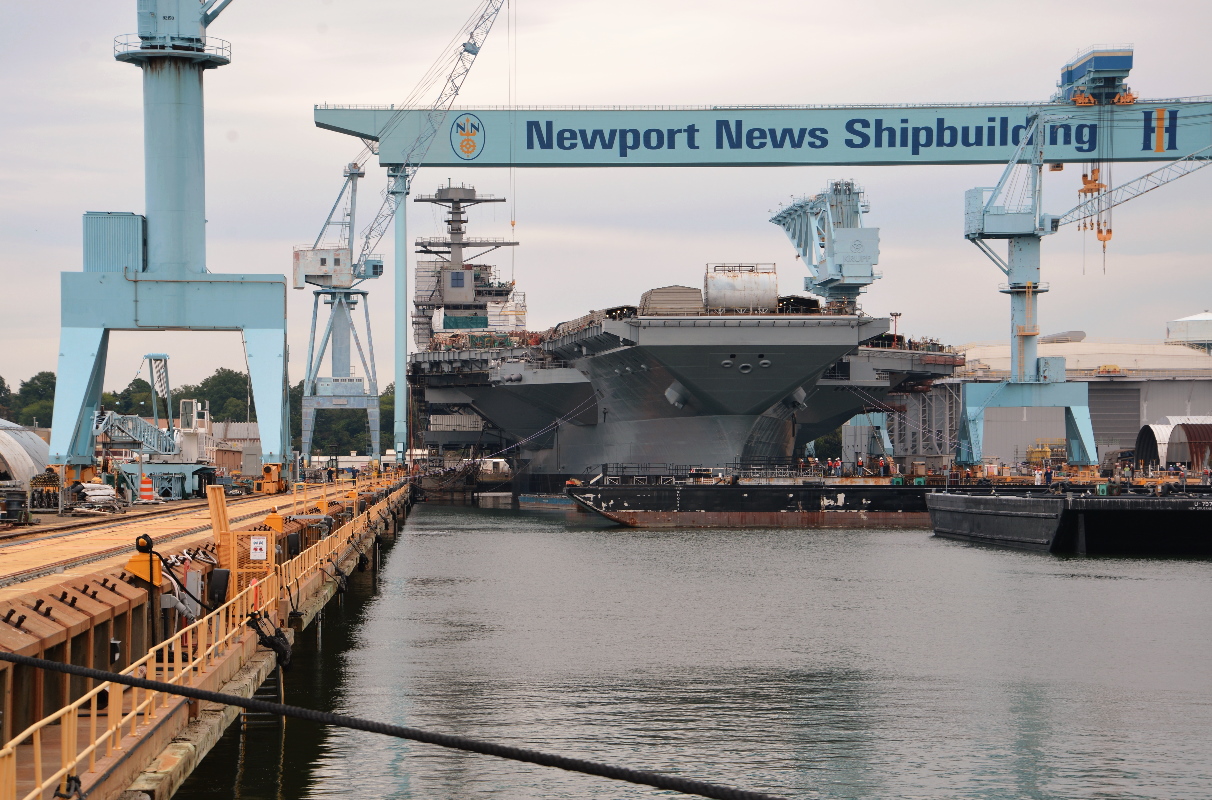
Well, depending on the yard, a lot of shipbuilding is still done in the open. The USS Gerald R. Ford, the newest US aircraft carrier, was assembled in a drydock in the open (enormous image link). But in the 1500s, most ships would likely have still been built at small private yards, and contracted (or bought/sold) as needed to conquistadores, explorers, etc. Most yards would have been small, but I don't think it's likely that most would work in very bad weather. The English navy only started building permanent structures around 1480 or so, and we have some evidence of purpose-built docks or slips (including a form of drydocks) around that time, but at the time shipbuilding was a very informal affair.
Also, how steady was work for a shipbuilder, was it hit and miss such as is the case of construction workers today or was there generally a steady stream of new ships in addition to the repair of older ships?
Again, unfortunately, the best I can say is "it depends." During wartime there would absolutely be a steady stream of work, but in other times it would very much depend on the type of ship being built and the local economy. One thing that various English naval administrators did was to use the polite fiction of a "great rebuild" to essentially scrap an old ship and build a new one, sometimes incorporating some of the timbers into it.