Hi there!
With the proviso that the idea of one, monolithic "Indian culture" is contrary to the numerous, divergent, Indigenous cultures which exist across the broad geographical territory of North America, this is a good question, not in the least because the question of Native headdresses (and even the wearing of hipster headdresses) has come to some prominence in the media recently. The short answer is that headdresses are significant for a wide array of reasons, and you're right that while many of which have to do with status, headdresses can also symbolize community membership and belonging, and sometimes also spirituality (if you want a more specific answer, you could refine your question to ask about a specific type of headdress).
The image that commonly springs to mind at the mention of "Indian headdresses" is the Plains feathered warbonnet, a visual symbol of bravery, leadership, and skill (especially in battle). Although in North American pop culture today, these generally appear in one fairly consistently stylized look, there are numerous variants of these, as each communities' traditions of making, wearing, using, and caring for them were different. Take a look at this series of Google images to see just a small glimpse of the variety of Plains headdress aesthetics, and some historic and contemporary uses and misuses.
Historically, artists like Paul Kane and George Catlin painted images of Plains chiefs in headdresses, and subsequently photographers like Edward S Curtis captured them on film. These images of the "vanishing Indian" (as settlers during the 19th and early 20th centuries believed Indigenous cultures would necessarily disappear, either through extinction or assimilation) became a very powerful part of the colonial imagination, as they appeared quite foreign and exotic to Euro-North Americans.
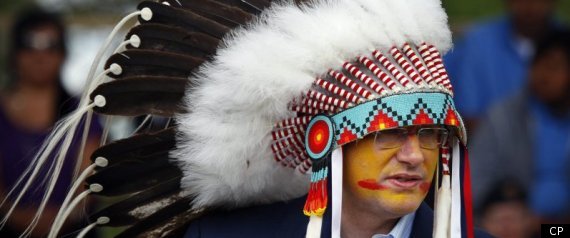
It was not uncommon for settler leaders, colonial men in positions of power, to sometimes wear headdresses themselves as a way of "showing respect" to Indigenous cultures with whom they interacted, but even then, this was for ceremonial purposes only (as in this photo of Sioux Chief Little Crow giving Canadian prime minister John Diefenbaker the name Chief Standing Buffalo and providing him with a feather headdress). If I may be given a bit of leeway on the 20 year rule, I'll just briefly point out that this is a trend that continues today. However (and here is the important caveat) when settlers are given names and headdresses in this way, it is always by Indigenous leaders themselves, who, along with members of their communities, wish to bestow a certain honour on the recipient. In these rare cases, historically and contemporarily, it is respectful to wear headdresses; wearing commercialized headdresses is a very different thing.
I'd also like to add that the concept of sacred headgear demonstrating one's role in society is not unique to Plains Indigenous peoples. On the West Coast, for example, headdresses look quite different, and are often purpose-made for particular ceremonies, masked dances during potlatches, for example, and are passed down the generations.
If you want to read more about Plains feathered headdresses, you could check out these sources:
For contemporary views on wearing (hipster) headdresses, these are good reads:
To be honest I believe I would argue that the West's obsession with headdresses far outstrips Native American culture. From the laurel crown, ritual masks and helms, and giant pope hats the west has had an obsession with cramming things on our heads that goes back years.