Egypt was heavily Hellenised after its Conquest by Alexander the Great. Alexander Conquered all the way to India. Parallels can be drawn between Hindu and Hellenistic culture in its legends and Gods. For example: Zeus and Indra, Iliad and Ramayana. Is it possible both religions have a common ancesstor, or that through trade or Alexanders conquest some stories were passed on.
So I've divided this answer into two parts. The first deals with Greco-Buddhist art, as propagated by Alexander the Great. The second deals with the links between Greek and Hindu mythology.
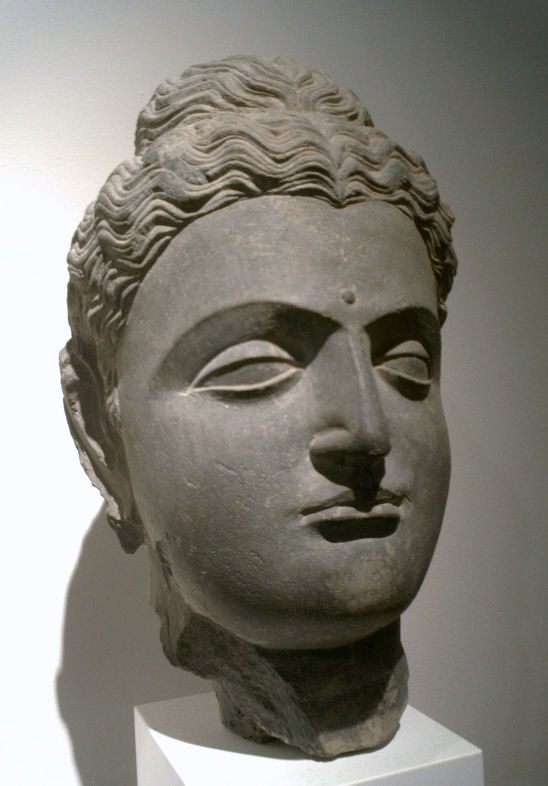
I can't speak to the general popularity of Hellenistic culture in India, but Greek statue design did imprint itself on northwestern Indian and especially Afghan art. Here are a couple of examples: Buddha Head from Hadda, The Buddhist gods Pancika and Hariti from 3rd century Gandhara, and the Gandhara Buddhist Head. Note the attention to realism, clear ideals of beauty, and dress that these statues have in common with Hellenistic culture. The famous (and even more famously destroyed) Bamiyan Buddha bore the marks of Greek influence too.
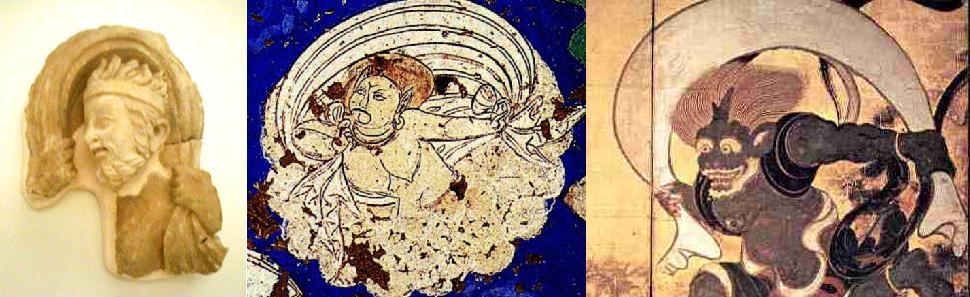
Now granted, that's Greco-buddhist art, not Hindu. However, it shows that Alexander's cultural influence was significant in at least one region of the subcontinent. These Greek influences spread in varied degrees to other parts of Asia, as far away as Japan even. The artistic representation of the Japanese wind-god Fujin bears a great deal of resemblance to Boreas, the Greek wind-god. Some people also say the Great Buddha of Kamakura shows the signs of Hellenization, though clearly less so than it would be in Afghanistan and Bactria.
The mythological parallels you're talking about do have something to them, though likely not through Alexander's direct influence but through the 'common ancestor' idea. Most indo-aryan cultures have polytheistic pantheons that share a lot in common, whether that be Celtic, Roman, Greek, Germanic, Near-Eastern, and even Indian. A lot of scholars have noticed these similarities and have attempted to piece together what the proto-indo-aryan religion would have been like, as there are no attestations to it. One of the most common ways to do this is through the linguistic comparative method. For example:
Dyaus Pita is the Sanskrit word for "Sky Father", and was an old Vedic god who is no longer that important in Hindu religion. Note the similarity between that and Zeu Pater (Zeus' long name) and Jovis Pater (Jupiter's archaic name). The linguistic roots are there, and the places they occupy in Greek, Roman, and Vedic mythologies are all very similar.
Another similarity is the famous 'battle with a serpent-demon' myth, which seems exceedingly common. Zeus vs. Python, Hercules vs. the Hydra, Indra vs. Vrtra, and Krishna vs. Kaliya are the ones most point to as examples. They almost always represent order vs. chaos, and the hero always wins. There's also the fact that sun-gods always seem to be riding chariots. None of this is a coincidence.
So, does Hindu have any Hellenistic influence? The answer is no, not in the sense that the Greeks imprinted their culture on the Indians. But as you noted in your sub-title thingy, they do share a common ancestor, which accounts for most of the similarities. Though there are no direct attestations, the comparative evidence is very compelling. However, the question 'does India have any Hellenistic influence' yields different and highly interesting answers, as I mentioned above. Alexander the Great's invasion had a great impact on the art and culture of the northwest, and had a lesser impact across the rest of Asia as well.
Here's some further reading. Keep in mind that some of the sources are pre-WWII, back when people saw the proto-indo-european thing in a more racist and less anthropological light. Anyways, here:
Cox, George William (1887). The Mythology of the Aryan Nations
Mallory, James P. (1991). In Search of the Indo-Europeans
Mallory, James P.; Adams, Douglas Q. (2006). "Oxford Introduction to Proto-Indo-European and the Proto-Indo-European World".
Watkins, Calvert (1995). How to Kill a Dragon: Aspects of Indo-European Poetics.
As for Greco-Buddhist art:
Qazi, Ihsan Ali and Muhammad Naeem. Gandharan Sculptures in Peshawar Museum
Wenzel, Marian. Echoes of Alexander the Great: Silk route portraits from Gandhara
"Alexander the Great: East-West Cultural contacts from Greece to Japan"
Alexander only Conquered a small part of the north west of India (around the Indus river) in 326 BC - on. This Aquistion of territory was Soon reversed by Mauryan expansion.
Further, Classical Hellenistic and Indian culture/religion were each well established by this time.
That said, Alexander did leave a legacy of future Indo-Greek interaction, but this was through the later Hellenistic empires such as the Selucids, Bactrians and their ilk.
Essentially, Alexander's conquests were after the development of Classical Hindu and Greek religion, and didn't hold enough Indian territory for long enough to have a direct impact, but Greek-influenced successor states did.