I'm under the impression that it's Manhattan, with Andrew Carnegie's contemporary steel method and all that jazz.
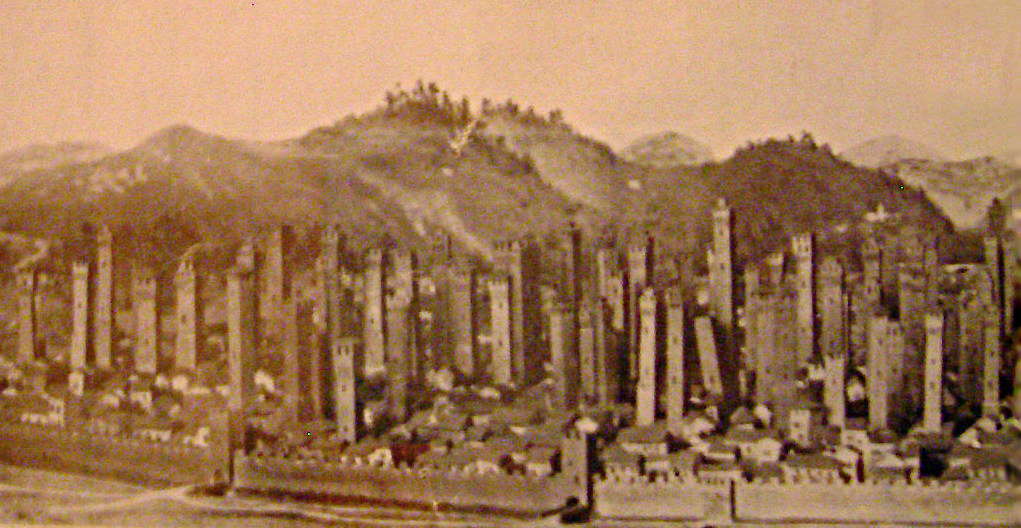
HAH! I scoff at your steel frames and new-world mumbo jumbo. Check out this photograph of the Italian city of Bologna, taken sometime in the late nineteenth century. Most of those towers were built between the twelfth and thirteenth centuries. After the definitive removal of German influence in the Northern Italian peninsula following Emperor Frederick Barbarossa's defeat at the battle of Legnano, ending his seventh excursion into Italy, the various factions that had sided either for or against the emperor continued to fight each other for two hundred more years, sometimes inside a single city; exacerbated by the fact that most Italian cities were run as (very limited) democracies, where each major family had a say in the local council. (Incidentally, this is what the Montagues and Capulets were feuding about in Romeo and Juliet. The Montagues are based on the Montecchi family of Verona, who were significant landholders in the surrounding countryside, and favored tighter imperial control. The Capulets were based on the Sambonifacio, an old family who's landholdings were smaller, but drew substantial support from the city's urban population, and favored less imperial control, although Shakespeare confused their name with the Cappelletti, a family from Cremona that has a similar feud with the Dovara family).
Consequentially, in this period, it became the fashion amongst wealthy urban families to construct towers. The first example was probably in Milan, in the eleventh century, where the influential Della Torre family constructed a four-story tower above their palace right across the street from the Palazzo della Ragione (or "Palace of Reason", where the city council met). The tower still stands, this is a picture of it. Indeed, the name "Della Torre" literally means, "Of the Tower". The structure itself (and the tower) was renovated in a later style after the Visconti murdered all the Della Torre in the thirteenth century in order to seize control of the city government. The palace was handed over to the local lawyer's association (not dissimilar to the Inns of the Court in London, England). It now houses the city's chamber of commerce.
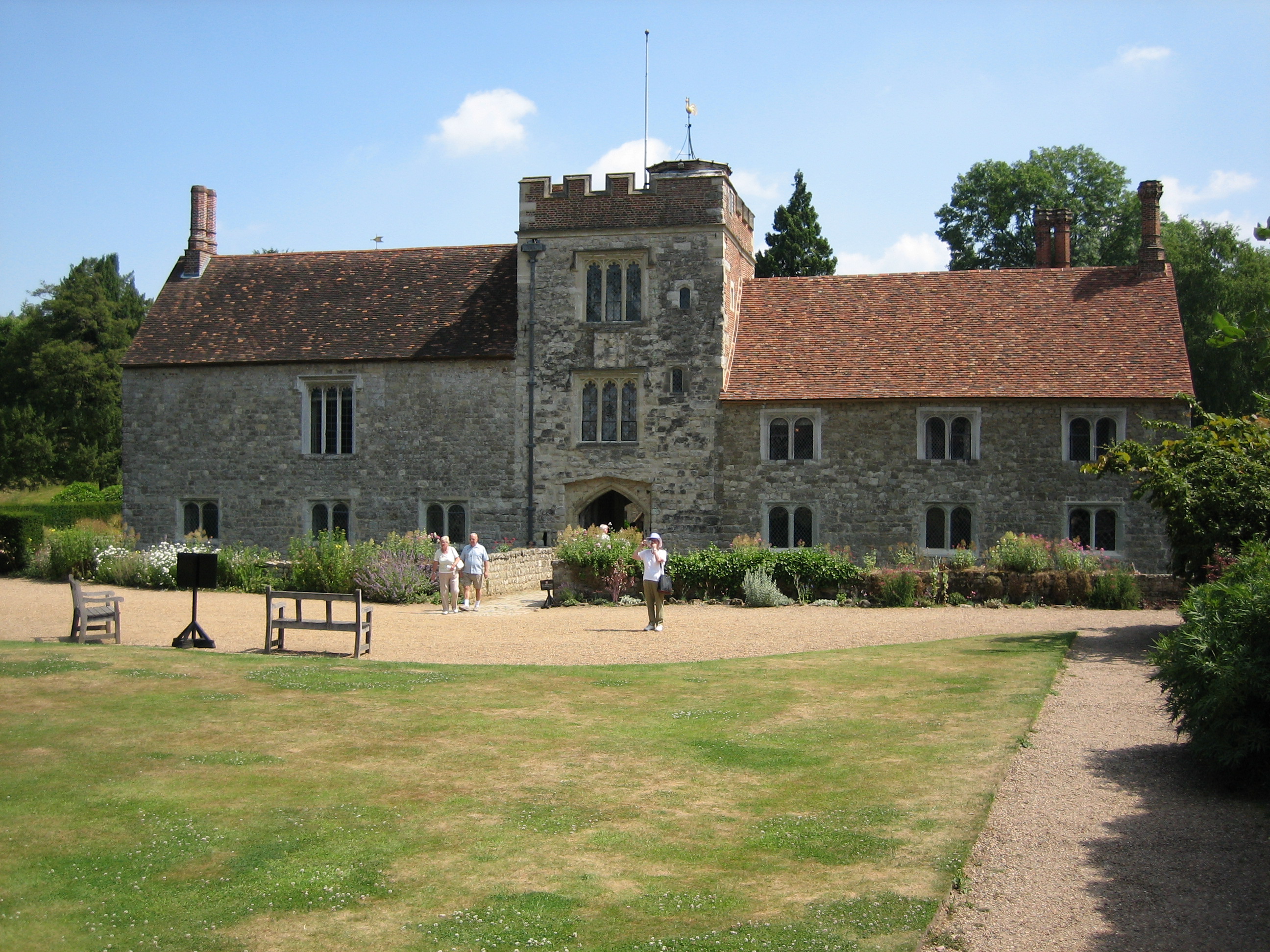
Constructing towers was convenient, as influential families could lock themselves inside should their political opponents instigate the mob against them. The defensive use of the tower has been evident since the early middle ages. Often, even the humblest petty lords who couldn't afford a fortified residence at the very least had a tower attached to their house (take a look at this image of an English manor house. The large windows added in later centuries are a bit jarring, but you get the general idea).
In Italian cities, families who challenged the local status quo, or for some reason or other feuded with a disproportionate number of families often found it convenient to add a tower to their house. Examples include the Torre dei Lanfreducci in Pisa, the Torre della Castagna or Torre della Pagliaza in Florence, both wealthy cities where infighting was common. Towers are best preserved today in those cities that flourished in short bursts in the late middle ages (perpetuating infighting and petty rivalries), like San Gimignano, where 72 towers stood by the 13th century (sixteen survive today, and the city calls markets itself to tourists as the "Manhattan of the Middle Ages"). Cities that continued being power centers into the renaissance, like Milan, Florence, Genoa and Pisa, saw many families demolish their towers to make their palaces more livable, especially as by the end of the thirteenth century, tower construction had becoming less about defensive pragmatism and more about phallic displays of superiority, with families effectively constructing tall towers just to show off. Indeed, Bologna is remembered as a "City of Towers" because it flourished exactly during this phase of "Phallic Tower Building". Although the city maintained its importance throughout early renaissance it soon fell under the control of the Papal State, and many Bolognese families opted to construct new palaces in Rome, rather than demolish and reconstruct their tower-homes in a more modern style. Through the centuries, many towers collapsed or were demolished, but the city continued being famous for its towers, until the coûp de grace during the 20th century, where a hunger for modernization in the newly unified country closely followed by the destructive fury of fascism saw the demolition of all but two of the city's towers (and the 15th century walls); an absurd tragedy for a city that once had nearly 200 towers.
So the answer is Bologna. Impractically so, yes. But still the first.
edit: Cleaned up the post a bit after I was told it would be tweeted on the AskHistorians twitter feed.
Steel-framed buildings were pioneered in several places, rather notably Chicago in the 1890s. After a short burst of buildings around 20 stories, though, Chicago lowered its height limits. Meanwhile, office demand and land economics prompted a boom in Lower Manhattan in the 1900s-1910s.
One of the best candidates would be the city of Shibam, in Yemen, which has been referred to as the "Manhattan of the Desert" and is a UNESCO World Heritage Site.
Shibam has over 500 tower houses made of mud brick and rise anywhere from 5 to 11 stories, as well as a mosque minaret that's 175 feet high.
Most of the tall buildings are from the 16th century, but the mosque and a few others date back as far as the 9th.