https://szabadriport.files.wordpress.com/2012/02/palestine_partition_plans.gif
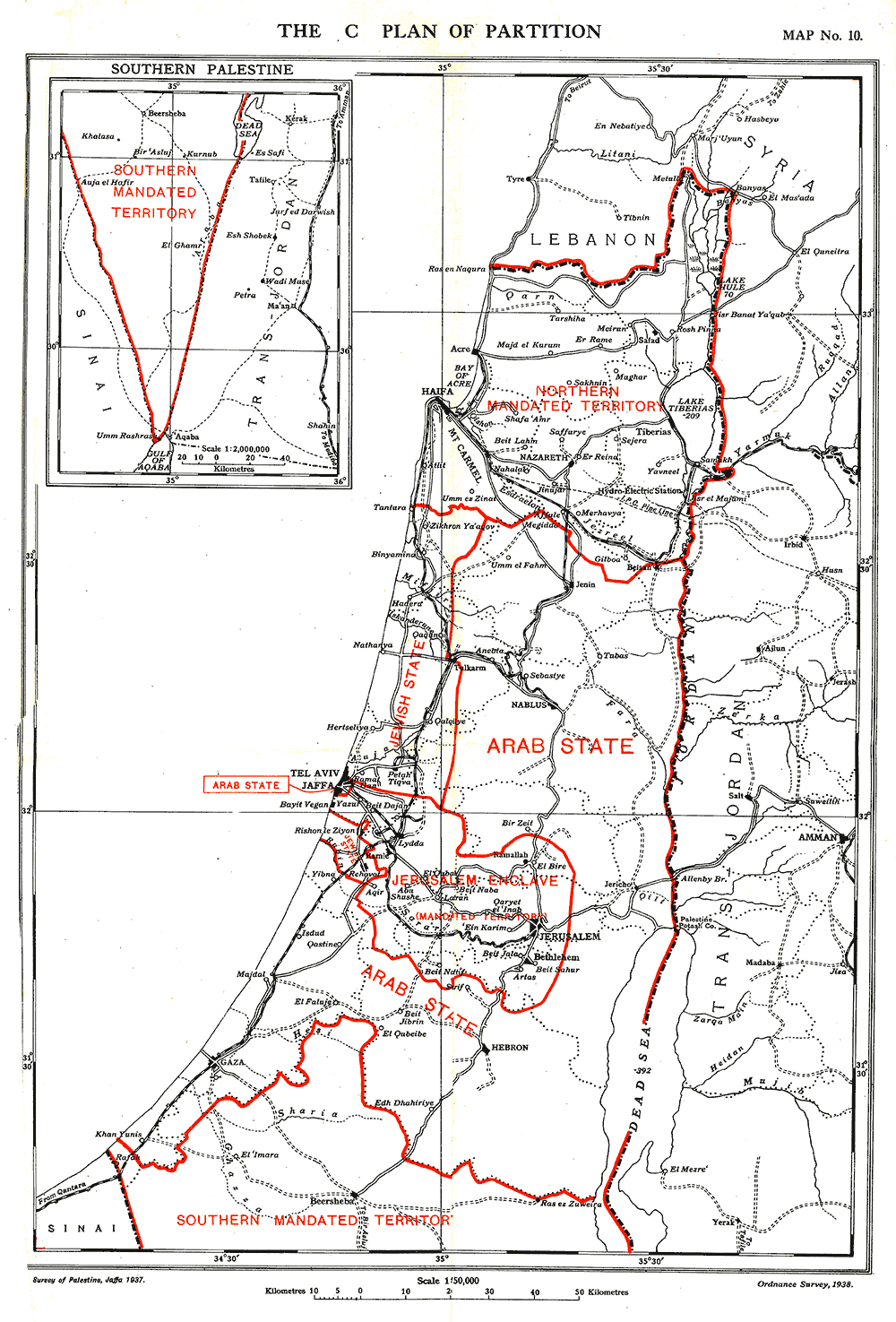
One of these is not like the other.
As I understand it, during the late 1800s, the ottoman government instituted a land registry covering Palestine. People who registered land would have to perform some kind of military service, and pay taxes on the land. Something that most people who had lived in the area for centuries saw as unfair, if they even knew about it at all. So then... it seems there was massive land fraud.
People would register land in the Ottoman land registry that they had no connection to, and that land would be flipped, and flipped, and flipped again, all without the knowledge of the people living on the land.
Then it seems that jewish groups would start buying up huge amounts of the most worthless land that nobody grew on or lived on. And, in some cases, developed that land. Kudos to them.
Now I assume, the repercussions of this late 1800s ottoman land registry was part of the cause of a lot of the turn of the century violence in Palestine. Suddenly all these people were claiming that they owned land because they had purchased it from people who had no connection to any part of palestine who were flipping these lots on the land registry.
But the jewish groups seem to have focused on the north. Even their very questionable claims on the land in the south amounted to less than 1% of the area, 2%, for instance, in Jerusalem I think. In the 30% range in some parts of the north, but less than 1% in all of the south.
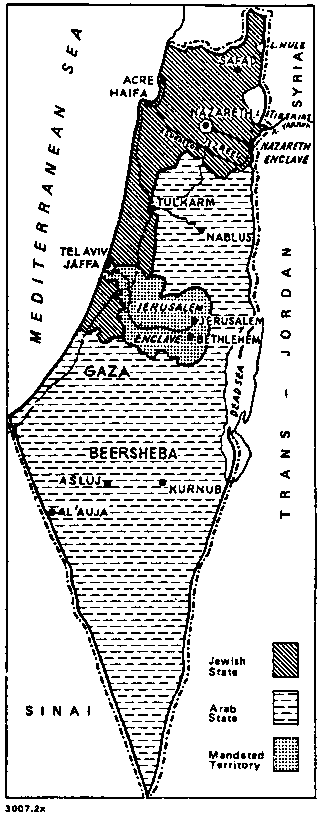
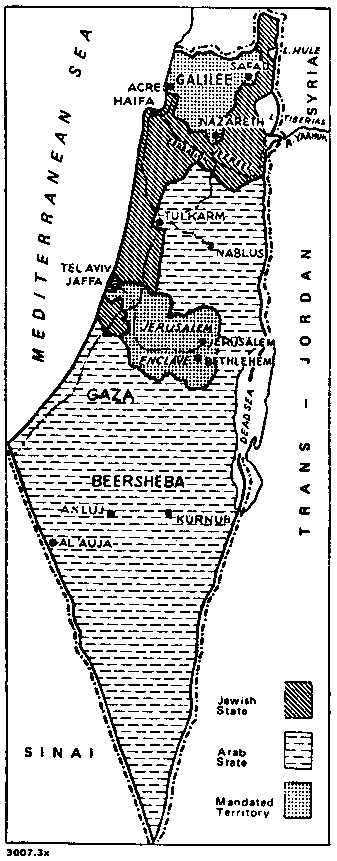
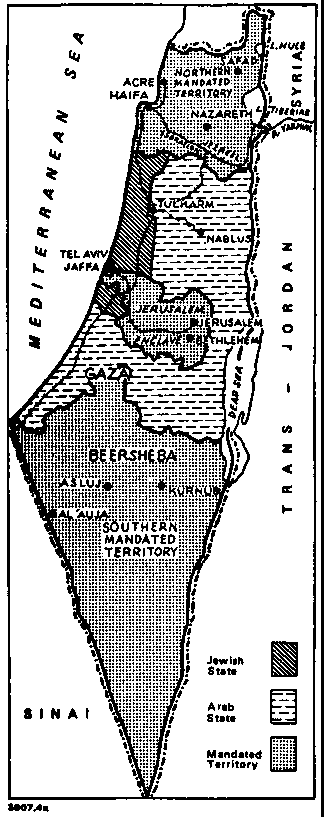
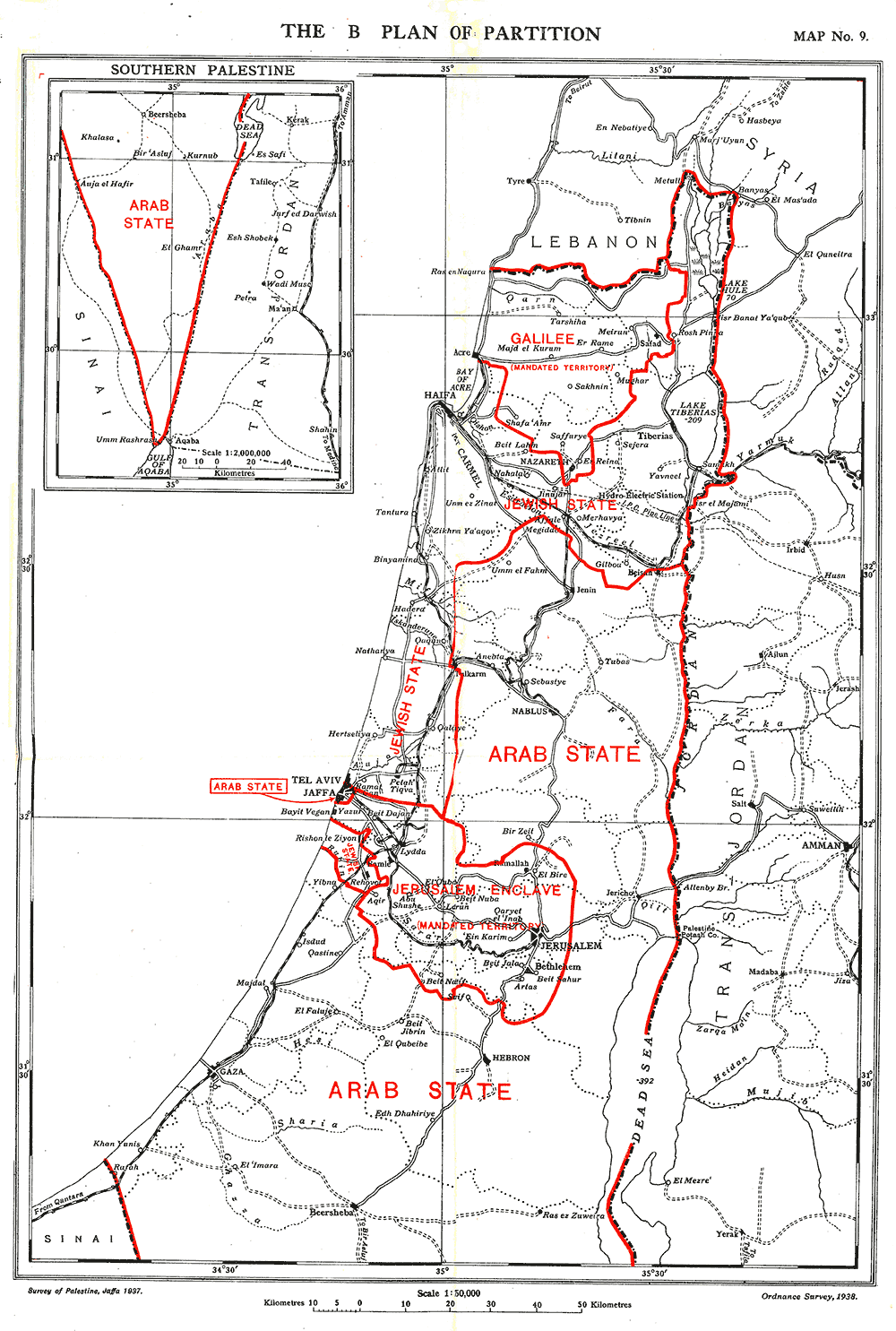
So is this map accurate? Why do 3 of the plans not mark off land in the south for the Jewish state? Why does the UN partition plan mark a huge amount of the south for the Jewish state?
Then it seems that jewish groups would start buying up huge amounts of the most worthless land that nobody grew on or lived on. And, in some cases, developed that land. Kudos to them.
"Huge" is subjective. Jews only owned about 6% of the private land by the time of the partition plan. This is likely in part due to land buying restrictions, some of which were circumvented, but also just due to reluctance to sell to Jews and large Arab landholdings and state landholdings.
Now I assume, the repercussions of this late 1800s ottoman land registry was part of the cause of a lot of the turn of the century violence in Palestine. Suddenly all these people were claiming that they owned land because they had purchased it from people who had no connection to any part of palestine who were flipping these lots on the land registry.
Well, part of it was that, but part of it was the fear of Zionism in general. The fear of being a minority, the fear of losing their jobs to Jews who would take up labor, and more, all contributed to some of the violence. Discontent among Arab peasants who were displaced by the new owners of the land was common, and led to a lot of poor peasants without significant incomes or places to live.
But the jewish groups seem to have focused on the north. Even their very questionable claims on the land in the south amounted to less than 1% of the area, 2%, for instance, in Jerusalem I think. In the 30% range in some parts of the north, but less than 1% in all of the south.
Much of the land in the south, especially below Jerusalem, was state-owned Negev land, and the distribution can be found roughly in this map. One thing to remember, though, is that Jewish land buying was restricted heavily in the White Paper of 1939, which said:
The Reports of several expert Commissions have indictaed that, owing to the natural growth of the Arab population and the steady sale in recent years of Arab land to Jews, there is now in certain areas no room for further transfers of Arab land, whilst in some other areas such transfers of land must be restricted if Arab cultivators are to maintain their existing standard of life and a considerable landless Arab population is not soon to be created.
This goes back to the point of a considerable landless Arab population. Because much of Arab income came from peasants working the land, landless peasants heavily suffered when a Jewish group bought the land and hired Jewish workers. Jewish groups did this (not all, but some) in order to demonstrate their ability to cultivate and economically grow in the region, and also possibly out of disdain and dislike for Arabs. Further, independence would dictate showing they could separate the economies of the two states (if there were partition, anyways) easily, which was served by this. Continuing, the White Paper had earlier noted (above this quote) that Arabs could not be prejudiced under the Mandate, and then used that as justification for the following:
In these circumstances, the High Commissioner will be given general powers to prohibit and regulate transfers of land. These powers will date from the publication of this statement of policy and the High Commissioner will retain them throughout the transitional period. The policy of the Government will be directed towards the development of the land and the improvement, where possible, of methods of cultivation. In the light of such development it will be open to the High Commissioner, should he be satisfied that the "rights and position" of the Arab population will be duly preserved, to review and modify any orders passed relating to the prohibition or restriction of the transfer of land.
As noted here, in the Anglo-American Committee of Inquiry's appendix:
Unlike the constitutional provisions, the land transfer policy of the White Paper was speedily implemented. Land Transfers Regulations, published on 28th February, 1940, divided Palestine into three zones.
In Zone A, consisting of about 63 percent of the country including the stony hills, land transfers save to a Palestinian Arab were in general forbidden. In Zone B, consisting of about 32 percent of the country, transfers from a Palestinian Arab save to another Palestinian Arab were severely restricted at the discretion of the High Commissioner. In the remainder of Palestine, consisting of about five percent of the country-which, however, includes the most fertile areas - land sales remained unrestricted.
This map roughly shows the zones marked by dashed lines, along with shaded areas showing what was already owned by Jews.
Now that I've given some information on the history of land ownership, or at least the recent history before the UN partition plan to some extent, let's move on.
So is this map accurate?
In a word, seems mostly right. Here's a better array of maps to closer-view the area:
Peel Commission 1937 Plan C (for reference)
Woodhead Commission 1938 Plan A
Woodhead Commission 1938 Plan B
Woodhead Commission 1938 Plan C
Morrison-Grady Committee Plan for Provincial Authority, 1946.
What changed is instructive. Between 1946 and 1947, obviously, very little changed. However, between 1937 and 1947, there was a big change, namely the plight of the European Jews. Not only had many left for Palestine and other regions of the world during the leadup to WWII, and not only had the Holocaust wiped out many, many Jews, but there was a significant problem of displaced persons (Jewish ones, and others) in Europe after the second World War. To understand how this factored in, one need only read the UN Special Committee on Palestine's report. Since it's long, though, here's some excerpts:
It is recommended that
The General Assembly undertake immediately the initiation and execution of an international arrangement whereby the problem of the distressed European Jews, of whom approximately 250,000 are in assembly centers, will be dealt with as a matter of extreme urgency for the alleviation of their plight and of the Palestine problem.
Also:
VI. International responsibility for Jewish displaced persons
- The Jews in the displaced persons camps and the distressed European Jews outside them, like the other homeless persons of Europe, constitute a residue of the Second World War. As such, they are all an international responsibility. But the Jews amongst them have a direct bearing on the solution of the Palestine problem, in view of the insistent demands that they be permitted freely to enter that country, and the Arab fears that this permission will be granted.
- Although the Committee's terms of reference would not justify it in devoting its attention to the problem of the displaced and homeless persons as a whole, it is entirely justified in recommending to the General Assembly a prompt amelioration of the plight of the Jewish segments of. these groups as a vital prerequisite to the settlement of the difficult conditions in Palestine.
While the 1946 plan recommended less drastic land apportionments, it was more based on the demographics of each region. The Jewish state in the UN Partition Plan would have had 60% of its population be Jewish, and the rest Arab, while the Arab state had almost all Arabs. Why?
Well, part of it was intense lobbying by the Zionist groups. Chaim Weizmann had great relations with President Truman, and personally spoke to Truman to keep the south as part of the Jewish state. The South, which as I mentioned had been mostly state-owned land, was also mostly desert. But Zionists saw it as crucial for settling new immigrants and "making the desert bloom", and it afforded access to the Red Sea in the south (a good port later on). So when they managed to get that apportioned to them, thanks in part to the committee saying that it was sparsely settled (7,000 Jews and 90,000 nomadic Bedouin), and that Truman had intervened, they were ecstatic. The British had wanted the Negev to go to the Arabs, as they'd always planned, but Truman, according to historian Benny Morris, says that Truman saw the Negev as "the Frontier" for Jews, and that he thus wanted them to keep it.
The other part of it is simply down to better PR. UNSCOP members saw displaced persons in Europe, saw refugees get turned away on the Exodus ship and sent back to France, then to Germany to be forcibly unloaded into the country that had just finished slaughtering their kin, and were welcomed warmly by Jewish villages and settlements. Arabs, suspicious and unwilling to officially cooperate with UNSCOP, only unofficially spoke to them (well, as far as Arabs in Palestine). So the committee, which also wasn't British, wasn't American, and which would listen to lobbying (consider that British forces were subjected to terrorism in Palestine by Jewish extremists after WWII), saw all this, it was likely more wooed by Jewish arguments than Arab ones.