Forgive me if this is the wrong place to ask, but if I were a peasant in fourteenth century Paris (or anywhere in the world) what would my night sky look like? Would light pollution be a big issue?
Along the same lines, what did those people do to light up the night (if anything)?
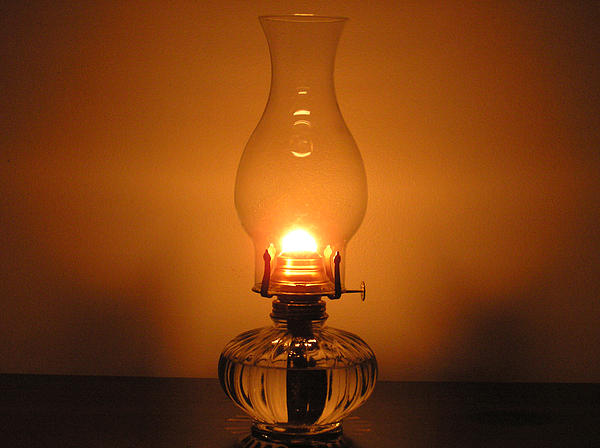
In the fourteenth century, most public lighting in Paris would have based on elevated cistern lamps, generally with hoods to prevent inclemental weather from affecting lighting output. These lamps are only very marginally better that candles and were basically shite all around. They have a luminous intensity somewhere in the range of 6-10 candelas while clean and 2-4 while sooty. And even modern cistern lamps can be blown out in a strong wind, so understandably a good portion of them would have been extinguished on a windy evening.
With both of these facts in mind and some number crunching you can arrive at a basic model of what night would have been like for our early-millenium Parisians. I would classify an area of the size of Paris, lit primarily with hooded oil lamps with a range of 5.8 to 7.1 NELM scoring with a mean of 6.2. You would be able to see your surroundings clearly. Clouds, mists and fog would be illuminated in the directions of the light sources but would be dark directly overhead. You would be able to see most of the zodiacal signs but only in a 30 degree range from zenith. As you moved up off of street level conditions would improve significantly. You would be able to pick out specific Messier objects and the Milky Way would have good detail.