Through a Westerner's eyes I think it's rather unclear as to how exactly China was more wealthy and prosperous than Europe. The image of Europe as this place of vast stone castles and fortresses gives me this impression that Europe was the place of material wealth, not China, yet books such as Jack Weatherford's books on Asia make it fairly clear that in the eyes of the Mongols Europe was essentially inconsequential. This is hard to reconcile with my impressions of Europe: buildings that tower into the sky, enormous mansions, ancient aqueducts, kings sitting on thrones, buildings made entirely of stone, soldiers geared all in sheets of armor impervious to common peasants, and kings with crowns of gold and silver.
In comparison, from what I've seen of Chinese society, everything seems to be fairly low key. The artworks are generally focused on a highly stylized form of geographical painting style, typically portraying craggy mountains. While admirable, they don't seem to measure up to the Western style of artistry which typically portrays the human body as a piece of artwork.
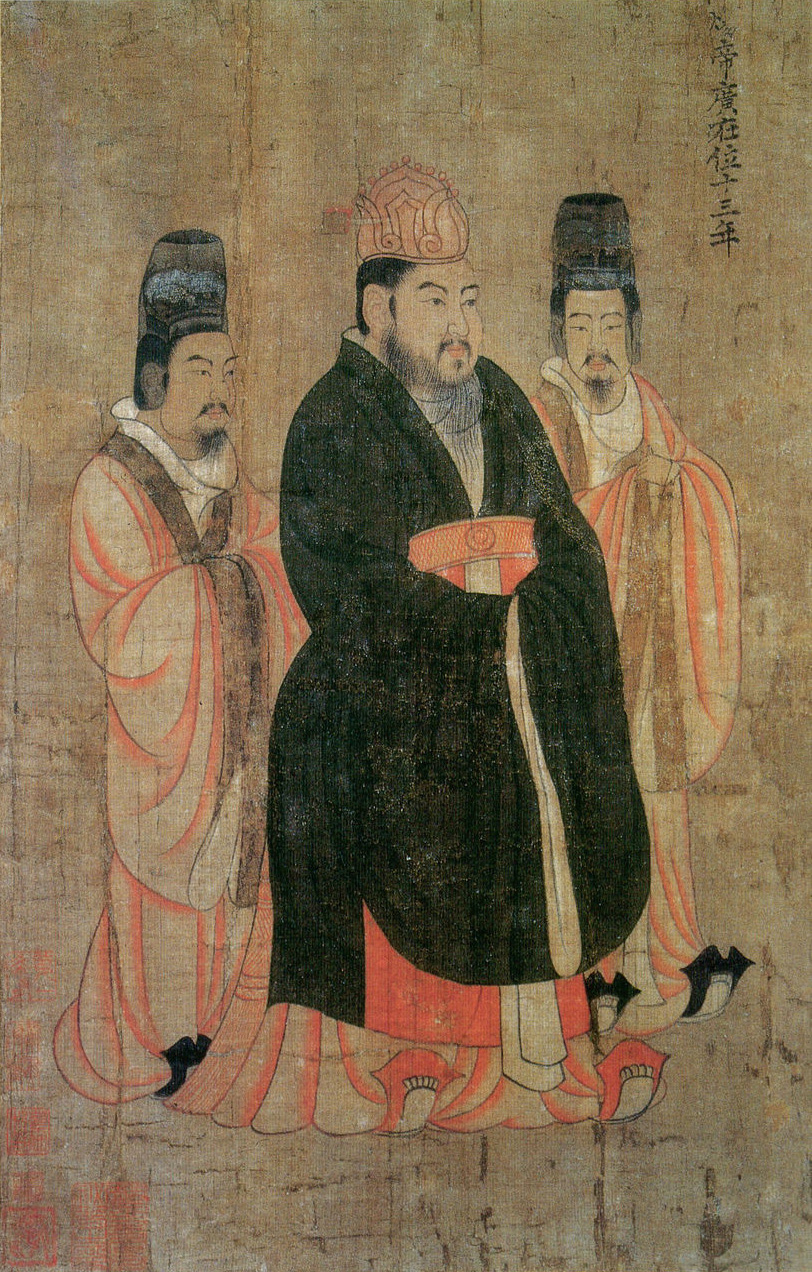
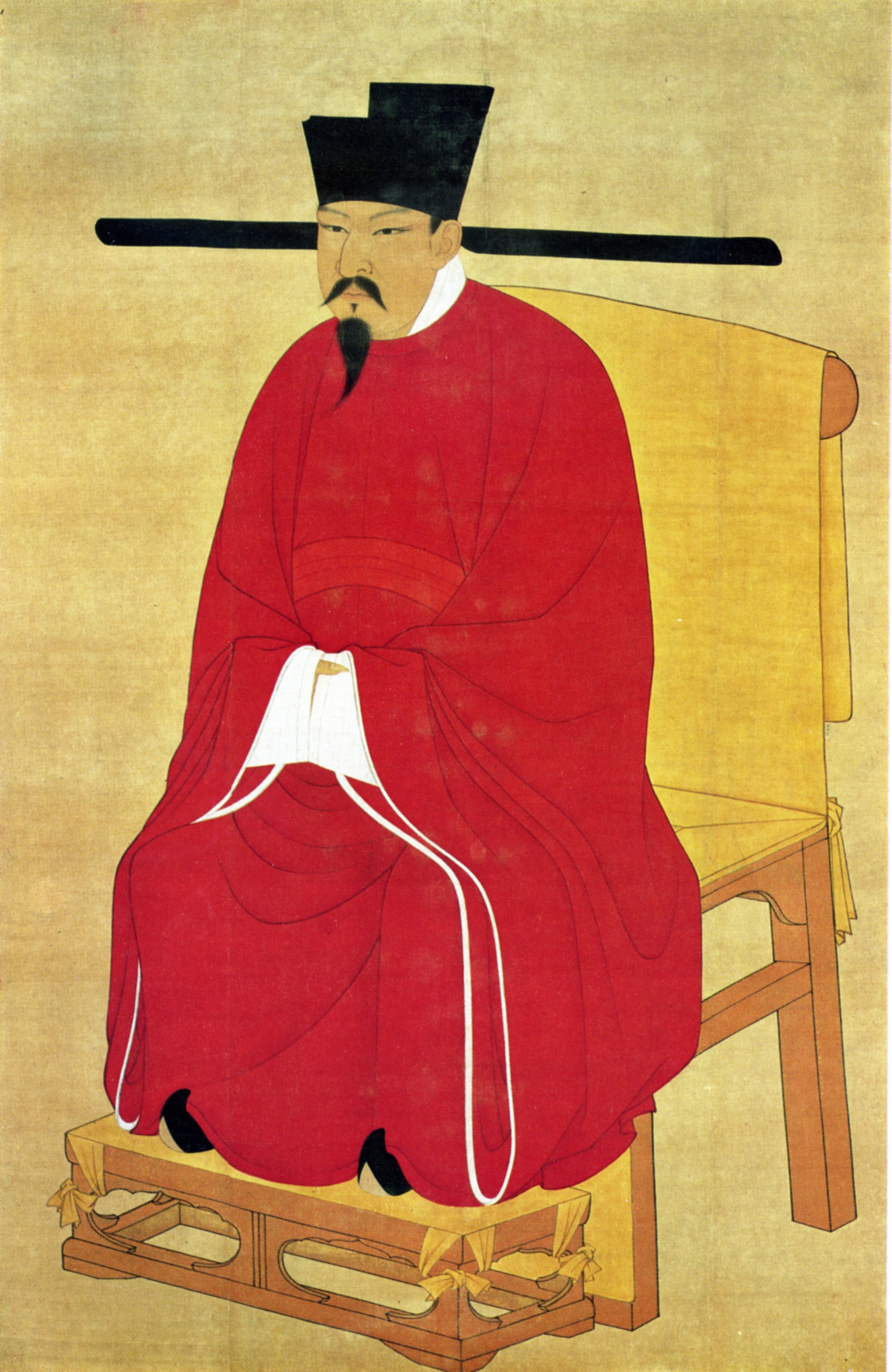
The emperors do not dress up in a way in which they would be distinguished. While the Qin to Sui dynasties seem to have had a tradition of headdresses which could denote their authority, the later emperors seem to be lacking in this feature.
To give you an idea of what I mean here's some pictures:
Emperor Yang of Sui who appears to wear a crown of some sort, possibly made of gold or bronze.
http://upload.wikimedia.org/wikipedia/commons/0/0b/Sui_Yangdi_Tang.jpg
Now here is a picture of Shenzong of Song, who wears... a hat with some flappy things on their sides, while sitting on a chair seemingly made with common wood covered with a sheet on the top.
http://upload.wikimedia.org/wikipedia/commons/3/31/Shenzong_of_Song.jpg
Pretty underwhelming tbh.
Apart from the dress style, I also find the common architecture to be rather lackluster. While the dwellings of royalty and the wealthy are quite wide and spacious, they also never seem to rise higher than a second story. In comparison the churches and mansions of Europe seem to be buildings from the future with their archs and spires. The common man of China seems to have lived in single story houses altogether with identical design and features.
The lack of gold is also pretty noticeable. I'm not sure if it's a cultural issue since Chinese seem to value jade above other jewelry, but nobody seems to wear any gold.
The soldiers as well dress in either cloth or lamellar armor while elsewhere everyone seems to have either picked up chainmail or plate armor. The closest I've seen to European style armor is the mountain scale armor, but that is also scale. The Chinese military seems to be entirely devoid of heavy armors.
So in what way was China more wealthy than Europe?
Keep in mind that Marco Polo travelled to China in the late 1200's, most of the great western art that we are familiar with did not exist until the Renaissance. This was the contemporary portrait of Michael VIII Palaiologos (who was around during Marco Polo's lifetime), not exactly what I would call an example of artistic human body. By comparison here's a contemporary painting of Kublai Khan hunting by Liu Guandao in 1280, which shows much more artistic skills.
Secondly, Chinese emperors often wore less formal clothing for their official portraits (as oppose to European monarchs who often wore their best clothing for official portraits). The more complicated headdress were worn by most emperors until the Tang Dynasty for very formal occasions. This would be a formal ceremonial robe.
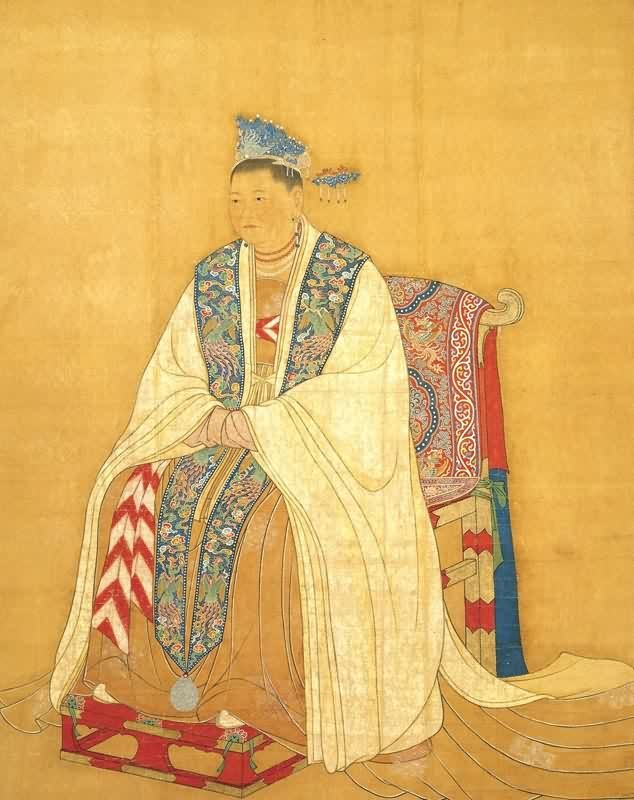
In the Song Dynasty, people wore extremely conservative clothing due to the influence of conservative Cheng-Zhu School philosophy, hence the Song emperor wore a simple red robe. However it's not hard to find examples of elaborate clothing, especially for women. For example this painting of Dowager Empress Du wearing a robe with extremely intricate embroidery and in this close up you can see she's wearing an intricate headdress decorated with pearls along with necklaces.
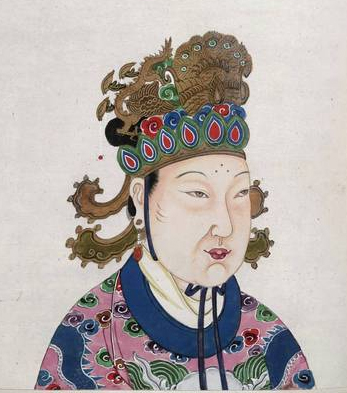
Tang dynasty fashion is much more elaborate by comparison. According to The New History of Tang, Emperor Gaozu of Tang made the following uniform rules for officials: Dukes and up to the third highest level officials wear clothes made with purple large patterned silk brocade, with jade belt buckle. Those up from fifth level wear clothes made from small patterned burgundy silk brocade, with gold belt buckles. Sixth level should wear clothes with yellow silk brocade with geometric patterns, with belt buckle made from rhinoceros horn. Seventh level should wear clothes with green silk brocade with geometric patterns, with belt buckles made from silver. Women's clothing were even more intricate. Here's Empress Wu Zetian wearing an elaborate headdress made from gold and gemstones. Here's three aristocrat women wearing even more elaborate clothes, jewelry, and headdress.
Armors also existed in China for a very long time. Here's parts of an armor from Qin Dynasty, many Terracotta Warriors were depicted as wearing similar armors. According to Book of Song, Song Dynasty armors include "Gold-colored armor, chainmail armor, iron armor with black lacquer, thin wire mesh armor, etc. In addition there is also thin metal sheets sewn to leather base as lightweight armor..."
I think you're struggling with three things:
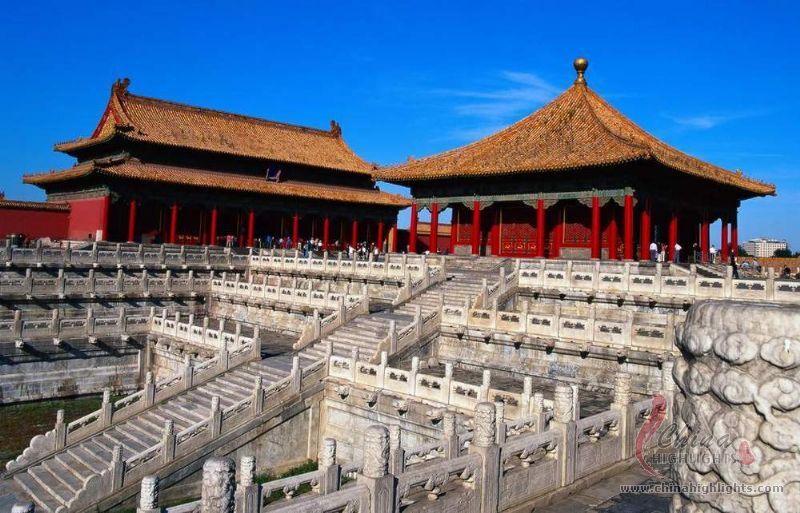
Do you truly find nothing impressive about this or this? How about this or this?
I mean I can understand if your personal taste is still different, but you can't blanketly say it's not impressive architecture.
And the Chinese certainly could build high if they wanted to. But the only structure to be traditionally build vertically was the pagoda of Buddhist temples. Here's the Qiling pagoda build around 600AD.
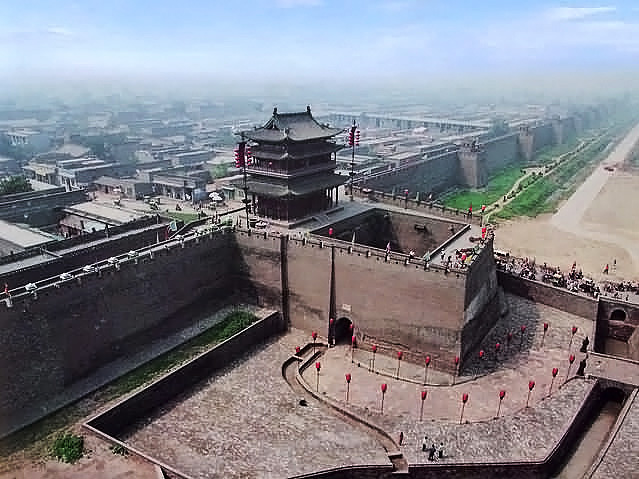
Also, the Chinese certainly could and did use stone. But they used it primarily when there was a reason, ie defensive fortifications. But have a look at the city walls of Pingyao build around 1370AD, if you don't call that impressive I don't know what is.
I think your image of Europe is also a bit idealised. You think a lot about buildings made entirely of stone, because all the wood buildings (of which there were countless) burned down during Europe's tumultuous history. Also, the most impressive buildings stem from Renaissance and early modern times when Europe was moving ahead of China technologically and economically.
As /u/cecikierk points out, you clearly have had a very limited contact with Chinese art. I'd like to point out that much East-Asian art emphasises a kind of minimalism, and often it is this minimalism that Westerners find the most attractive thus that is what you'll see brought over and emphasised here. The examples of gaudy and showy art aren't brought over to this side of the world. But as /u/cecikierk showed, there are plenty of examples around.
I don't see this observation is against the local rules, but I challenge the OP's assertion that wealth and prosperity must be per se exhibited by gold crowns, armor, and nice clothing.
For example the people's prosperity can be represented by their living conditions. Wealth (capital) is what makes this possible. How did peasants live in 1200 China or England or France or Germany? (I don't know, and I hope to be educated because it would help answer what I re-interpret as the OP's question).
Instead of armor and pretty clothes, what about investment in huge militaries and logistics systems (again, I'm not able to detail differences, only pointing out that wealth can be invested in things that are valued differently).
China did build a wall, a massive system of canals, mountain engineering (the rice terraces), and more or less managed to keep together a rather large empire compared to the size of all of Europe (approximately the size of the whole USA). Cities had massive, stone, city walls (larger than a European castle).
Again, I apologize that I don't have cites, as I'm not knowledgeable enough, but I'm hoping that the points I raise can be addressed in terms of what is wealth, not "why doesn't China have castles and armor."
In China, during the Southern Song Dynasty, in 1193, population hits 76.81 million. "Relocation of Civilization Centers in Ancient China: Environmental Factors," by Duan Chang-Qun, Gan Xue-Chun, Jeanny Wang, and Paul K. Chien, from Ambio, Vol. 27, No. 7 (Nov., 1998), pp. 572-575.
At the thousand mark the population is 38.5 million in entire Europe. "Population in Europe", in Carlo M. Cipolla, ed., The Fontana Economic History of Europe, Vol. I: The Middle Ages, (Glasgow : Collins/Fontana, 1972), 25–71
The population was highly urbanized in China.
I can only imagine walking into a small insignificant city, that is bigger than the country you originated from. Since the cities were larger, number-wise, city infrastructure had to be solved. Basic infrastructure was far more sophisticated then its counterparts in Europe.
Another thing that comes to mind is unionization. While there certainly were masons and other unions in Europe, the daily order in a Chinese medieval city was strongly controlled by different tongs. Crime, while certainly happening, was hidden away.
All of this must have worked together to create a highly evolved image compared to European origins, creating an image of wealth.