Sorry if this sounds like a silly question.
Take ancient Egypt for example (not exclusively). We are left trying to piece together small bits and pieces of information - why didn't the Egyptians have a more formulated and ever-lasting way of storing information? Did they just not care? Technology too primitive?
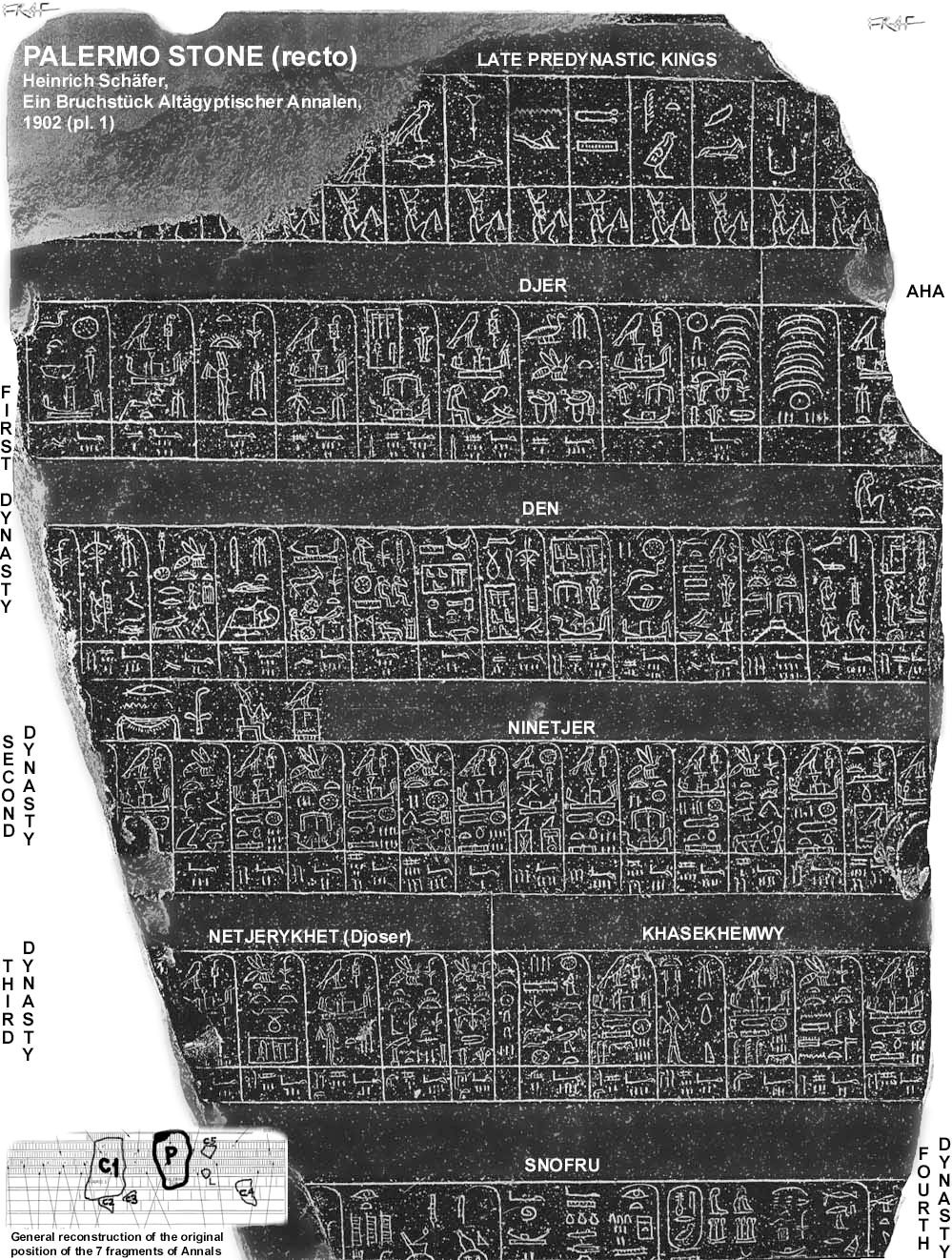
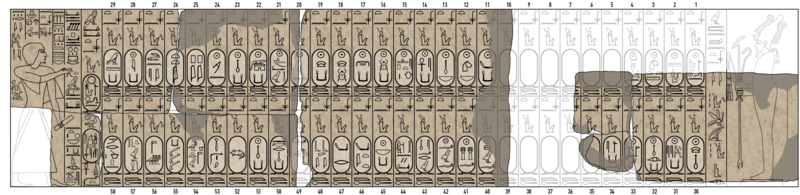
An ever-lasting way like carving into solid rock? Turns out they often did! We have several historical "king lists" from Ancient Egypt: documents or monuments that provide the name (and occasionally deeds) of each prior ruler.
The earliest fragments we have are from a hypothetical "Royal Annals" basalt monolith, dating to as early as the 5th Dynasty. Fragments can be found at London's Petrie Museum, the Cairo Museum, and the largest, most significant part in Palmero, Italy. Folks are still not entirely confident that all pieces came from the same stela, since their provenance only goes back to 19th century amateur antiquarians, or whether they represent an original or a later copy.
Later examples include Thutmose III's list from the Karnak temple Ramses II created a monumental king list in his additions to the temple of Osiris at Abydos. The king list from Saqqara also dates to this time.
And these are just the engraved ones. The Turin king list was written on papyrus and is another important source for Egyptologists. As you can see, it's not that lack of formal historical records that requires us to piece things together, but that the ones we do have aren't in perfect condition.
Of course, this is just for Egypt. If there's any other areas you're interested in, let us know!