I find your title a bit questionable; it's been a while since I've heard someone lay the blame on Russia and I don't think it's a particularly fair one. We must remember that, first and foremost, blame does not rely firstly on who threw the first punch. It's the "I'm not hitting you" conundrum. If you have a bully following someone around poking someones sides gently all day and saying horrible things to them and the kid receiving the bullying eventually has enough, turns around, and decks him would anyone reasonably blame the kid being bullied as the instigator or 'starting it'?
It's an analogy so it breaks down pretty quickly when compared to actual fact but it creates a general thought process I find necessary when looking at World War I's general leadup. Just like the bully in above picture (though I certainly would not portray Germany as a "bully" as defined in that story, don't get it twisted) from about 1890 onward it was Germany who held the reigns in driving Europe toward war. It was her actions which brought the world toward it. Let's go over them briefly:
To emphasize a later point, and to maintain a chronological system, I need to talk about the Anglo-Japanese Treaty of 1902 briefly. The British and Japanese would create a defensive treaty which, by extension, allowed Japan to go to war with Russia in 1904 over some East Asian ports. No nation, particularly France who was now allied with Russia or Germany who may have wanted to intervene to get back in Russia's good graces, could intervene as declaring war on Japan would mean declaring war on Britain. Isn't that the beautiful part? Since Japan opened the hostilities Britain was not obligated to go to war with anyone until someone else intervened and attacked Japan and France did not have a reason to intervene since their treaty with Russia was w.r.t. Germany, not anyone else.
Just to make sure that France would not find a reason to intervene Britain and France would sign a series of agreements called the Entente Cordiale which basically solidified the North African colonial possessions of both of the two powers that had been in long contention. The French would have full influence over Morocco and Algiers while France would recognize British hegemony over Egypt. What Britain had effectively done was isolate Russia from everyone else in the world, even her closest ally (France) and greatest admirer (Germany), from involving themselves and basically made it a one on one slugfest between the two nations. One Japan would whoop Russia's butt in. This is the type of crap I'm talking about when I say Britain and Russia hated each other. Even as late as 1904 Britain was actively trying to fuck Russia over so it could gain an edge in Central Asian colonial diplomacy.
It would be in 1905 that would give Germany two more demerits on its metaphorical 'war instigation card'.
This is such an enormous accusation of instigation it really needs to be emphasized. Remember that forming of power blocs motif I mentioned earlier? That's precisely what this is doing. Britain had an inherently isolationist policy with regards to Continental Europe and it would be this action that made it realize Germany will have to be dealt with someday.
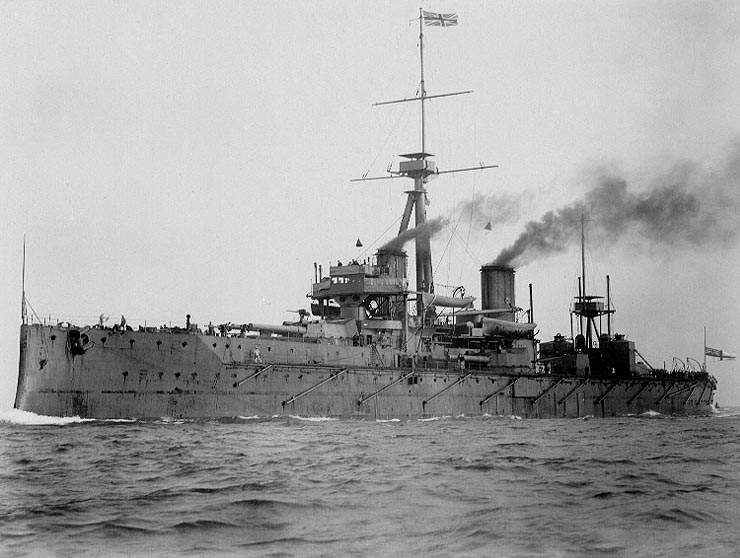
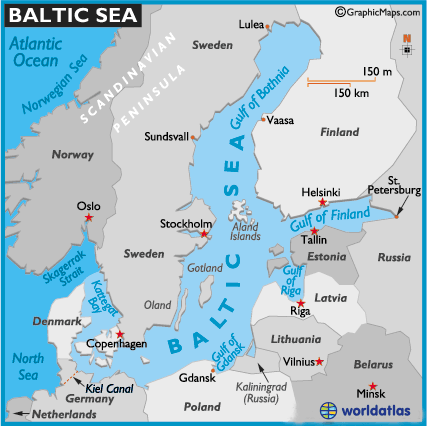
It would be the combination of Germany directly and blatantly contesting British naval hegemony (and thus, to the British, threatening their sovereignty as it was all they had to protect themselves) along with them undermining a Franco-British Treaty in the same year that forced Britain into France's arms. However, as we saw before, Britain and Russia fucking hated each other. In 1904, just one year prior, Britain was intentionally trying to screw Russia in actual warfare and in the 1850's Britain actually declared war on Russia. Yet in 1907 both parties would change their tune entirely. They both voted the same in the conference called by Germany and they both recognized the threat of Germany; compounded by the fact that the German naval buildup also threatened Russia as a significant amount of her ports were in the Baltic Sea. This would culminate in a series of agreements in 1907 that decided decades old contentions in Persia and Central Asia as a whole.
To put it more simply: Britain wanted to support France but to support France they would need to accommodate Russia and now they had common ground. Also by extension of this agreement Britain would free up swathes of manpower stationed in India which were there for a significant purpose of keeping Russia in check and contesting said Central Asian territories. The catastrophe in Manchuria against the Japanese and the failed revolution in 1905 as well showed the Tsar that the frontiers needed to be handled once and for all and the efforts concentrated and by dealing with Manchuria with Japan via losing the war (and by virtue of becoming Britain's friend who was Japan's ally) and by dealing with Central Asia with Britain via diplomacy Russia could finally exert all of her efforts toward the West.
In the process of past 25 years Germany had effectively isolated itself from the rest of the world and driven former enemies into allegiance together for the sole purpose of containing Germany. It had created clear political boundaries in the formation of two major power blocs -- the Triple Alliance and the Triple Entente. That is why, ultimately, people say the war was "inevitable". When you create two power blocs like that where one is created for the sole purpose of aggressive expansion (Germany colonially and A-H with respect to Serbia and the rest of the Balkans) and the other with the sole purpose of containing the other, war is nearly inevitable. This is the Cold War without M.A.D. and nuclear bombs.