This is a question regarding the actual use of lances as a battlefield weapon. I know that there are a lot of misconceptions due to the popularity of jousting, but I am interested in the actual battlefield use of the lance as opposed to a sporting tool. To narrow down the time and location let's say 14th century France.
The word "tilt" has an association with jousting, meaning, IIRC, an individual "pass" between two combatants in a joust. "Tilt" also describes the mechanical action of lowering a 3+ meter long wooden pole from a vertical resting position.
My question is, how essential was this "tilting" action? I saw a video several months ago (that I cannot find for the life of me) where modern jousters talk about timing the drop of the lance as being absolutely necessary to achieve maximum force. Trying to hold a lance level aiming at a target while on a charging horse is a difficult task. The idea behind the "tilt" is that by only lowering your lance in the final moments before impact you can hit your target with more accuracy, more force, and with less stress on your arm. The final effect is not unlike hitting a baseball with a bat, except the arc of swing is vertical instead of horizontal.
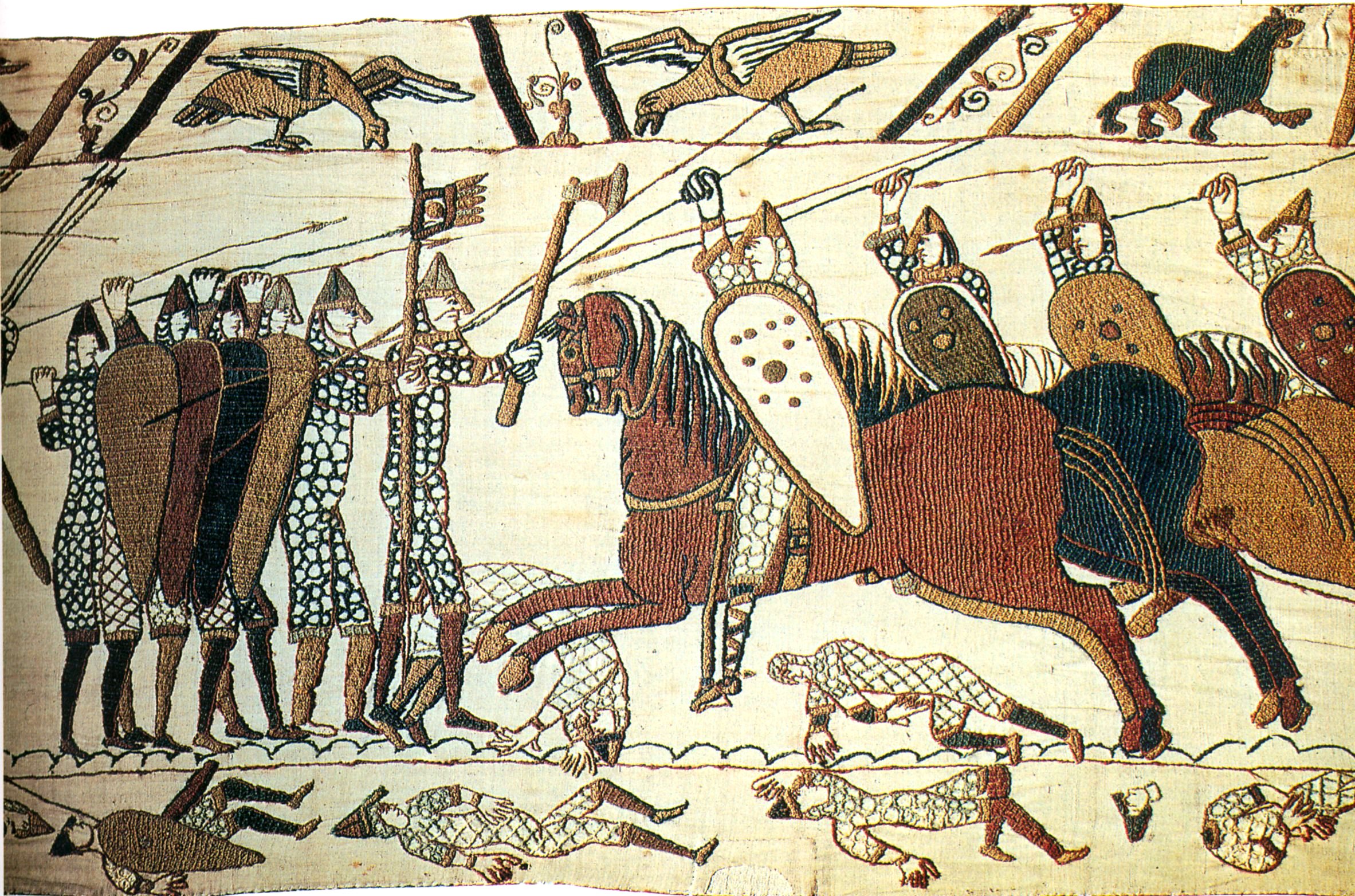
I suspect there is some truth to this due to sheer physics, but I hesitate because of confusion surrounding the joust as sport. This tactic makes sense with a very heavy, specialized jousting lance designed for the tournament. But were lances used in war in the 14th century as heavy as 16th century sport lances? The Bayeux Tapestry shows lightweight lances being used overhand. Renaissance paintings like this one show heavier lances.
Is there any basis to this explanation for the "tilt"? How was a lance really used in battle?
This question is somewhat anachronistic from the outset. According to the sources I can find, the word "tilt" didn't actually refer to the action of tilting a lance or the act of jousting until the beginning of the 16th century. According to the etymology I can find our oldest source for the word being used in this context comes from 1510 and was originally applied to the barrier set up between the two jousters as they participated (this barrier is a somewhat newer invention than fiction and fantasy would lead us to believe). As such, what we have here is either a post-medieval invention, or something that was referred to by another name. In the case of the former it is outside my area of expertise, in the case of the latter I can only say that I cannot recall any sources that distinctively refer to leveling the lance at the last moment as an essential action in terms of an actual military application.
I can however speak of your more broad question about how lances were used during the Medieval era.
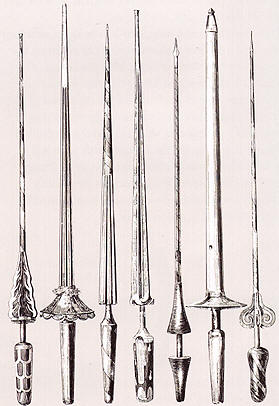
The way lances were used and the lances themselves changed over time, as is clear from the pictures that you linked to. During the reemergence of cavalry as a significant fighting force, lances were used under or over hand with the arm extended as you can see from the Bayeux Tapestry. The lances used were essentially just long spears, consisting of an ash staff and iron/steel head, possibly with a counterbalance at the opposite end. Over time, the lances grew heavier, longer, added specific grip areas, and began implementing round guards in from of the hand as you can see here. The advantages are all quite clear. A longer lance allows you to strike your enemy while you are still our of their range. A heavier lance hits with more force. A grip provides a sturdier grasp upon the lance. A guard provides protection to the knight's exposed arm and could potentially deflect away on oncoming enemy's lance. In addition, soldiers began to hold the lance under the arm as opposed to with the arm extended. This allows greater energy, stability, and endurance. This was actually covered in an episode of a TV show that measured the amount of force applied by the two different methods (which I could try to find when I get home, if there is interest).
For the most part, lances would be carried in an upright position until they were leveled for a charge. This is the same as any military 'at rest' position. As anyone can test this at home if they have a long pole nearby, it is far easier to carry a long pole in the upright position than tilted forward. Unfortunately, as I said earlier, I can't find any sources that talk about the tactic they referred to as 'tilting.' The issue is complicated by the fact that in the time period you specified, it would not have been referred to as 'tilting.'
As a final note, remember that the purpose of heavy cavalry is to break an enemy's line, not to engage in a melee. The lance, in this sense, is meant to make a charge all the more devastating. The lances were to be leveled to break through the front lines of the enemy soldiers in the hopes that momentum and the force of the charge would break through the lines and send the soldiers into disarray. The lance was essential in terms of creating shock, but was completely useless if knights got bogged down in a melee. The charge itself would have every desire to remain as united front with as many lances hitting the enemy at the same time as humanly possible. Shock was key, lest the enemy line fail to be broken and a melee ensues. If I was going to offer an inference on this tilting, it would be somewhat impractical in a battlefield scenario. Battlefields are chaotic and involve massed action, not individual precision and finesse. Keeping your line on horseback, making sure your lances are as even as possible, and making sure you hit the enemy before they hit you would be more important than exact lance placement. Fighting a single opponent on horseback is vastly different than charging a rank of one thousand men-at-arms with two hundred other knights to either side of you.
Let me know if you have any other questions.
Actual use of the lance? Why not read the sources?
Fiore's treatise is based on his learnings and teachings in Northern Italy (HRE at the time). If you navigate your way to the mounted fencing section, it may illuminate some aspects of the question you are trying to ask regarding its use.
I can't answer your question, but the tapestry you've shown, could those have been javelins or short spears and not lances? I wasn't aware lances could be used "overhand" like that.