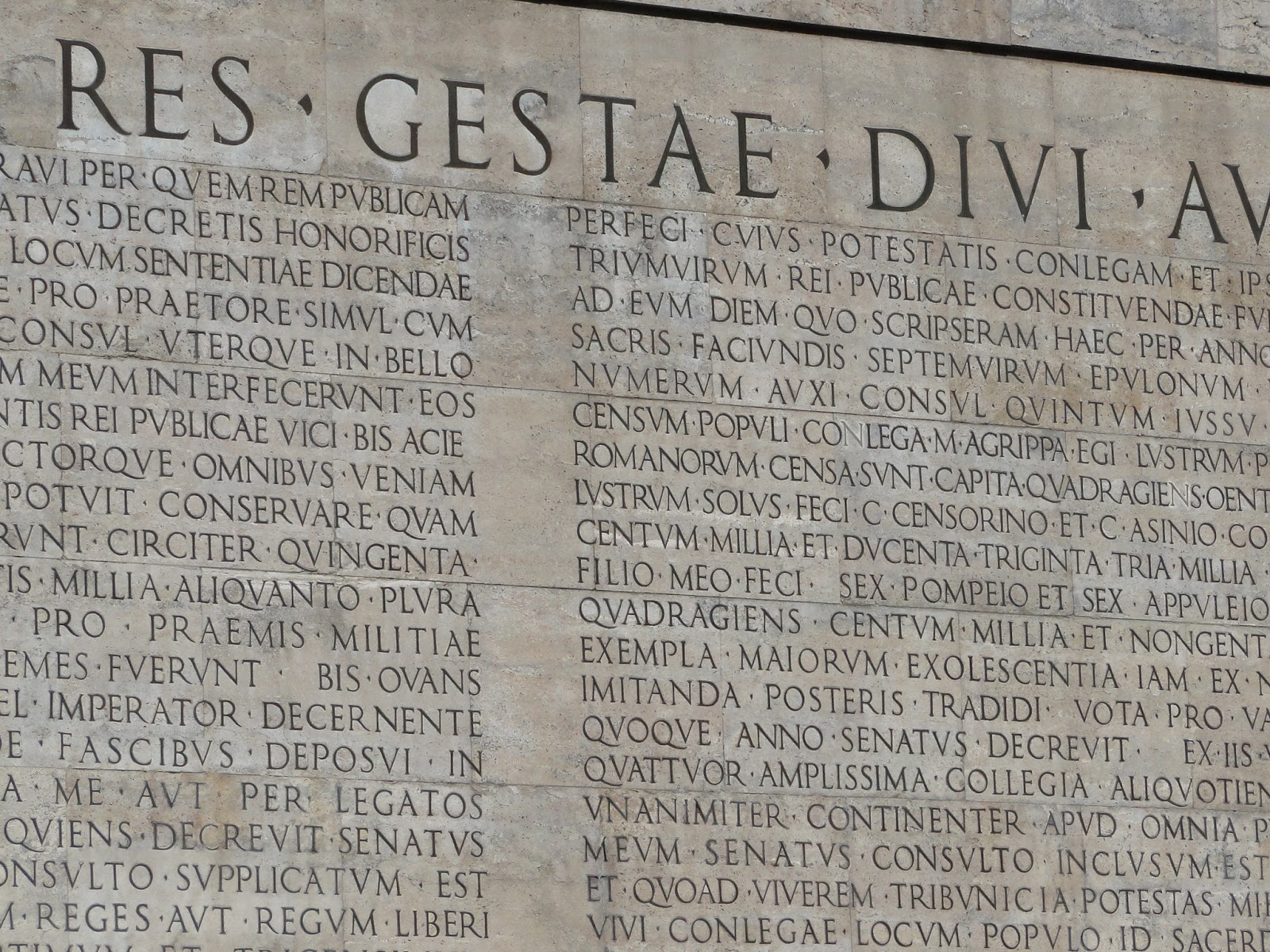
What I mean by original is written in basically the time period it was created or at least very close.The only one Ive ever seen a picture of is the pella curse tablet and thats because the macedonia language debate brings it up a lot.
What about documents for the literary or oral works of Herodotus, Homer, Aristotle etc. Do we have original documents written around their time or are most Roman copies of the origianal or Byzantine, Arab, German, French etc.
If you know of an original can you tell me which one?
As you may be aware of, a document is "A piece of written, printed, or electronic matter that provides information or evidence or that serves as an official record."^1 Meaning that the sample base for what you're asking for is quite large. Speaking of tablets alone, there are quite a few more important ones (excluding the one you mentioned), such as: the Rosetta Stone and Res Gestae Divi Augusti.
We also have things like the Turin Scroll (in the Turin Museum) or the Battle of Kadesh - although the wall itself isn't a museum per se, but a cultural heritage site. In the area of tales from ancient Egypt we actually have a 'bunch' of papyri preserved thanks to the climate, which are stored in different museums. My personal favourite of these is the Tale of the Doomed Prince - even if the ending sadly is lost to us.
However, when it comes to the more popular ancient authors you mentioned; such as Herodotus, Aristotle, Tacitus, Suetonius, Caesar, and the like, a lot of what we have are copies that have withstood the test of time through scholars living long after their time. I actually started researching which works we know are completely original, which ones that are commentaries on the original and thus preserving it and which ones that are pure copies. That task proved quite time consuming though and probably - in the end - fitting for a book,^2 but not for a forum post like this. An example would be something like the Consitution of Athens by Aristotle, which probably isn't written by him, but by his students. Meaning that it would be his work, but not written by his hand (it's now in the British Library). In the end I suppose it comes down to what you mean by original in your question; ie., is it original if it simply is from ancient times or is it original if it's written by the author's hand alone? If it is the former, then there are quite a few of these works preserved on papyri and stored in libaries and archives (rather than specifically museums usually).
[1] From oxforddictionaries.com
[2] Such as Ancient Greek Scholarship (2007) by Eleanor Dickey, which I stumbled upon while trying to find a quick answer to your question. :)