Hi all! Just in time for the holidays we've finally brought you our long-planned AMA on the end of the Roman Republic, a period of time roughly covering the careers of the Gracchi in the mid-2nd Century, B.C. to the acension of Augustus as emperor at the very end of the 1st Century, B.C.! As this is possibly the singlemost studied field of Roman antiquity we expect lots of juicy questions from you guys, and we'll do our best to answer them. We were hoping to get this in before the end of the semester, but sadly we've mostly been swamped with work at the tail end of the semester, so that was a no-go. Still, we're here and ready to help! Our panelists specialize in everything from the study of the Roman magistracies, the development of the Roman army (always a favorite on reddit), to epigraphy in the Republic and Empire!
Our panelists, in no particular order:
/u/edXcitizen87539319 studies the (ab)use of magisterial power, particularly during the middle Republic, but also during the period of our interest. In particular he studies the use and abuse of imperium by consuls and praetors sent overseas from around 218 to 133, a time during which the governance of the provinces and the role of provincial imperium was being worked out. His work is highly important as a foundation for understanding the political changes occuring among all levels of society during this period. Additionally, citizen knows a great deal about how the Roman political structure was "supposed" to work, which I think we'll all find instrumental in figuring out what went wrong.
/u/DonaldFDraper, despite his current flair, is also an expert in Roman military history and used to be flaired as such (before he asked it to be changed to reflect his current bent towards French Revolutionary history). He's offered to tackle most of the very specific questions about Roman military history for us. However, he would like to point out to everyone that though Roman military history may be very popular, there's a lot more to Rome than war. As such he considers himself to be mainly supplementary to the rest of our panelists, but of course his addition is wonderful and very useful to all of us!
/u/Astrogator studies epigraphy (which many of you will actually find quite pertinent to some of your questions, as a lot of material on Augustus and many magistrates is recorded purely through inscriptions) and also is going to be helping us out with the "Romanization" of Italy and the tribunate of the younger Drusus
/u/LegalAction more or less does the late Roman Republic in general and is great both with specific instances in time throughout the period and more general overviews as well. Recently he's taught a course on Augustus and the Julio-Claudians, and argues that the ascension of Vespasion is the real end to republican rule and the beginning of Roman totalitarianism, a very interesting novel take
/u/Tiako is my go-to guy for Roman economics. He mostly does economics during the Principate, and specializes in economic relations with India, but of course he's fully capable of tackling lots of questions about the late Republican economy and just has a fantastic knowledge base all around.
/u/Celebreth is pretty well-known around here, answering mainly questions on military history but also tackling social, economic, and political questions during the closing years of the Republic as well.
/u/XenophonTheAthenian is actually a mere lowly undergraduate and is outranked by most of our panelists today. Being as of yet not technically a specialist I can answer pretty general questions, but I particularly have been focusing in coursework, interest, and studies the period from around the Catiliniarian Conspiracies to Caesar's death. I also did some stuff on Augustus a while back as well. I'm especially interested in political history, both the rise of individual statesmen using and abusing the limits of the law, and the conflict between the orders that caused tension to flare up throughout the social sphere
So without further ado, let's get this party started. Reddit, ask us anything.
RIP my inbox...
IMPORTANT EDIT: So a lot of you are asking questions about the Empire, which is fine, but in the interests of this particular AMA we ask you please to restrict your questions to the fall of the Republic, not the Empire. The mods have been working hard to keep us uncluttered from questions that many of us aren't qualified to answer because they're about the Empire, so I figured I'd help them out. I also would like to help out our panelists doing military and economic history by reminding everyone that a great deal of the economic and military history of Rome pertains only to the Empire, not the Republic.
This one kinda goes past the Republic into the Principate period. At what point did Romans (mainly the literate and educated) realize they were no longer a republic, but instead a monarchy? How did they accept this given there was such a strong hatred for monarchy within Republican Rome?
Splendid! I have a few questions for you all.
What were the main factors that shifted the Roman Republic to a totalitarian system?
How did Rome change economically during this shift? Did their currency change?
What changes did the army undergo under the new political system? Was the training reorganized?
Were scientific studies (like astronomy) encouraged/suppressed with the transition?
What books would you recommend for the subject?
I'm not very well-read in Roman history so I apologize if these questions are inaccurate. Thanks for taking the time to do this!
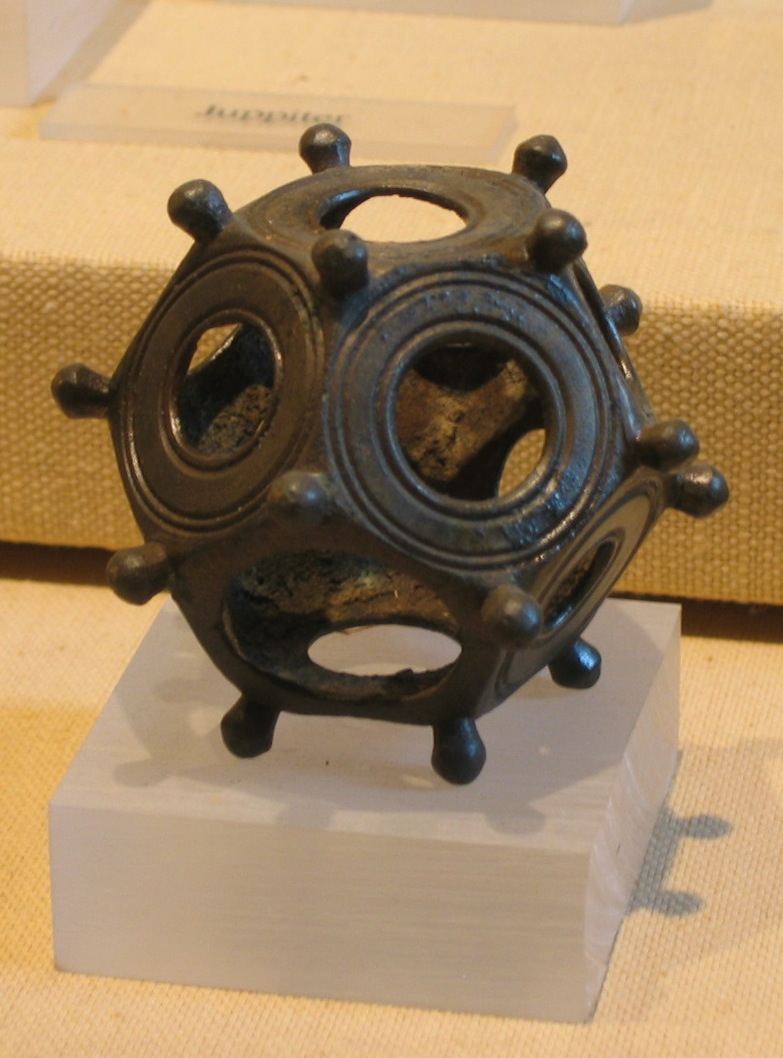
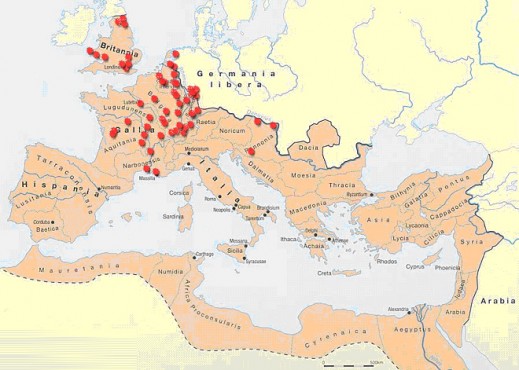
What the heck are these things? One of my professors freshman year introduced these to us. Apparently they were found freaking everywhere and had numerous different styles.
He said he didn't know the answer but said they were thought initially to be candle holders but they found people buried with them as if they were relics and they found in seemingly random places like under bridges tossed away and shit.
Is this really as big a mystery as it was painted to me? Do we know what these were for or have a good idea what they were? I know this isn't precisely 'fall of the empire' but I'm shoehorning it in as many others are asking kind of tangential questions too :P
Are there any great unresolved questions or highly controversial topics that spark intense debate about this period of Romam history? What are the major known unknowns?
After a lot of removed questions, I'm making a mod comment about something that's becoming a repetetive problem- this is not an AMA about the Imperial periods of Roman history, it's specifically about the Roman Republic, and its transition into the Augustan Principate. If your question is about the fall of the Roman Empire, it will be removed. If your question is about the Roman Empire, and cannot be related in any way to the Roman Republic it will be removed.
The panelists here have been assembled with the assumption that they will be answering questions within the period that the title, and /u/XenophonTheAthenian's post, specifies. Please take the time to actually read that before assuming your question is one that belongs in this AMA.
I've always been a bit confused on what role the Senate was supposed to (and actually did) play in the Roman political system. My current understanding is that it started as just an advisory committee of rich guys, because rich guys like to have their voices heard. But it also happened to be a social club for rich guys, and as such was a major factor in the 'behind-the-scenes' of Roman politics, which was exclusively populated by rich guys. And this social influence gave it them de facto legislative power because they could apply peer pressure to the elected officials, despite being being an 'advisory committee' with no de jure legislative power beyond offering proposals for laws. Yet somehow the Senate also had executive power because I keep hearing phrases like 'the Senate ordered magistrate X to do action Y.' And I think it could appoint or fire officials despite officials being elected?? And it also had judicial power and power of the purse because reasons??? The more I think about it the more I realize I don't understand Roman politics.
So basically I want to know
what were the formal duties and powers of the Senate?
what were the informal duties and powers of the Senate?
is it appropriate to use 'Senate' and 'government of Rome' interchangeably? I do this a lot mentally, but I also know that the Senate is only one part of the modern American government, so I'm worried that my mental usage is wrong.
how did someone get into the Senate? Where all sufficiently rich guys automatically allowed to sit in meetings and vote? Did you have to get elected by a voting district? How did rich guys living in Spain or Asia or the even just the edges of Italy make their voices heard?
Could non-rich guys attend and speak at Senate sessions?
I have a few questions:
What were the greatest culture shifts that occurred in the transition from the Republic to the Empire?
I know none of you are linguists, but perhaps one of you may know the answer... I studied Latin for a few years in High School, and I am curious, was there a drastic and obvious evolution of Latin over the aforementioned time period comparable to the evolution of the English language?
And out of my own lack of knowledge in the area, what is a general economic overview of the Roman Republic?
Thank you all for this great AMA!
What are the economic arguments for the fall of the Republic? And, more broadly, can we speak of a "commercialization" of Roman society in this period? Does money come to play a greater role over time, and is this related to political changes?
Colleen McCullough wrote a great series of novels covering the fall of the Republic. She did as much research as she could, but took some artistic license.
I love the novels to bits, as they are so well written. Aside from the notes that she herself makes about changes that she made for artistic license, what are the absolute howlers that she makes? Or are there any disputed areas where she has made one assumption when an equally plausible scenario exists?
Adrian Goldsworthy's books are often recommended here and I personally enjoyed reading them, but are there any problems with his books? His books on Caesar and Augustus are obviously not entirely academic, but they are still pretty hefty in terms of size, so I do wonder if I'm missing out on anything from modern scholarship. I'm particularly interested to know what kind of stuff he overlooked, rather than how he simplified academic debates, which is understandable for books aimed at a more general audience.
I've come across Syme's books occasionally in my studies, how relevant is his idea of an Augustan Revolution right now? Has anything replaced it?
Why on earth do we have so many sources for this period? Cicero, Vergil and other literary figures I can sort of understood because of how they became entrenched in the Latin curriculum, but how did it start? Were there not similarly brilliant orators and poets in other periods who were equally admired? Likewise for sources such as Caesar's Commentary, were writings like this exceptional for this period or the norm?
How close did the slave revolt, led by Spartacus, come to overthrowing the Roman Republic?
To what extent did the revolt have, if any, in assisting in the decline of the Republic?
What are your guys' thoughts on Dan Carlin's "Death Throes of the Republic Series"? Its my fav hardcore history cast, curious if you guys more or less concur with what he says or not.
To the panelists at large. What is it about the Roman Republic that appeals so much to your personal interests?
Was there a moment in casually reading about the Republic that clicked with you, and made you think "THIS is what I want to learn more about?"
Basically, why does the republic matter to you all individually, and why do you think it should matter to the public as well?
How accurate was HBO's Rome towards portraying the fall of the Republic? What are some significant qualms you guys have with the show?
Thanks to everyone for doing this: it has always been my favourite period of history. Given that the sources we have were generally written by the victors, their descendants, and people who wanted to be in favour with those people, how sure are we that we know the truth behind what happened? Are there any areas where historians look and say: "oh, yeah, suuuuure it happened like that"?
Julius Caesar. Before his assassination, is there any evidence that he intended to re-establish the Republic? In short, did he view his position as Dictator as a temporary expedient to effect necessary changes, or was he actually committed to perhaps founding a new lineage of royalty?
How has Gibbons stood the test of time? Still worth reading?
How different was the dress style and architecture of republican era Rome (perhaps early to mid) in comparison to the imperial era?
I know that much of our perceptions as to the visual look of both buildings and people in the Roman Republic derives from Renaissance painters and afterward who drew their inspiration from mosaics that were predominantly from the high imperial period.
What would be some of the main differences?
Can any of you enlighten me about the Grass Crown? Were there any eye witness accounts of its bestowal? Have any recipients described the receival of such an immense honor? Did anyone receive a similar kind of honor once the Empire came about?
How did the Catilinarian Conspiracy and Cicero's actions afterwards consequently affect the Roman Republic?
From the dawn of the republic to around 338 B.C., joint colonial endeavours with the Latin League served as an important catalyst in Rome's rise to hegemonic control over the peninsula. Was colonisation as important to Rome from the mid-2nd century and what form did it take?
Why did Caesar take such a huge risk in taking the fight to Pompey, after Pompey and the Optimates had fled Rome and left him Italia on a silver platter?
I mean the war in Spain I can understand, and securing Sicily was obviously vital to guarantee Rome's grain supply. But otherwise, why not stay put right where he was, use the wealth of Rome's treasury Pompey had so graciously left behind to shore up his power base, build some actual naval forces that could rival Pompey's dominance in that area, maybe even have his veteran centurions train a few extra legions.
All while his handpicked non-exiled part of the senate pushes through popular legislation to keep the ordo equester and the general populace happy. Then he could have just sat back and waged a propaganda war against the cowardly senate in exile, until they either gave up, or took their armies back to his home turf.
Instead Caesar split his army in half, ran a naval blockade in the middle of winter, forsaking all his supply lines in the process, all so he could have a protracted standoff with Pompey in a territory chockful of the latter's clients.
I mean I guess it worked out for him in the end, but it put him in a pretty tight spot for a while, as he himself admitted. So help me understand why he didn't make all those brilliant strategic decisions I just made from the safety of my couch ;)
For someone with very limited historical experience, are there any pieces of literature you would recommend that cover the topic of what an average day in the life of an Ancient Roman would look like? Thanks for doing this AMA!
Thanks for doing the ama guys!
To what extent and in what ways did the key players, such as the brothers Gracchi, Marius, Sulla, Cicero, Pompey, etc, enable the rise of Caesar and later Augustus? Which precedents did they set (or break), and which events as a direct result of their actions, allowed individuals to consolidate so much power that they otherwise wouldn't have?
Did Caesar or Augustus institute any great changes in monetary policy? Did they personally spend much time thinking about monetary issues, or were they content to either delegate (and to whom?) or to let things stay as they were in the Republic?
Finally, a chance to ask something I've always been curious about.
When Marius pushed through legislation to allow anyone to fight in the armies, not just aristocrats, this allowed more people to fight. People talk about this being a big change, but it must have been absolutely massive.
A widely cited contributing factor to the fall of the republic is the fact that armies were loyal to generals, not the state. How did this happen? Wasn't a magistrate only able to raise, equip, and pay an army with funds and permission from the Senate? (btw is this a correct understanding of how Roman armies were mustered and funded?) I understand that generals would promise to lobby politically for their soldiers to be given land grants down the road, but that explanation seems kind of thin to me. For example, I can't imagine an American general retiring, getting an elected office, and then convincing his former troops to overthrow the government by promising to introduce a 'Free housing for the troops' bill to the House floor.
For that matter, if the Senate distrusted a magistrate's loyalty, why couldn't they assign a new guy to his office/command?
How were optimates like Sulla able to keep their troops loyal? My understanding is that Sulla was against land reform that would enrich the lower classes, while Marius the populare and his eponymous reforms were all about tying your soldiers to you by promising land reform in the future. Why fight for the Sulla-the-land-reform-scrooge when you can fight for Marius-the-land-reform-santa?
By the time Caesar was bucking senate control and crossing the Rubicon with an army to make a show of power, was it already too late in the collapse of the republic for it not to make a difference if he hadnt made that stand?
Did resource depletion (trees/lumber, loss of soil fertility, etc) play a factor in the decline and fall? If so, how?
Who were the soldiers fighting in the Roman civil wars? By this I mean where did they come from? Were they all urban poor from Rome itself? Italian allies? Or did they come from even further afield like Gaul or Asia? For those far afield fellows, what fighting style (i.e. legionary or indigenous), by what process were they summoned to fight, and were they commanded by Romans or their own officers?
How much say did a common civilian/soldier get when it came to which side he supported in a civil war? Were recruiters for rival armies ever competing in the same population centers? If you were already a soldier in an existing legion were to stuck fighting on the side that you're officers chose or could you easily defect?
Lets say you appeared in Rome with a small fortune (500 aureus? Not entirely sure about the buying power, assuming that would be enough to buy dozen slaves?).
What would you invest in?
Also, would a person without any connctions or known name appearing in the city with a sum of gold have any problems when trying to start a business?
My question is about running for office in republican Rome. I know that it could be ruinously expensive to run for office and that some of the money was needed for the politicians to defend thensfves if they won and their term was up. What else was this money used for?
Did any subject nations or neighboring rivals try to break away/grab some land while the Romans were distracted by their civil wars? How did that work out for them?
Were taxes physically collected and transported to Rome? How did the emperor know how much he could spend?
I'd like to know more about Roman concrete. There was an article earlier in the week about researchers finally figuring out the ingredients. How long was the recipe lost for? Are there any contemporary accounts of its quality or construction? Did they use other inferior kinds of concrete that we don't know as much about because those buildings didn't survive?
What was music like during the turn off the Millennium? Do we have any Roman records or what music existed or how it was performed?
In their speeches would politicians honor the old republic and say they were a empire now or would they not talk about the republic?
My understanding is that most Romans never thought of the Principate as of the "fall of the republic" and that the emperor was just a new office in the republic. It is recorded that the emperor Decius said "the death of one soldier is not a great loss to the republic" after his son was killed in a battle in 251 A.D.
Am I right, or did Romans in fact widely believed that the republic was dead after the office of the Emperor was introduced?
In your opinions, was the Republic doomed? By that I mean was the storm of competing political interests, progressive decay of tradition, misuse of the magistrates, manipulation of the patron-client system (IE the Marian reforms, Gracchi land and grain reforms, and all of the games), et al simply too much for the Republic to survive. Were Cato's attempts to defend the Republic ultimately in vain, or was there actually a chance that they could have fixed the system and continued the Republic?
Obviously this question is a bit deterministic, so I understand if there's some discomfort in trying to answer it. I only ask because I recently took a class on the Republic, and my professor asked the question quite frequently as the semester (and the Republic) drew to a close. I'm curious to hear what you all have to say on the subject.
What pissed you off the most about the HBO series Rome?
What actually made you happy, either because it was accurate or because they took artistic license about something we don't really know much about and you just think they did a good job speculating?
Thank you very much for taking time!
I have two questions:
When was Rome arguably the wealthiest and greatest nation? During the Republic or under the emperors? I don't just mean by surface conquered, but by general living standards.
In pop culture, romans are usually portrayed as getting completely destroyed in any "northern" setting. I am thinking north of the Hadrian Wall and Germania in particular. How appropriate is this portrayal? I have a hard time believing them because certain depiction make the romans look like absolute amateurs (e.g. Centurion).
If you could send a single postcard back to one person in the Republic in order to prevent or forestall its collapse, based on your specific area of study, who would you send it to, and what would you advise?
How did women (common or aristocratic) participate in Roman politics? If they were locked out of politics, did their social lives ever spill over into politics?
I understood that Rome has become a republic way before Caesar or Augustus (some generals acting like dictactors ruling for decades).
However, why didn't romans revolted against those who violated their basic principle of not becoming a monarchy (empire) again?
Is it true that Caesar, although a good general, destroyed the economy of Rome in the first place, as the first one issuing gold & silver coins?
First tank you for doing this AMA, it is greatly entertaining and of great learning value so read all of this.
This morning I was reading a short article on a magazine written by a student who specialized and wrote a thesis ( hope this is the right term in English ) on humour in ancient Rome, his article was named : Could we laugh at Ceasar ? He explained about Cicero's jokes on Ceasar, some examples of generals who had been mocked by their soldiers and of Caesar's rumours about a possible relationship with the King of Bithynia.
My question is how was it common ? ( near the fall of the republic but this question can also be applied to other periods ) and how was it dealt with by the power ? We know that politicians can be very careful about was is said of them, no matter the government type so was there someone ( let say during Caesar's power ) or an organization charged to deal with mockery against the power ? Be it from important men such as Cicero but from others, like more common people or the soldiers.
Was mockery allowed ? Tolerated ? Or was it dealt with more repressive actions or even another mocking propaganda against whoever started to do so against the power ?
Thank you all again for the time taken to do this !
Thank you very much for doing this.
1.) Return to Republic - At any point after Julius Caesar's assassination, was there ever a real chance that Rome could be returned to a Republic again? Or was the entire social/political structure changed so much that it would not be possible in any form similar to what had existed before? I know this is probably highly contentious, but I'd like to hear your expert take(s) on this.
2.) Class mobility - My impression is that Roman social classes were quite stratified after the fall of the Republic, and moving up in class would have been quite rare during this period (e.g. for a pleb to make it up to patrician or even equestrian). For example, in HBO's series Rome, one of the main (fictional) characters Lucius Vorenus progresses from pleb -> centurion -> precept -> magistrate -> senator. I realize this is an extraordinary depiction of a character, but I'm curious if there are any notable historical examples of somebody who similarly rose up through the ranks, so to speak.
3.) Contact with the East - I've read after Crassus's defeat at Carrhae, that a remnant of one of the defeated legions made its way to modern-day Uzbekistan, then eventually to mainland China. I find this entirely plausible given the reach of Rome at the time. Given this possibility, was there any trade between Rome and Asia (namely East Asian dynasties) going on? Are there any recorded instances of interaction with Asia, beyond modern day Central Asia, mentioned in any of the histories?
4.) Practice of decimation - Seems barbaric and counter-productive. Any proof that this was actually an effective military tactic? Any good writings from a lower Roman soldier's perspective?
Thanks!
In terms of the historiography of Rome, which historians are considered the most 'reliable'? I want to read the accounts by contemporary historians of the period, e.g. Suetonius, Cassius Dio, Tacitus, but can't choose which would be the most enjoyable and how trustworthy their information is. When commenting on emperors, for example, were these historians often imperial courtiers themselves, or speaking from a strictly detached perspective?
At the peak of the Roman Republic, what was the % of citizens who have suffrage like? How was elections organized (from logistics point of view) given that at this point the Republic has such an extensive domain?
What do you guys think of the History of Rome podcast? It seems quite good but throws me a bit that the narrator doesn't seemingly have an advanced degree on the subject?
Quick question for you knowledgeable gentlemen (and perhaps women IDK given the usernames).
I have read in a number of popular history books that prior to the "fall" of the roman republic, it had basically devolved into a "who could buy the most votes" situation. Is there any validity to this claim? Was that always the case, or never?
Augustus' relative military supremacy following Actium and the purging of his political rivals through proscriptions are often stated as being important factors behind his ability to dominate the Roman state, but what role did his wealth play? How did his personal fortune allow him to maintain control?
How did literature and history writing change as the republic was falling? Was there more fawning over the emperor?
Towards the end of the Republic, the Senate enacted a few laws that were supposed to be un-repeal-able. As in, no future Senate, consul, or tribune can disturb the law in any way. First: is that right? The example I recall is something enacted just before Caesar left for Gaul.
Second, was that an accepted and common tactic, or relatively unheard of prior to the Republic's waning years? Third.... how was that expected to "stick"? Thanks!
Was there an expansion of infrastructure, public works, and other sorts of major projects after the fall of the republic? Did the centralization of power make it easier to execute expensive and time-consuming initiatives?
How did Augustus neutralize the Senate, especially since a large part of the Senate's power was informal and based on social connections? What powers remained to the Senate? Could they influence anything outside of the municipal matters of Rome itself?
How did the Republic's notion of citizenship change over time, if at all? Reading Gibbon's Decline and Fall of the Roman Empire, I get the sense that during the empire, there was a more civic understanding of citizenship, divorced from race and simple geography (living in Italy, etc)
Did Greece have any political influence/autonomy during this period? Was it treated as conquered territory?
Were the Catilinarian Conspiracies really as big a deal as Cicero had made out?
I have heard that the Romans had contact and traded with India but how prevalent was this and to what extent did they exchange cultures (meet and look at the others society and such)?
Great timing!
Right now, I happen to be watching the BBC production "I Claudius" with Derek Jacobi. In it, Augustus makes noises about restoring Rome as a Republic and Cladius' sympathies lie that way (after the sympathies of his father Drusus), while Augustus' wife Livia wants nothing of it and schemes to put her son at the helm as Augustus' successor.
I'm sure it's fictionalized in the name of good drama, but how fictionalized?
Personally, who was your favorite historical figure during this time period, and why?
The roman empire encompassed many peoples and cultures and was trading with others such as India. My question, how accepting of "race" were the romans and their merchants? Was it out of the question for someone from india to wed someone from france?
So what is the last word on Julius Caesar's last words? Is there any consensus? Did he probably just say nothing?
Thanks for doing this! I have a question on the economy of rome the city. Did it start out as an industrialbase (i use the term very loosely, meaning production of goods basically) ir was it always a marketplace? Was it more of a grocer than a blacksmith?
In Adrian Goldsworthy's In The Name Of Rome he makes a statement that the idea of Scipio Africanus waging war against the Republic for his auctoritas would have been absurd, yet that is exactly what Caesar did. Was this a result of different personalities or had Roman politics changed that much? If it was the politics, what are some key events that set up the making of such a decision against the better interests of the Republic?
I'd like to ask about debt. We know that Romans, politicians especially, incurred lots of debt in their ambitions. How was this recorded? Did the state get involved in the case of a debtor defaulting? Could a citizen declare something akin to bankruptcy for remedy? Finally, to bring it around to the Fall of the Republic, what do we know about Cataline's scheme for tabula rasa? Was it feasible or just a cheap political ploy? Why was Cicero so against the idea?
Who would you say is most responsible for the actual fall of the Roman Republic?
Who could have turned it around?
And what point was it irreversible?
Great thread. I am actually studying the fall of the Roman Republic for my final year in high school. My question is, how important was Caesar to the fall of the Roman Republic? For example was he one of the main causes or was he just adding to an already failing Republic.
I'm a leading citizen of Roman Greece during the time of the Gracchi. How do I find out about changes that are occurring? How did the power structure change over the years, say up until Augustus? How much say do I have in the governance of my province?
When was the point of no return in the late republic? When was the republic destined to change drastically like it did in our timeline?
How did the roman money supply work? Was there any person or group that was responsible for regulating the money supply? Did changes in monetary policy play a major role in the fall of the empire?
Here's a smug question: when did the Republic end and the Empire begin? Who do you consider to be the first ruler of the Roman "Empire"?
Were Romans aware of the change from a Republic at the time of its occurrence or is this something that has only been visible in retrospect?
How did the transition from Republic to Empire change the citizens of Rome?
What's the consensus on Gruen's "Last Generation of the Roman Republic"? My prof gave it a rather negative review and suggested reading Syme's "Roman Revolution" (which I'm reading now) instead.
What were the key factors that led to the development of the Republic in the first place? My understanding is that Republican governments were not common at the time.
What allowed the Romans to become such a major power? Was it a convenient series of fortunate geniuses, or were there important structural institutional or geological factors?
Sorry if this is late, but why did Rome during the Republican period not develop more public institutions, like a police force for the city, a tax collection bureaucracy, a standing army under civilian control and paid directly from Rome's coffers, some sort of public system to try to get the poor and out-of-work out of the city of Rome (even if it was some sort of expensive public works thing) instead of just letting them stay on the dole?
It seems very contradictory how modern the Roman state and politics seem in some ways, and how many of these state institutions that existed by the 1600's just didn't for the Romans.
Was there a generational divide to who sided with whom in the civil wars? I've heard that as a youth Caesar was disparaged by his elders for having an unorthodox fashion sense and associating with a clique of other flamboyant and indulgent young people, and I'm wondering if that had political consequences down the line
In my readings, the actors in the "National" government of Rome, the senate, the consuls, etc. seemed to have had extraordinary action in the day-to-day affairs of the Republic (and later empire) and I rarely read much about the organization and structure of the governing bureaucracy. But it's clear that my readings are incomplete, a territory the size and complexity of the Republic must have had strong civil institutions and a governing bureaucracy full of civil employees of some kind/
Compared to China, with a well developed bureaucracy, or modern day nation-states, how did Rome's bureaucracy look like and function? Were there departments and ministers? Local or regional authorities? How were things like tax collection and distribution work exactly? What did the Roman government look like, not form the point of view of the Senate and the Consuls, but the rest of it down to the local villages?
I know this sort of falls past the republic and early empire, but what are your thoughts on Caligula, and whether he was truly insane, or just power maddened?
How much actual control did Rome exert over Sicily during the late Republic? Why wasn't Syracuse made part of the province of Sicilia after the 2nd Punic War?
How democratic was the late republic, really. On the one hand, you have people like the Gracchi and Caesar who relied greatly on lower class support. On the other hand, I've heard stories of elections being decided by who could provide the biggest bribes to the most people, or by who could threaten the city with an army.
Also, somebody asked about how the upper classes felt when the realized they were no longer in a republic, but how did the lower classes feel about it? Or, were in a state of blissful ignorance about the situation?
Some people try to connect Rome with other powerful nations like the modern U.S.. Were there analogous large centralized welfare programs that cost too much that may have weakened the nation? In other words, is there some merit in the suggestion that in it's growth, Rome spent too much and that lead to cracks in the system?
If you have listened to it, how accurate is the summation of the end of the roman republic by Dan carlin, I think the series is called Death throes of the republic, it's about 10+ hours long total listening time.
Grave's fiction books on Claudius indicate that he wanted a return to the Republic? Is there any indication that it was true?
What important agricultural innovations occurred during the late Roman Republic period?
i'm very new to the history of rome. i'm interested in the culture as well as miilitary side of things, are there any "easy" to read books on this?
i was looking at http://www.reddit.com/r/AskHistorians/wiki/books/europe#wiki_ancient_rome
however some of them look like academia stuff.
Appreciate the recommendations!
I'm interested in the Roman economy during the late Republic era when the economy was much larger and more developed than when Rome was just a city-state. I have a few questions on the late Republic Roman economy and how it compares to a modern economy.
Did the Republic have a share, bond or money market?
Were derivatives such as futures a part of the economy?
How was currency issued in the Republic and was counterfeiting ever a problem?
Was there a central bank to regulate major transactions between different banks and if not how did the Republic deal with banking crises?
Was the boom/bust cycle something that existed during Roman times?
Were there are financial or consumer regulators that existed?
How exactly did Caesar come from being an ally of Pompey to an enemy of the state? It seems that texts just gloss over this without many details.
Did Julius Caesar engage in vote buying in his ascent of the cursus honorum? I haven't read a lot about Roman elections and there was allegedly a lot of vote buying for the election of the Pontifex Maximus. I understand this is a religious post but from what I gather religion and politics did really mix a lot during Roman times. Apologize if this question has been asked before as I'm late to the party. :) And I remember reading that Ahenobarbus passed a law requiring election of the Pontifex Maximus and other pontifices/augurs before this particular election? Please enlighten me. Thanks!
Edit: I reread it again it seems the lex Domitia (Ahenobarbus) that passed the law requiring election of the pontifices passed it 104 B.C. so about 41 years before Julius Caesar was elected Pontifex Maximus (63 B.C.)