The bigger towns, such as Danzig and Stettin usually did already have a slavic name because of historical slavic communities living around these parts. This is also the case for many townships still in Eastern Germany - Dresden/Drozdin, Leipzig/Lipeck, Chemnitz/Kameneck etc. The only place in Germany where native slavs are still around is Lausitz (or: Luzica).
When the boundaries were moved Poland set up a committee which had to look up Slavic names for towns in the reclaimed territories. If no name could be found: Where it seemed prudent, the original Slavic name was guessed (-itz endings derive from -ica, -etz derive from -eck, -burg derive from -bor etc.); When the name was evidently German it was translated (Glashütte => Huta Szkłana) or a new name was made up, usually to commemorate some person. When a town didn't have a Slavic name that could be Polonized but did have a third, non-German, name available it was taken in it's stead. That is the case for Johannisburg. Now it is known as Pisz as it was called in the Old Prussian language. That language was neither Germanic nor Slavic and doesn't exist anymore.
There was some controversy over the preference for Polish names over the name in the local dialect of Slavic like, f.i. Pomeranian, and sometimes the Polish population wanted to keep the German name as it was pronounced by Poles; Didn't happen.
Both.
Many places in what are now the 'Recovered Territories' of Poland (ie. the bits of Poland that were part of Germany pre-1945) would have had some kind of significant Polish or other Slavic (eg. Kashubian) minority, particularly in Upper Silesia and Masuria, and in addition many German place names were themselves derived from Slavic roots, such as the example you gave above.
As for why cities have different names in different languages, good luck trying to get a German to pronounce the word 'Szczecin'. And in addition, places with two names are not confined to areas of dual language use. In English, for instance, you have Warsaw (Warszawa), Munich (Muenchen), Naples (Napoli) and so on.
hi! you may get additional information from this recent post
As for your last question, languages often have different names for places.
Posts re cities:
Why do we anglicize city names? Why not call cities by the same name the cities' inhabitants use?
Why are the German cities München and Köln called Munich and Cologne in English?
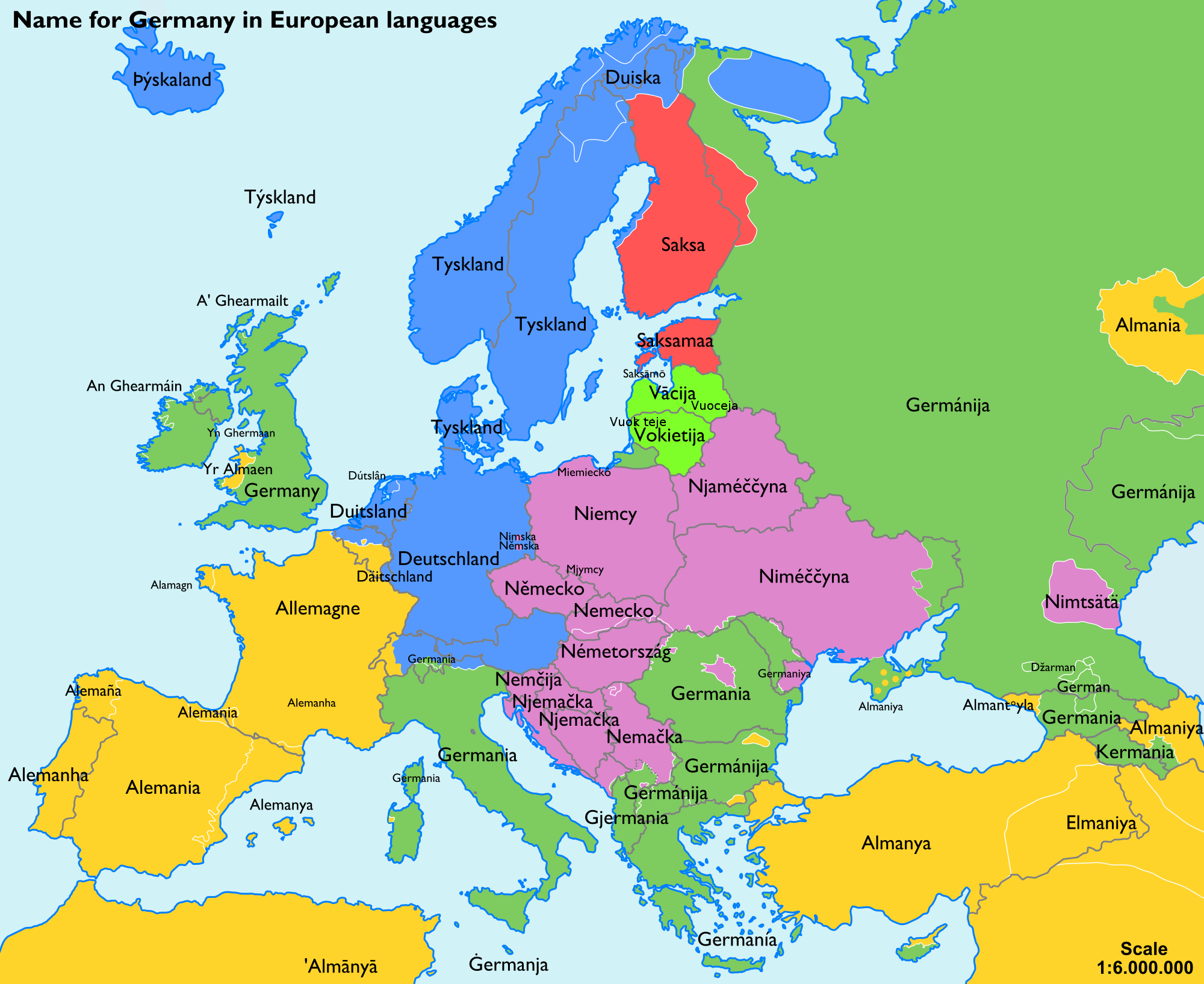
... and countries, [Germany] (http://upload.wikimedia.org/wikipedia/commons/thumb/4/44/Germany_Name_European_Languages.svg/2000px-Germany_Name_European_Languages.svg.png) being the most commonly asked about:
/r/AskHistorians FAQ: Why do countries have different names in other languages?
/r/Linguistics FAQ: Why are our names for countries so different from what the people call their own country?
an old one with more examples How did countries translate the names of other countries?