That's actually a fascinating question you've touched on, and at least in the West, it is historically linked to the Renaissance Era where we witness something known as the invention of the artist as a celebrity, or the "cult of fame".
In the centuries before, years of barbarian incursions, inept governance and weak emperors have wreaked havoc upon the Roman Empire. Armed conflicts have become a fact of life between the Huns, Vandals, Merovinginans, Franks, Goths, etc. Soon it will fall, but the Christian faith will survive, assimilating itself within the cultures of the migrating peoples, most prominently within their culture’s art. For example, in Hiberno-Saxon art religious icons like crucifixion plaques or the famous Bell of the Shrine of Saint Patrick mixed the twists and winding of abstract bands that the Celtics brought with them with the religious iconography of copious crosses, of Jesus being crucified, and so on. So here we see that Christian imagery has successfully survived the tumults of the period now know as the Migration Period. While powerful warlords were amassing armies, Christian missionaries were establishing monasteries and sponsoring artworks of Christian content, like the Book of Durrows or the Lindifarne Gospels. However, many of these great works were penned anonymously, combined with the obvious intention of monasteries to separate religious life from the outside world, and there is little chance for any given artist or piece of work, no matter how astonishing it is, to gain much notoriety at all beyond a local scale, much less command values on the scale of millions of dollars like you were suggesting. There is some sponsorship, but on a smaller scale, unless you are talking about "works of art" like Gothic Cathedrals, which really are more like civil projects then anything else.
However, this all changed drastically during the beginnings of the Renaissance. In here we see a rise of capitalism as a result of the several centuries before of re-urbanization of secular cities which shift the center of intellectual and religious life from the monastaries to growing population centers. The Church or the Head of State no longer is the sole patron of the arts. The growing power of great princes and their powerful families in parallel to the massive influx of wealth as a result of the previous years of war with the east and the exiles of Constantinople we see glut into the Italian city states and elsewhere creates a new class of men. Men who were not recognized for their wealth nor the nobility of their lineage, but their awe-inspiring talents.
You see, money and art in the Renaissance went hand in hand. Artists needed wealthy patrons to fund their endeavors while patrons obviously needed large amounts of money to fund their commissioned artworks. For example, the commission that the Florentine father announced to design and construct the Dome of the Florence Cathedral was a cool 200 florins, with a salary of 36 florins a year, a rate that later rose to nearly 100 florins a year. A florin was worth anywhere from 6 to 14 times the rate of an entire day's wage. You see how art could quickly get expensive.
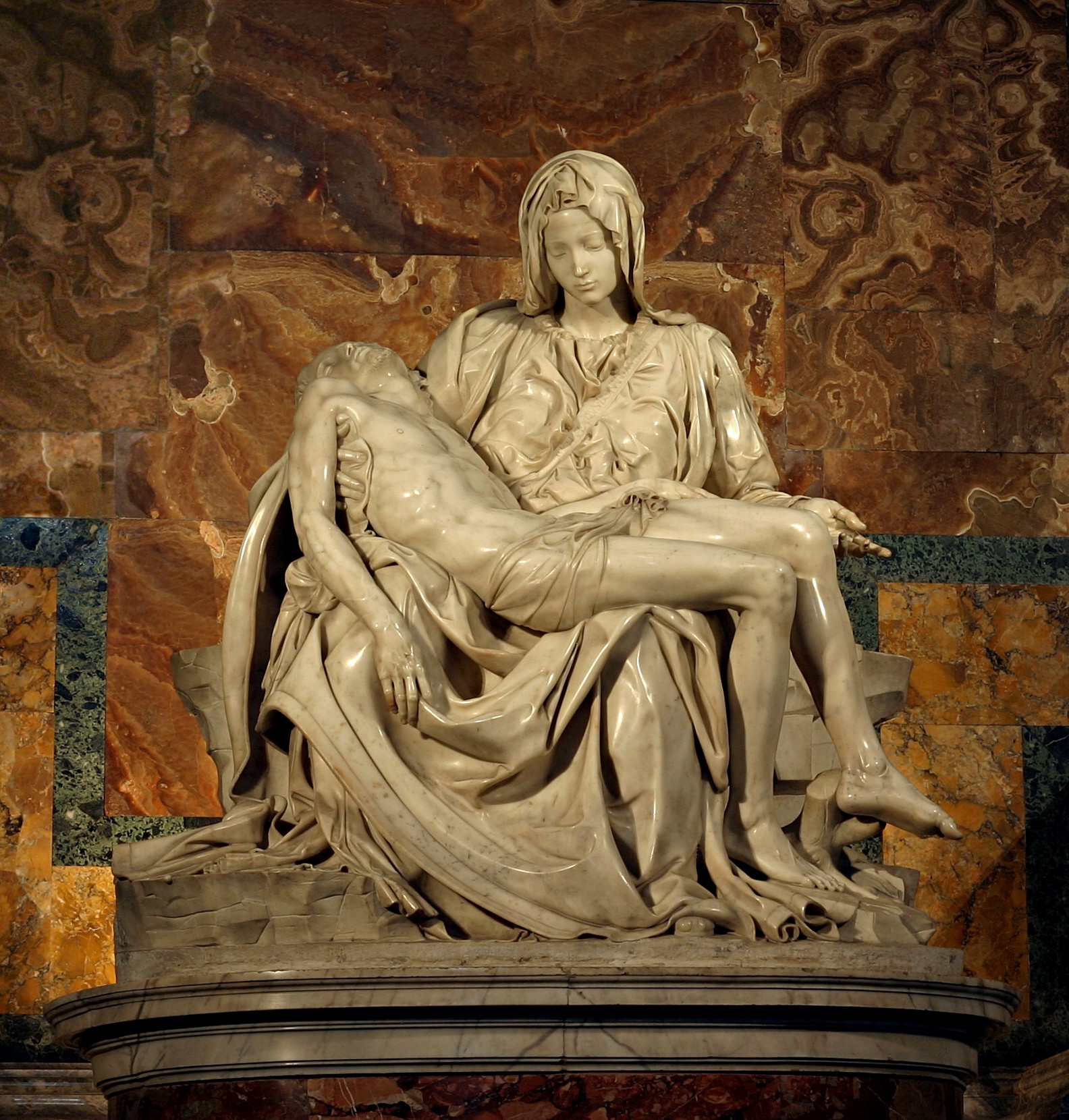
But that in terms of how we value art is nothing compared to the "cult of fame" that these Renaissance artists would establish. Leonardo Da Vinci, Michelangelo, Raphael, you still recognize these names today I bet. That is all a result of the almost literal invention of the artist as a celebrity. As the these artists created masterpieces and their eager patrons showcased these artists works as a demonstration of their own wealth and influence, the reputation of these artists grew, egged on by those same patrons who would see the value in their own works they owned rise, as well as the contemporaries of the artists themselves who published many accounts of the artists we know today. For example, Michelangelo had two biographies published of him-- while he was still alive. That's not to discount their awe-inspiring talents that these artists exhibited. My art history teacher fell to his knees and cried when he first saw Michelangelo's Pieta.. He was one of the lucky few to see the sculpture in person before a lunatic with a hammer attacked it and the Vatican put the piece behind bulletproof glass. You know the Mona Lisa to be possibly the most famous lone artwork in the entire world.
This, along with the standardization of the quality of art thanks to the Guild system, would lead to the establishment of artists, no longer anonymous monks scrawling calligraphy in a monastery, but a select few as internationally famous celebrities. This along with the rise of mercantilism that fueled the Renaissance contributed in no small part to the monetization of art and the state where pieces of artwork by celebrities could reach tremendous values.
Sorry if you think this is too late or too partial, but I hoped I answered a small part of how art could reach the status you're imagining.
sources
Tom Mueller, Brunelleschi's Dome http://ngm.nationalgeographic.com/2014/02/il-duomo/mueller-text
Richard G. Tansey, Fred S. Kleiner, Gardener's Art Through The Ages, Tenth Edition Renaissance and Modern Art