Coins seem so ubiquitous and global.
Japanese koban and oban were oval, rather than round.
During the English Civil War siege coinage produced in Newark were lozenge shaped.
ECW siege coinage: http://www.britishmuseum.org/explore/highlights/highlight_objects/cm/s/silver_siege_money_of_the_engl.aspx
Japanese 10 ryo Oban: http://www.britishmuseum.org/explore/highlights/highlight_objects/cm/g/gold_10_ry%C5%8D_%C5%8Dban.aspx
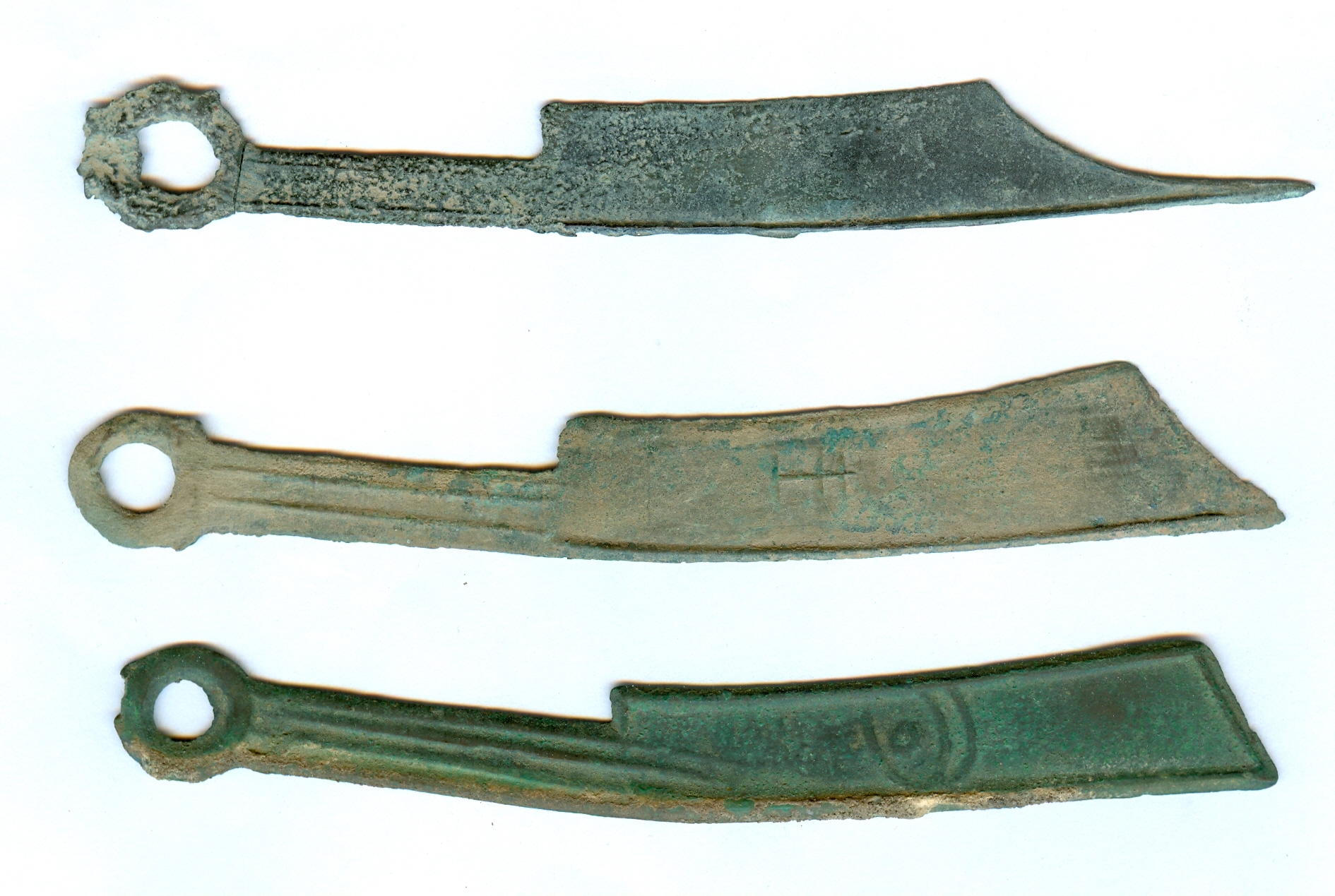
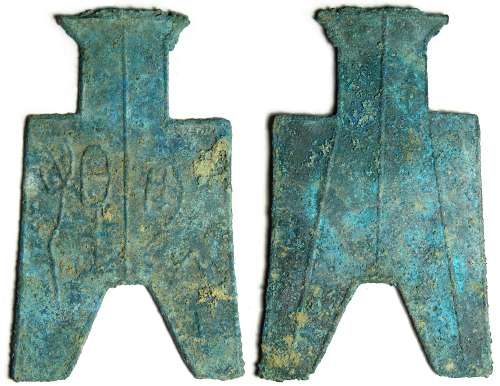
From the Warring State period (770-221b.c.) to the Han Dynasty (206b.c.-220a.d.) knife and spade shaped had circulated among the Chinese masses. How this form of currency started circulating is uncertain. These utensils replaced shells as the main form of currency.
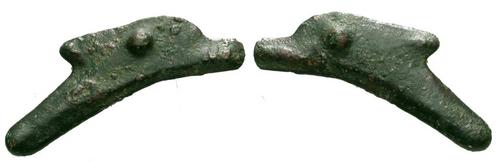
Also made were dolphin shaped coins from Olbia on the Black Sea. They were made by ancient Greeks out of bronze from 600b.c. to 400b.c.
Lastly where square coins minted in the area that was the Mauryan Dynasty (India) after its fall in 200b.c.