When looking through the roster of U.S. Presidents I noticed that Abraham Lincoln was the first President elected with facial hair in 1861. Excluding Andrew Johnson and William McKinley every President (10 of them) up until William Howard Taft in 1909 had some form of facial hair. What caused beards and mustaches to fall from favor?
I looked through the links in the other comment and I wasn't totally satisfied with their depth. They seem to focus on when facial hair fell out of fashion in general with the average American, mostly focusing on the usual causes of World War I and Gillette company. So, I'll supply the alternative explanation of why they had beards and a little more explanation on why they stopped having beards.
Most of this explanation is from in Matthew Algeo's The President is a Sick Man, with examples supplied by myself, as I can find them. It seems to be a more in-depth explanation that others I've come across. In it, he notes, as you have that excepting Johnson and McKinley, every president from Lincoln to Teddy Roosevelt had facial hair. The style was taken from British aristocrats who had mostly stopped shaving by 1850. Beards had been regarded as healthy and were believed to prevent bronchitis and throat diseases. During the Civil War, most soldiers were unable to shave, and grew beards, which they maintained after the war.
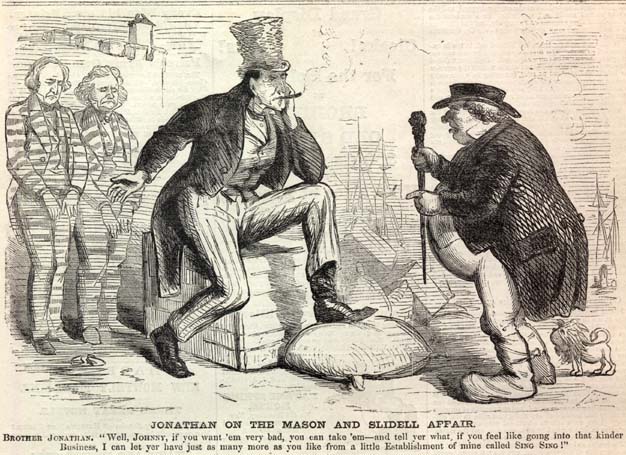
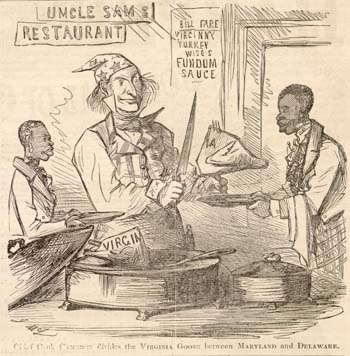
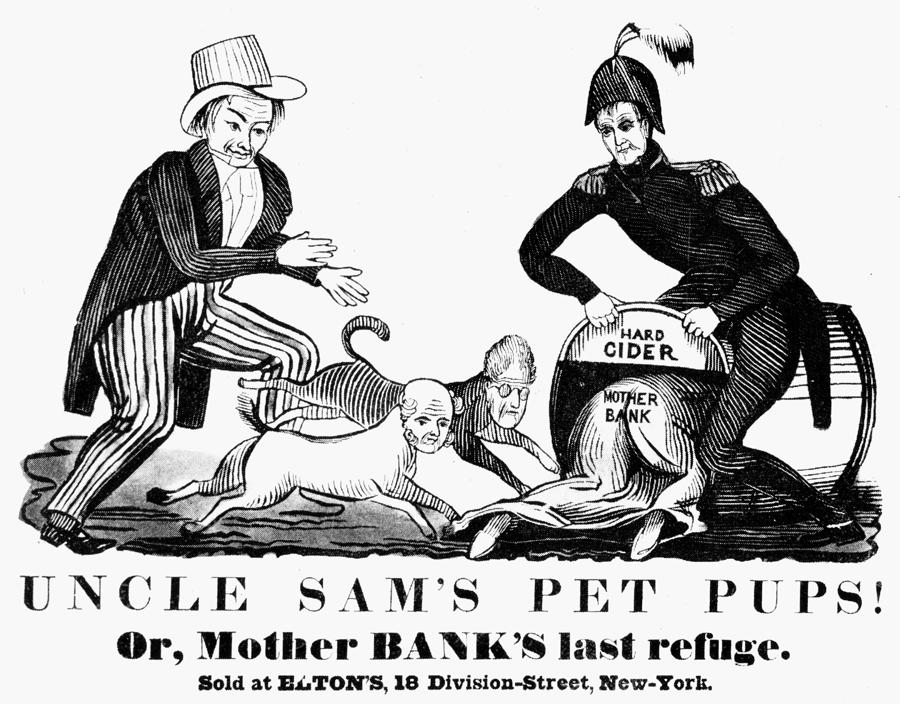
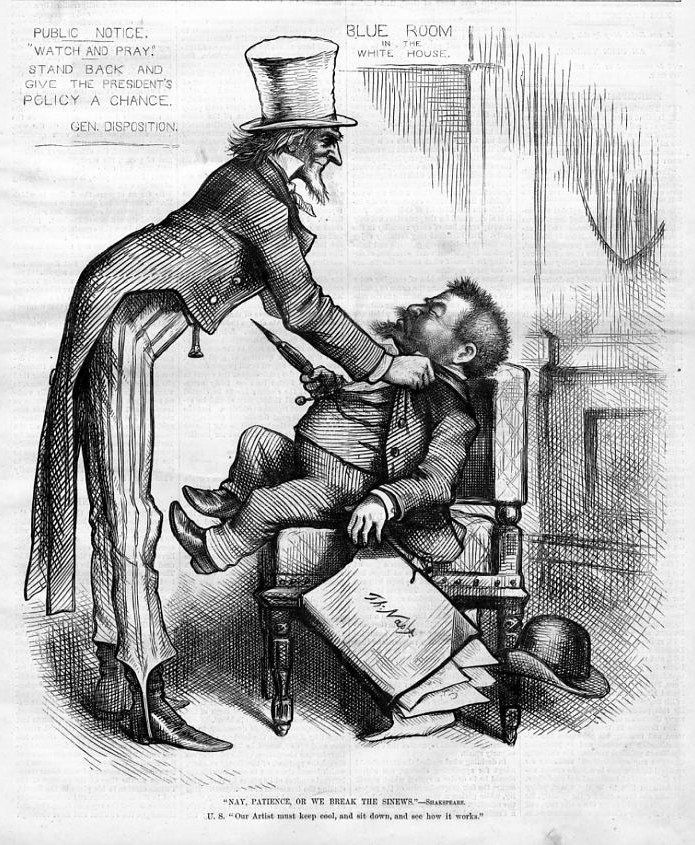
By 1870, beards were so common that even Uncle Sam, who had previously been depicted as a clean shaven: example 1 (this one is actually Brother Jonathan, an earlier personification of New England in particular, from whom Uncle Sam took some fashion cues), example 2, example 3, example 4, to make up for my example 1 mistake.
Was now depicted with the beard we know him with today: example 1, example 2, example 3
Facial hair was popular with the younger generation during the 1870s as well. Every graduate of Harvard's class of 1870 had facial hair and Yale's 1870 yearbook even broke down the class by type of facial hair, playfully noting the unshaven members of the class as things like "hopeful scrags" and "fuzzy in spots". Their 1911 book about the class actually shows that several formerly clean-shaven members later grew facial hair.
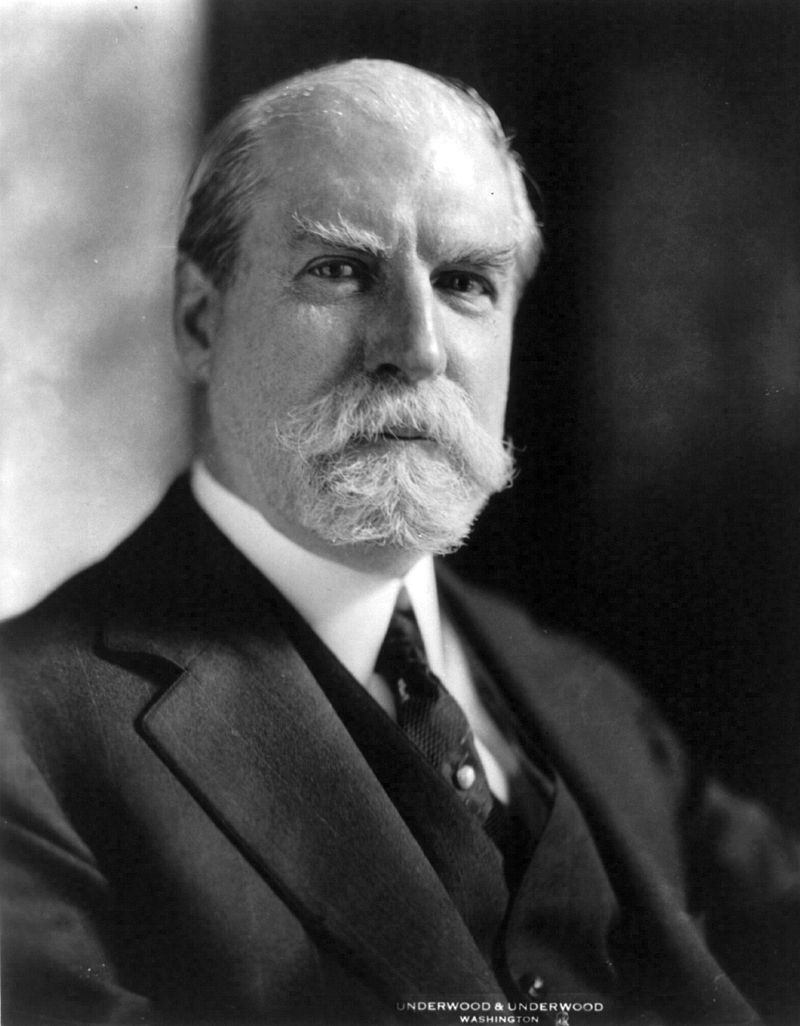
However, facial hair quickly fell out of fashion, as others have noted, during WWI and with the introduction of the safety razor in 1895. Suddenly, beards were seen as unhealthy, as they could harbor lice and other microbes. No president has sported facial hair for an extended period of time since Taft, although Truman's short-lived beard he grew while on vacation made the news in 1948. Two presidential hopefuls, Hughes in 1916 and Dewey in the 1940s would have been exceptions had they won.
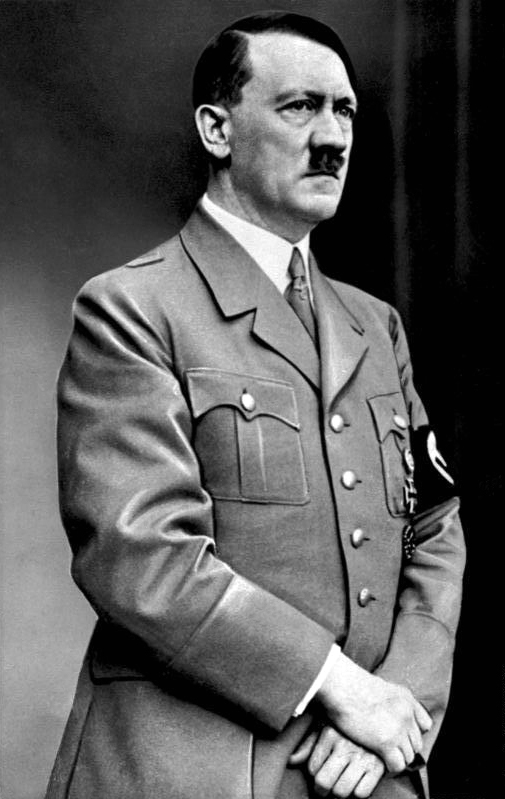
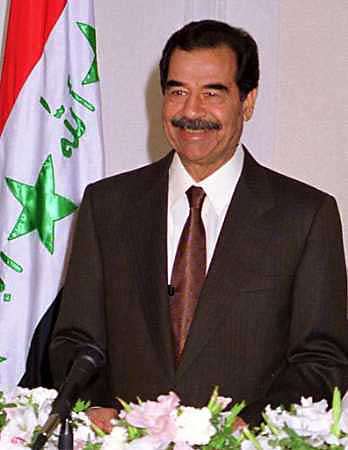
According to Allan Peterkin, author of One Thousand Beards, the final nail in the facial hair coffin for western politicians came after WWI with the rise of Lenin and Trotsky, followers of Marx and Engels. When facial hair began to be tied to dictators, communists, and revolutionaries, American politicians distanced themselves by remaining clean shaven. Facial hair on more recent American enemies, probably plays a similar role in current-day American political figures staying clean-shaven
I hope that helps some beyond the usual answers.
edit: I accidentally included a picture of Brother Jonathan rather than Uncle Sam.
Here are a few similar questions to help get you started:
Why have there been no American presidents since Teddy Roosevelt that have had facial hair?
When and why did it become taboo for American politicians to have facial hair?
When and why did it become the norm for men to be clean shaven?
Hope this helps! As always, further discussion and new answers are welcome and appreciated.
As a footnote, Lincoln was actually not elected with facial hair. He was inaugurated with facial hair.
He grew the beard in the last weeks of his campaign based on the suggestion of a young girl, Grace Bedell, who wrote him a letter that said, among other things:
Have you any little girls about as large as I am if so give them my love and tell her to write to me if you cannot answer this letter. I have yet got four brothers and part of them will vote for you any way and if you let your whiskers grow I will try and get the rest of them to vote for you you would look a great deal better for your face is so thin. All the ladies like whiskers and they would tease their husbands to vote for you and then you would be President.
I've had a feeling that the beard was a way of flagging abolitionist sympathies, since in the 1830s and 1840s, beards were linked with the same kind of radicals who were protesting the institution of slavery in gatherings like the Chardon Street Convention, which Emerson described as attracting "Madmen, madwomen, men with beards, Dunkers, Muggletonians, Come-outers, Groaners, Agrarians, Seventh-day-Baptists, Quakers, Abolitionists, Calvinists, Unitarians, and Philosophers."
(A decade prior, in the same region, abolitionist Joseph Palmer famously spent a year in jail for wearing a beard. And, of course, John Brown's beard before his execution was mighty impressive, too. )
However, other commenters here have pointed out that there were plenty of beards in the Confederacy, too, including Robert E. Lee's and Stonewall Jackson's.