Today:
You know the drill: this is the thread for all your history-related outpourings that are not necessarily questions. Minor questions that you feel don't need or merit their own threads are welcome too. Discovered a great new book, documentary, article or blog? Has your Ph.D. application been successful? Have you made an archaeological discovery in your back yard? Did you find an anecdote about the Doge of Venice telling a joke to Michel Foucault? Tell us all about it.
As usual, moderation in this thread will be relatively non-existent -- jokes, anecdotes and light-hearted banter are welcome.
So, a few weeks ago the phrase "You're darn tootin'!" started bouncing around in my head. I don't remember exactly where I heard it (I think it was because I rewatched Fargo, and the William H. Macy character says it at one point), but I couldn't stop thinking about it. It's such a weird and delightful phrase, with something so incredibly heartland America about it. It kept bouncing around in there, and I decided to see if I could find out anything about the history of this phrase. The etymology seems simple enough, I figured that almost certainly the phrase comes from expressions like rootin'-tootin' and ultimately from tooting in the sense of blowing into an instrument ("tooting a horn", and the like). But how old was it? And where did it come from.
Naturally, the first thing I did is the first thing you should always do in cases like this, check the Oxford English Dictionary and see what they have to say. And, indeed, they have an entry for tooting in this sense (that link is paywalled, but here's a screenshot of the entry). Indeed, they confirm that the etymology comes from the verb toot, in the sense of blowing a horn, and that it is related to rooting-tooting, and the earliest use they could find was from 1932 (rootin'-tootin' seems to be from around the turn of the century).
However, if you do even the most casual bit of more research and look up the phrase on wikipedia, you find that it is the title of a 1928 Laurel and Hardy silent movie, which, as luck would have it, is available on YouTube.
(side-note: this movie brings up a question I'm curious about. At the end of the film, there's a whole lot of shin-kicking going on between the male actors. It strikes me that you never see that anymore: today, if men are to kick each other in a comedic manner, they kick each other in the groin, not the shins. I'm assuming Laurel and Hardy couldn't do that, but I'm wondering when did it change? When was The Great Shin-Testicle Shift in American cinema? Surely there's some poor film student out there who've written a paper called The History of Genital Violence in American Slapstick Comedy? Anyway, back to darn tootin')
This got me curious: clearly the OED was wrong by at least four years, but from the movie itself, it seems like the phrase is even older than that. The title is sort-of a pun, after all (with Laurel and Hardy being horn and clarinet players), which seems to imply that at least some portion of their audience were already aware of the phrase "You're darn tootin'".
At this point, there was clearly only one thing I could do: I had to find the first usage of the phrase "you're darn tooting" in the English language. The universe had dropped this task into my lap, and I had to finish it. If I didn't find it out, then who would? Who else but me would do this stupid research! The world would never know the answer!
Thankfully, I'm fairly convinced that I did find the answer.
After some laborious searching through Google Books, I finally came across a reference to the phrase written in 1917 in something called "Dialect Notes (Vol. IV)", published by the American Dialect Society. After some more searching I found that the book was available digitized on archive.org. There, on page 273, I found my golden nugget:
darn-tootin' adj. Correct, right. "You're darn-tootin about that thing."
And there you have it, ladies and gentlemen. As far as I can tell, the first time anybody in history decided to write down the phrase "You're darn-tootin'" in a published text.
Interestingly, we can even place the phrase geographically: the section this entry appears in is called "Word-list from Nebraska", with Nebraskan slang words submitted by the students of the University of Nebraska. Would you like to hear some other early 20th century Nebraskan slang? What am I saying, of course you would! Here's a selection, along with their definitions:
beat it. To depart
Belgiums. Belgians.
blixen-bus. Automobile
blurb. Exact meaning unknown. Term of disparagement.
bumswizzled. Used in "I'll be bumswizzled!" [that's all the definition there is, but presumably means "surprised"]
cackleberries. Eggs.
discumgalligumfricated. [don't even ask]
eellogo-fuscion-hipoppo-kunurious. Term of eulogy. Extra good or fine. [I think some clever student is having a bit of fun with the American Dialect Society for this one]
glaked. Heedless, careless; as a glaked child.
goozlums. Cornstarch pudding.
hornswaggle. To swindle, cheat or trick.
It. Idiot. "What an It that man is." "He's a perfect It." In writing or print, usually capitalized.
kale. Money
like fun. Ironical negative. "You tried to take her to the dance, didn't you!" "Like fun, I did!"
moreder. Occasional double comparative of more. "I like John moreder than I like his younger brother"
mullet-head. A know-nothing. Term of disparagement. [this word is far older than mullet used in the sense of the hairstyle]
Pop goes the weasel. Expression employed when money is expended in small quantities here and there.
putchity. Variant of pudgiky, putchy [neither of which appears in the word-list]
scroobly. Mussy, untidy.
skeewinkle. Twisted.
snollygoster. Exact meaning unknown, but plainly a term of disparagement.
thee-ry. Common for theory. "O, he has thee-ries about things!"
worseter. Worse. "No one could have done it worseter"
And I'm gonna stop there, because there's just too many good ones in there. The whole book is a treat, in fact, I spent several hours digitally leafing through it. If anybody is curious what to get me for my birthday, if you can find a copy of Volume IV of Dialect Notes, published in 1917 by The American Dialect Society, I'll be the happiest little camper ever.
I find myself becoming more and more intrigued by what (at least by Dutch histiorian Geert mak) is called the 'silent revolution' of approximately the second half of the 20th century. What Mak means by this, is that in that period the social fabric of the Netherlands changed completely. Not only were many crafts lost due to technological developments, but the scale of everything (ranging from the size of company's to one's knowledge of the world) changed dramatically as well. I know I am very bad at explaining this in English, but I think I am just fascinated by the hugedifferences between the world I know and te one my grandfather knew and the fact (?) that this is the biggest difference between the worlds of two generations ever.
What I would like to know, is if this is correct and whether there is some good reading to do on this topic, preferrably in English and focussed on (Western) Europe instead of on The Netherlands.
As a side note: my interest in this is probably at least in part caused by the fact that I race on a ship on which my great grandfather used to be a freighter. The ship is now 102 years old and every year competes in what we Frisians call 'skûtsjesilen'. On the odd chance anybody here knows what that is, I would also like to know whether anything like it is done anywhere else in the world. So, is there any place on earth where antique ships are used for high elvel racing?
I'm looking for two book recommendations. I'm interested in a comprehensive book on World War I and a book (or several if that's the better option) on the history of Italy from the fall of the Roman Empire to about 1900. I'm not too well versed in European history, so entry-level, broad books would be fantastic.
I posted this about five months ago as a thread, to no avail. Hoping someone will see it and help me fix my knowledge gap:
"I am looking for book recommendations on the Mexican American War. I would particularly like something focused on the political and military story, that includes a traditional battle-by-battle narrative of the war.
I realized that I have very little understanding of what went on, with the exception of the anecdotes one picks up while reading about the previous service of the Regular Army officers of the Civil War.
I consulted the /r/askhistorians Book List, and (in an illustrative parallel to academic syllabi) found that it skips over the Mexican American war.
Any help would be appreciated. Thanks in advance!"
I haven't been able to share this, but I finally got my hands on a copy of:
The Tanks: The history of the royal tank regiment and its predecessors Heavy branch machine gun corps tank corps & Royal Tank Corps 1914-1945. By Captain B.H. Liddell Hart. Vol. I and II.
Super expensive set, $300, my family pooled together and gave it to me for christmas. Been chugging through it and its fairly interesting, its definitely british writing, but good.
What is the modern greek identity?
Are they the children of the Romans? Or the children of the golden age of athens?
I've just created a new sub for learning Gaulish! /r/gaulish is the sub. I've just created it, so not going to lie it sucks right now, but if some historians and historically-minded people want to join, and if some people historians want to be mods of the sub, that would be greatly appreciated! Feel free to ask more about the sub.
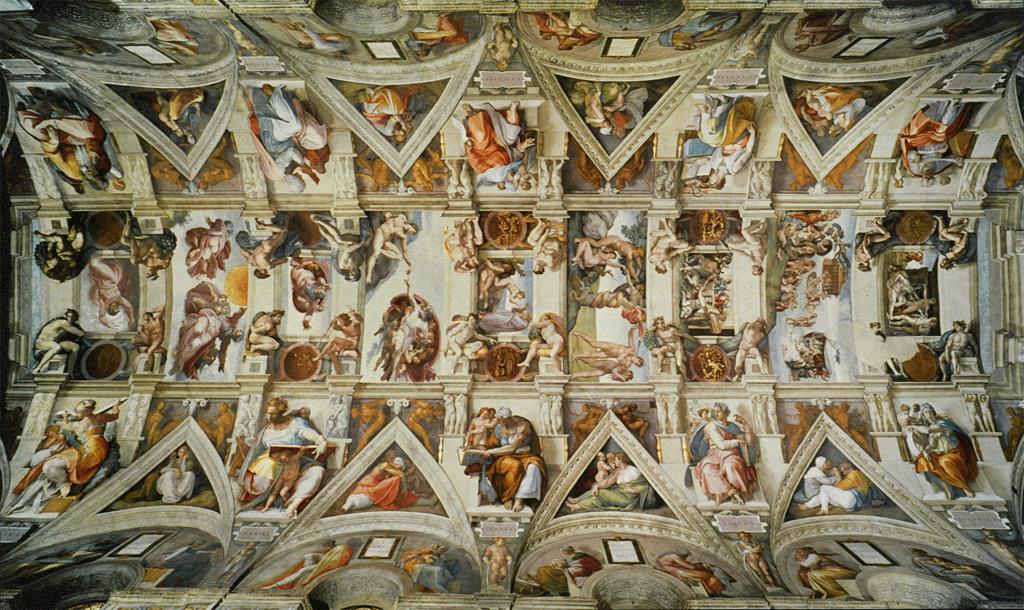
So I wanted to talk a bit about a common myth that's rather pervasive in the public mind concerning the Creation of Adam. For those who don't know, the Creation of Adam is one of 9 panels running along the center line of the ceiling fresco of the Sistine Chapel. These 9 panels detail the story of Genesis, running from God separating the Light from the Darkness to the Drunkeness of Noah. The Creation of Adam is by far the most famous of the panels.
Now, the myth is that Michelangelo intended to paint the cross-section of a brain using God's Cloak We actually know where this theory got started. A Dr. Frank Meshburger, who was a gynecologist at Saint John's Medical Center in 1990, published his theory that Michelangelo painted a brain in such a way to the New York Times, who in typical tabloid fashion, published it with all of the authority and careful art analysis that it was due, that is to say, none at all. I don't particularly know how well the theory caught on, but twenty years later, two neuroscientists, Ian Suk and Rafael Tamargo were caught purporting this theory unironically in the scientific journel Nuerosurgery, which makes me think that this theory actually caught traction, which makes me sad. What's even worse is that they intended to advance this theory by saying that the panel of God separating the Light from Darkness was actually an anatomically correct illustration of the human spinal cord and brain stem. If you've noticed anything missing, it's the total lack of the wisdom of any art historians on the subject. At all.
Now, I've got a whole laundry list of issues with this myth, never mind the credentials of its originator.
First and foremost, the majority of the images you see comparing God's cloak to the cross-section of the human brain have been doctored to appear more convincing, or rely on vaguely setting the two images side by side in the hopes that you won't look too closely. Note how God's feet disappear from the right hand side of the superimposed brain. If this was /r/badhistory I would have saved the most damning evidence for last, but I thought it more pertinent to reverse things here in a more scholarly fashion. I think this is where the vast majority of art historians balk on the subject. The Sistine Chapel Ceiling is massive with dozens of figures all being painted in pain-staking fashion. That one would have to doctor the original painting just to make the comparison more appealing to a widespread audience when you've got literally hundreds of different shapes throughout the fresco is pretty damning.
Another common point that is raised is that since Michelangelo attended dissections of the human body, and therefore would be familiar the anatomy of the brain. Too familiar, in fact, to have accidentally painted something that a few doctors hundreds of years later considered to look like a brain. Is this making any sense? It shouldn't. It is true that dissections were a common way for artists to refine their craft and strive for a more lifelike portrayal of the human figure. That said, the majority of artists were also largely confined to the muscular-skeletal portion of the body-- the most relevant portions to the art of sculpting and painting, obviously. The organs of the human body and the brain would have been considered to be secondary importance to detailed study of the muscles and bones.
One caveat though-- there is one well known artist who we've known to take detailed scientific drawings of even the human brain, among many other things. Unfortunately this same man is often confused to be the archetypal Renaissance man when he was anything but-- Leonardo Da Vinci, who we have to be extremely careful not to generalize for all Renaissance artists. Leonardo is special. He is scattered, nimble in his forays and with an unquenchable curiosity. He believed that reality in an absolute sense is inaccessible that that we can only know it through its changing images, and with that end in mind, deigned to discover the flux and processes of all of nature. Needless to say, Michelangelo is not Leonardo. While Leonardo did everything seemingly effortlessly, Michelangelo was hyper-focused on his sculpting, and as such, there is no evidence to support that he would have been anymore familiar if the insides of the brain as any other average Renaissance artist at the time. Of course, there are further elaborations to explain this away. I've seen assertions that Michelangelo studied Leonardo's notes and were friends, despite him despising Leonardo and being some thirty-years his junior. But again, this isn't /r/badhistory.
Finally, the last major objection I have to this myth is the fact that the art of anatomical diagrams were in their infancy. Yet every single comparison that is shown of Michelangelo's is of an arbitrary, modern, scientifically popular forward-cross section of a human brain. There is no reason at all why Michelangelo should expect at all that this forward-cross section should gain any traction at all. In fact, we have pretty good reason to believe that if Michelangelo had any grasp of what the insides of the human brain looked like, it would have been anything but a forward cross section. Take this collection of images from Andrea Vesalius' De humani corporis fabrica published in 1543, and also note how not a single one of these images are of our modern day's perception of a brain. If the depiction of the forward-cross section wasn't popular or even standard at the time, why in the world would Michelangelo paint that same exact cross section? Now I'm not familiar with the history of science as much as I should be, and I'd be glad if anyone could elaborate or correct me on anything but everything about this myth seem to me just presentism, pareidolia, and a small bit of arrogance applied from the sciences to historical art.
sources
http://www.metmuseum.org/toah/hd/anat/hd_anat.htm
http://www.anatomyatlases.org/HumanAnatomy/IntroExplanatoryNote.shtml
Recently I've discovered my passion for Asian history, particularly Japan in the Meiji Era and the Postwar occupation by the United States. Any recommended books?
Best books on Second World War tanks?