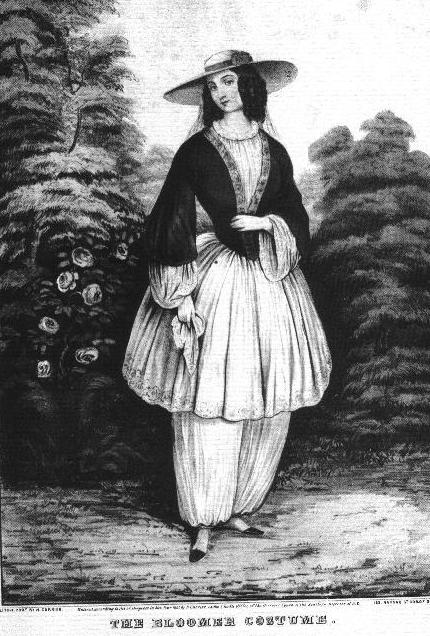
It seems physically more practical.
hi! the fashion historians may want to add more, but fyi, there have been a few discussions about pants/trousers v dresses; check out this recent one, which includes links to a few more
As you'll see in many of the links, there are definitely ancient religious rules about women and men dressing differently. However, like all rules, it has a practical reason that may have been forgotten. In the case of women wearing skirted garments, the change over to pants doesn't occur until the mid 20th century. The big change that allows for this comes in women's sanitary garments. Prior to this point, women's cycles were taken care of by larger rags or later rubber undergarments that would have been noticeable under a tighter fitted garment like trousers.
It, however, wasn't long ago (about a hundred years) that male children stopped wearing skirted garments until around age 5. Changing diapers and bathroom emergencies are much easier to deal with that way. There are many reasons why men then transfer to bifurcated garments, a big part of it being riding a horse astride.
The religious rules are all about cross dressing; no where do they mention skirts or pants, which would make sense as pants weren't worn at that time. So that doesn't explain why it isn't men wearing skirts and women wearing pants.
As /u/colevintage says, there was a sanitation issue. However, if you look at any of the dress reform literature of the 19th century, which advocated for a women's bifurcated garment, the main issue for opponents is the immodesty of such a garment. There is not one mention of sanitation, which also makes sense since menstrual pads were held securely in place with a kind of harness anyway. It was considered very immodest and immoral for a woman to show her legs seperately, even in a voluminous garment like this and bloomers as bifurcated underwear were even considered immoral and too masculine for the first half of the 19th century, since they were clothing each leg separately. Even before pants, when men were wearing long robes or tunics, they were often a short version of the female full length outfit. So it comes down to a cultural tradition of modesty, with long, full skirts that hide a woman's legs from the world, and even trying to skirt the subject of women having legs at all. One argument from dress reformers was that women have two legs, and should therefore wear bifurcated garments instead of pretending that the legs weren't even there.
more info: Dress and Morality, Aileen Ribeiro