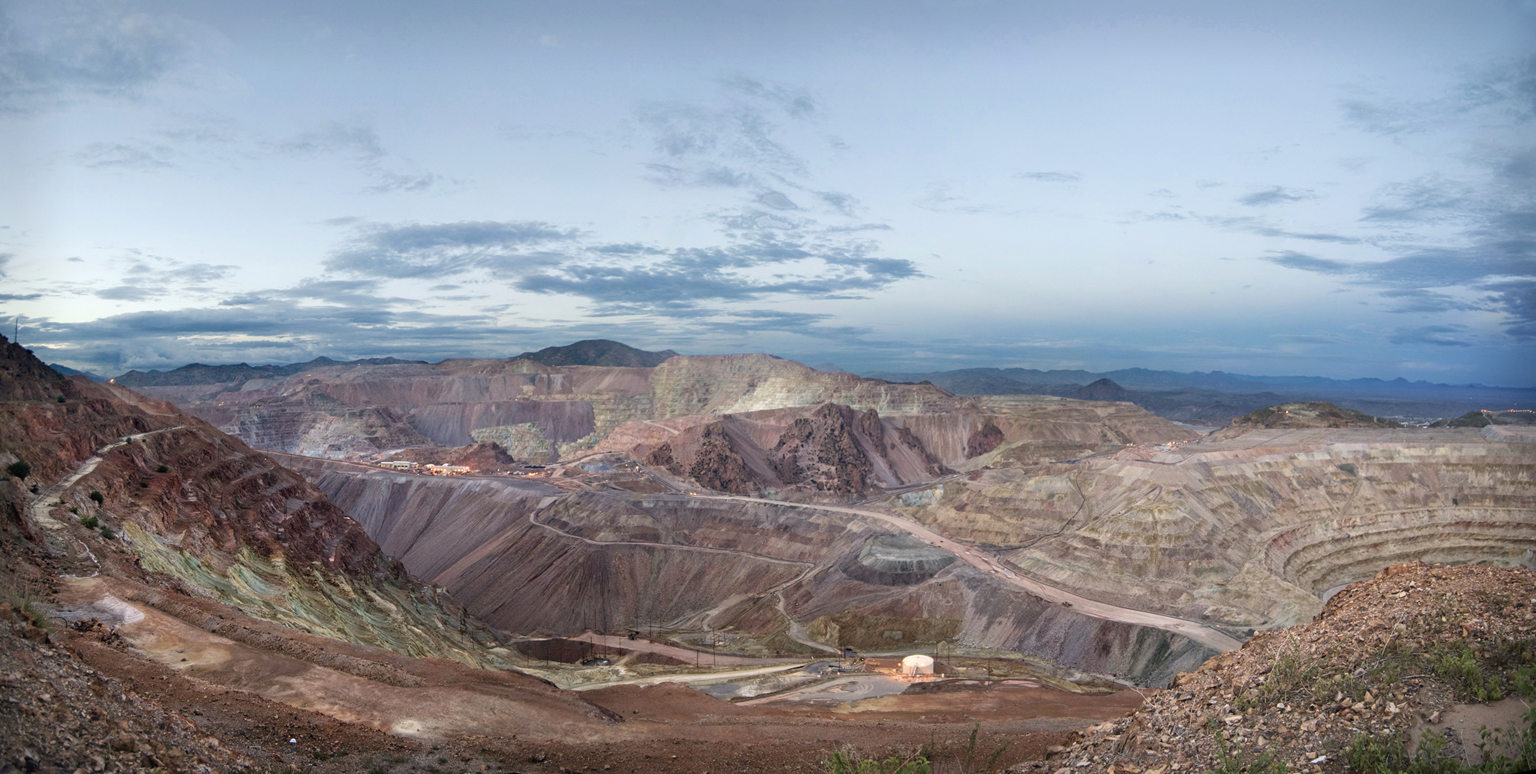
It is correct in that "hilly" regions do provide plenty of minerals for production. Chile is the world's largest producer of copper, mainly reliant upon its high altitude Atacama desert. The next three are China, Peru, and the US. Peru is hilly much like Chile, and China and the US's diverse biomes include such places as Arizona's Morenci copper mine, North America's largest. Copper was used as early as 5000 years ago by folks in Michigan's Northern Peninsula, an almost-mountainous region.
However, "production" agglutinates many real-world factors into one in-game stat. This makes for better game play, but doesn't entirely reflect the reality. For many things, especially for goods most removed from the source materials, it is impractical to produce a usable product in the same place as the material is extracted. A manufacturing center like Detroit is situated on a river at the junction of the Great Lakes and the St. Lawrence seaway, an ideal place to consolidate goods and produce final products. An actual production center up in the copper mines of the Kennesaw Peninsula on Lake Superior would be terribly hard to get all the other materials to.
This question is... well, unanswerable. Could you frame it something like "did [X culture] in the years [Z to Y] find building their cities on hilltops to be preferable?" or similar.