Do you mean the Edo Period, i.e. 1603-1868? This period is more often called the Tokugawa Period or Shogunate. Assuming that's the period in question...
Yes, of course rice was the primary element of the Japanese diet regardless of location / social status. Shoguns and samurai had a strong sense of their peasant roots, and their menu reflected this. They avoided refinement, ceremony, and any foreign (particularly Chinese) influences. Even with a kaiseki - probably as close to a banquent dinner as classical Japanese society came, it was a modest meal - simple ingredients, but carefully and artfully prepared and served as several small courses. Typically this might include a miso or light broth soup, a sashimi course, a grilled fish/eel/meat, a steamed pot dish (futamono or shiizakana), possibly other courses, and a dessert. The meal always incorporated seasonal ingredients. Dishes were typically in elegant porcelain bowls and artfully put together - much as finer Japanese dining is today. The Bento Box is a modern evolution of this concept - many small, carefully prepared items served separately (although, in a Bento Box they come all at once, but still divided).
So to answer your question briefly - no, the food wouldn't be that much different. But the quality would be, and the fact that it would be several courses elegantly served... as opposed to one main dish/pot.
Here's a good article I saved from the LA Times a few years ago that goes into a few more details:
To give you an idea of what Japanese people ate in general, I made a massive wall o text post here.
I talk about what Japanese people grew for food, have lots of pictures to illustrate everything, etc. I love talking about food and agricultural history! Please check it out and then come read this post!
As for a summary, Japanese people in general and aristocrats would have eaten:
Rice, and subsequently all rice derivative products, such as rice wine, rice cake, etc A massive variety of beans
Aristocracy would have had plentiful access to rice, which was interestingly both a dietary staple and cash crop in Japan. Being able to consume a multitude of various things made from rice, such as rice cakes, excellent rice wine, etc, as well as high quality rice would have been a staple of any aristocrat's diet.
For people today, being able to have access to rice is seen as a boring thing, particularly for people in the West who can't imagine having to eat rice every single day. But for the average Japanese farmer historically, being able to eat rice everyday would be a sign of a well-to-do family.
People who languished in poverty (or everybody in hard, lean times where food is hard to come by) would generally eat millet instead of rice.
Even economically okay families would tend to eat millet over rice. This is because rice can be turned into a great variety of other products, least of which is rice wine. Rice itself fetched a solid price at market, as did it's various products, meaning many farmers would prefer to save rice for sale than consume it themselves.
Rice being taxed by the aristocracy and shogunate means that aristocrats would not have needed to worry about such mundane things as weighing whether or not to eat rice in hope of more profit. They would simply eat whatever they wanted, and rice would be at the top of ensuring any meal was worthy of the aristocracy.
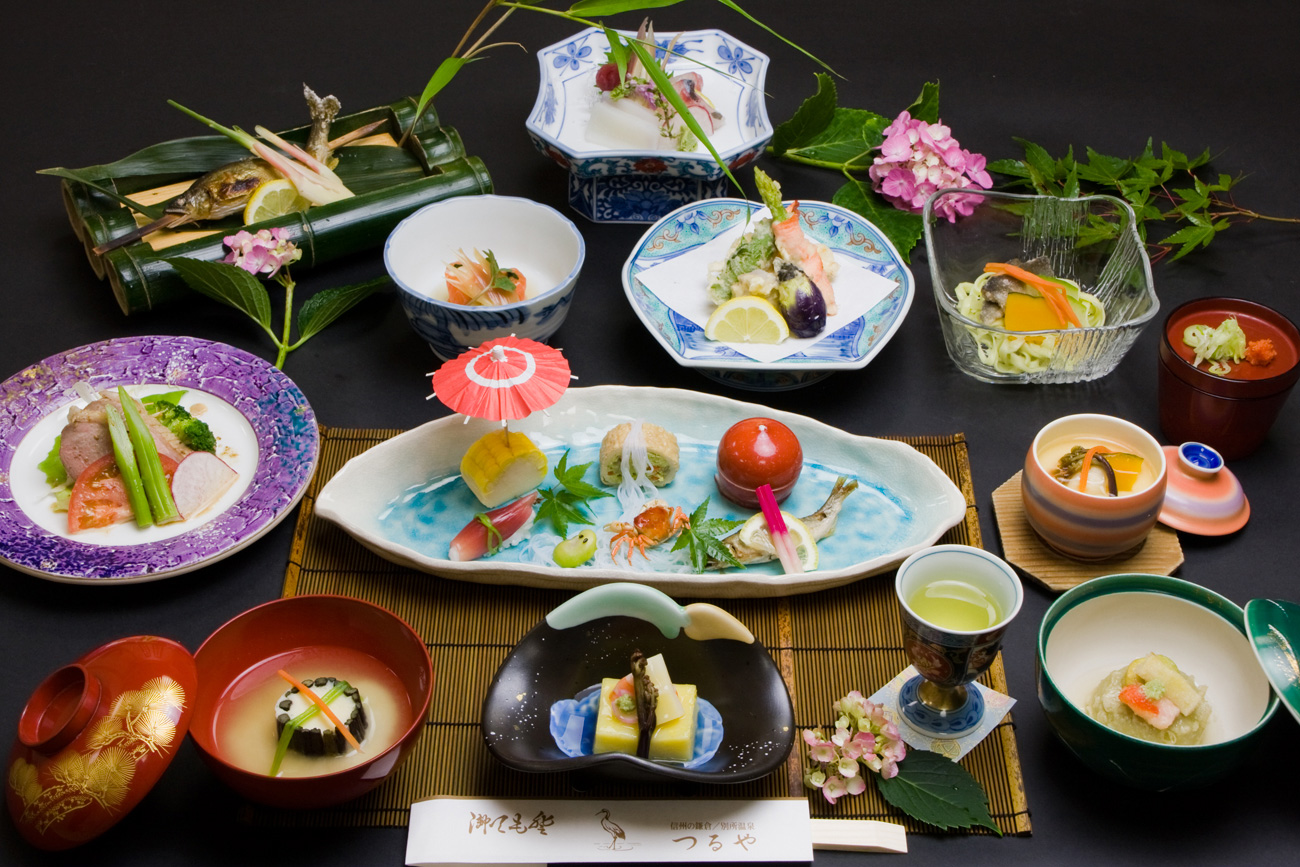
/u/disco_biscuit has already given a pretty solid outline on kaiseki. This word refers to the presentation of food that is supposed to be elegant and refined without being ostentatious. This is an example of what a kaiseki spread would look like. This is partly to due with the austerity that was favored by samurai at the time, which heavily influenced all forms of art, including culinary arts.
Part of the reason that austerity became 'fashionable' or aesthetically pleasing to samurai was because of the heightening influence of Sen no Rikyu, arguably the most famous figure of the Japanese tea ceremony. His teachings on the emphasis of bucolic beauty of Japan's countryside and elegance in simplicity & minimalism, had a massive impact on Edo Period art, disseminated through his school of thought for the tea ceremony.
This style of a simple, yet elegant multi-course meal would have started being served to the upper crust of Japanese society sometime in the mid to late Sengoku Period.
Here is a painting that shows the average 'banquet' of Japanese aristocracy in the Edo Period.
The key features of a Japanese banquet would be that everyone is served their own portions. They would have been served by female attendants carrying personal trays called 膳 or zen. It was an important distinction that everyone was able to be served on their own trays in many areas of Japan, though not all places were like this.
The word for these trays, zen is even part of a Japanese phrase, 膳越し zen goshi, literally meaning 'crossing the zen' and refers to reaching across the table/platter to take food from a side that is not yours. This is a particular part of dining etiquette in much of Asia where many meals were entrees of meals are often shared.
For example, looking at this picture, let's assuming I was sitting with the perspective of the camera. The food on that raised boat in the middle is to be shared between me and the person sitting across from me. Let's say I think the silvery bits of fish that are on the side opposite of me are really tasty looking and I take it casually with my chopsticks. This is considered fairly rude and a violation of table etiquette.
For the aristocratic banquets, being served your own portion in a personal tray is part of the appeal of the banquet.
The next main difference between regular meals of the average population and a aristocrat banquet would be the multi-course meal. You can experience this yourself if you ever stay at a traditional Japanese inn, called a ryokan. They generally serve meals in the same fashion that an Edo aristocrat would have eaten. They serve each dish artistically. Even today, presentation is one of the biggest parts of Japanese culinary art, often times conflated to be at least as important as the taste, texture, and seasonal nature.
Each 'course' is supposed to be a work of art.
What's really interesting is that the ingredients themselves generally aren't anything extravagant or extraordinary.
I'll use modern examples because I don't have examples of historical ones handy. These are mostly to illustrate the form of how high culture Japanese food would have looked like, not literal examples!
For example look at this dish
The main ingredients in this dish are just your average alfonsino, tofu, turnips, and some garnish.
These are all things that your average Japanese family in the Edo period would eat, just in a much simpler form.
Sashimi, or clean cuts of quality fish, would have also been in the standard fare of Japanese people.
The main ingredients are mountain yams or buckwheat, Japanese pumpkin for the sauce, tofu curds for the wrap, fish paste, and pickles. Again, all these things are totally what your average Japanese person would eat for their meals.
Modern kaiseki cuisine draws its inspirations from meals at Buddhist temples and tea ceremonies as well as the banquets of Edo and Heian courts, so these images shouldn't be taken at face value as being something that a Japanese aristocrat would have eaten in the 16th century.
The biggest food difference of Edo period banquets and previous banquets like during the Heian or Kamakura Period would be mushrooms.
Mushroom cultivation only started in it's most primitive form during the early Edo Period. This would have resulted in an uptick in several key edible mushrooms.
Before this, many mushrooms were considered delicacies that required hundreds if not thousands of man hours to locate consistent growing sites, establish collections, and then actually forage and transport said mushrooms.
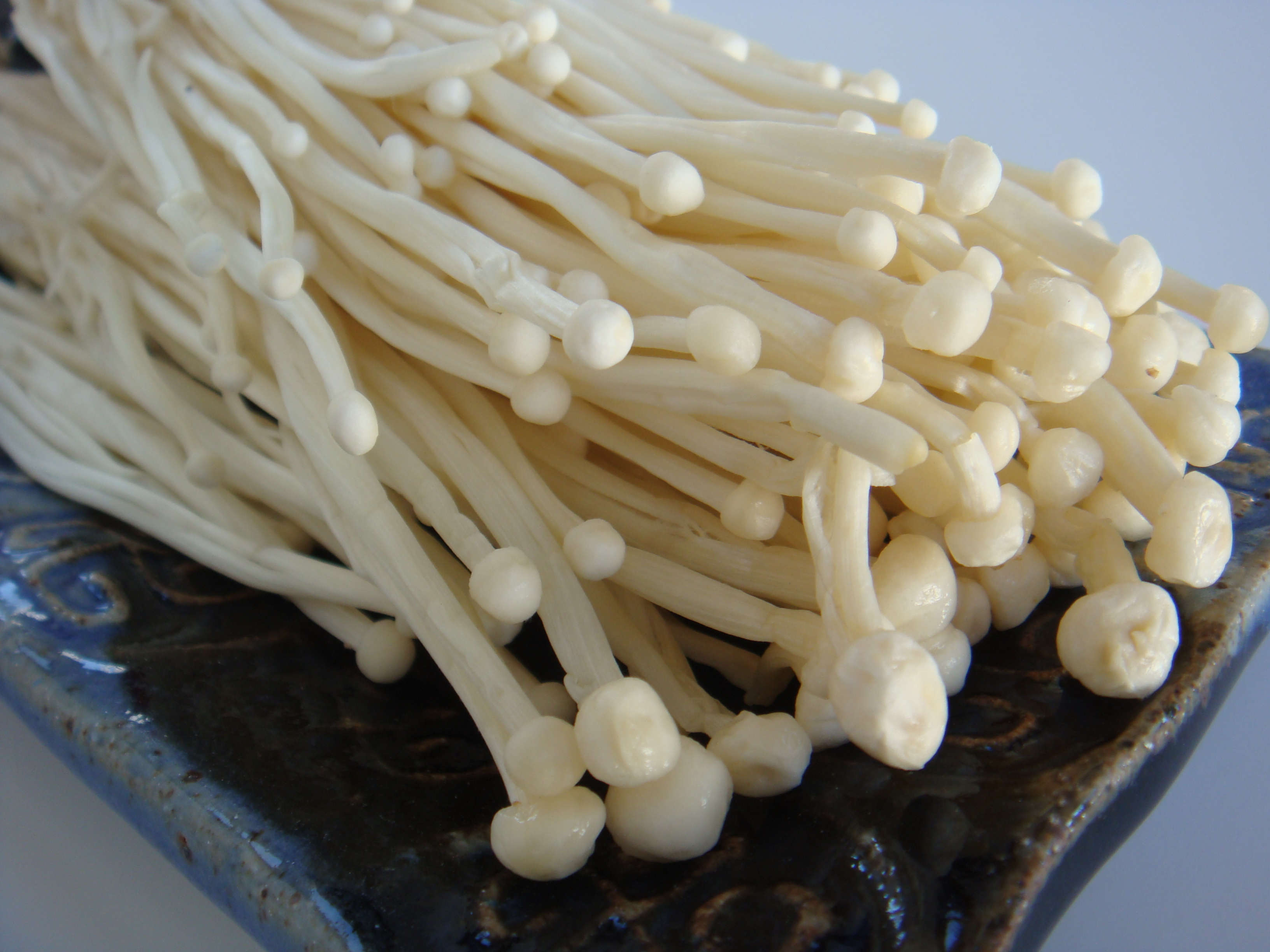
These included the maitake, also known as hen of the woods, the enokitake and of course, the venerable shiitake
But what's funny is that peasants and the average farmer would have also had these mushrooms in their diets (at least occasionally! This has to do with the nature of mushrooms not being consistently cultivated and cultured but foraged. This meant that the average farmer in Japan would have also gotten his fair share of edible mushrooms on the dinner table, though probably not as consistently and not as high quality as the nobility.
Their pickings would also be much slimmer, eating just what they could find.
The last main point of a Edo Period banquet would be the 華魁 oiran, the entertainment.
Oiran were the predecessors of geisha. The key difference is that oiran were incredibly expensive and were explicitly marketed toward the upper class. They were purposefully priced out of the common man's purse strings.
When geisha finally came about, they stirred up massive amounts of controversy because they openly marketed themselves toward the average middle class peoples. It was seen as scandalous and they were predictably decried as simply cheap prostitutes.
While sexual favors were considered standard for the oiran, their main appeal was actually their intelligence, wit in conversation, and ability to entertain outside the bedroom more than inside it. Many would have trained for years to perfect a musical talent, while others would memorize and recite the classics. Other times, they would compose and improvise poetry on the spot for guests. Even their walk was perfected to be provocative but classy.
The oiran even had their own special 'dialect' of Japanese in which they talked. It's often considered 'sultry' but also evokes images of high class for modern Japanese people because of how formal it sounds to the modern Japanese speaker.
What's funny is that I tried to search online for a video that showed an example of the oiran dialect and could not find one! My closest example is from the anime "Spice and Wolf", where one of the main characters, Horo, speaks with a moderate oiran accent. You can watch the clip here, where the start time should be 14:30. Apologies for the unprofessional example but it is one of my favorite shows. Moving on!
Today, oiran, as a profession, are essentially extinct except for the few that preserve the ways of the oiran for historical demonstrations. They no longer entertain clients for pay, as opposed to geisha, of which there are several hundred registered in Kyoto who still practice entertaining in the traditional ways, albeit without the sexual aspect.