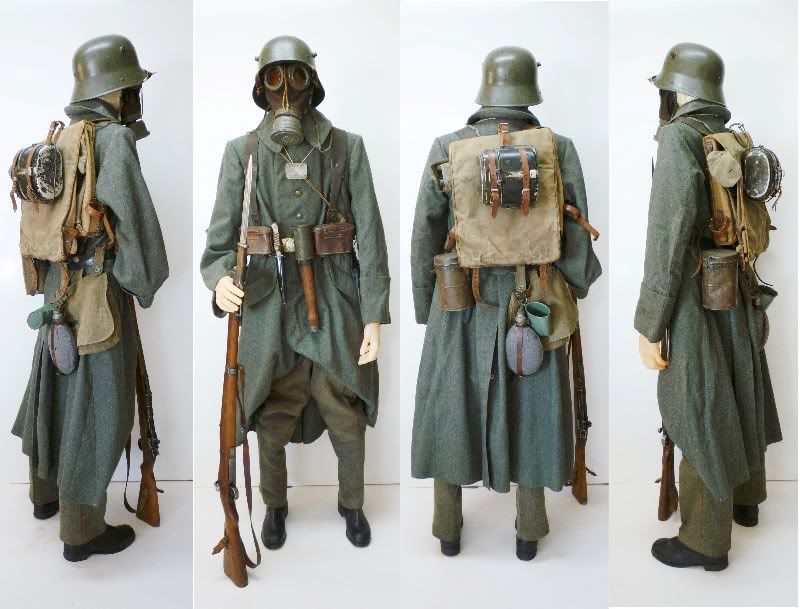
Well, they didn't really.
Its a bit of a misconception based on the fact that the colour was called feldgrau (field grey) and that some war flicks in the 60's and 70's tended to portray the steel-grey colour matching that seen in black and white photos of actual German uniforms.
In fact, feldgrau was a variety of shades of green ranging from something close to olive to something close to grey.
They didn't, this is a very popular myth. In WW1 they had full grey dress but what they were issued in the field was/is called Feldgrau; it would be a grey base color yes but it was a mixture of grey and dark green. Why were they so set on using grey? Because battlefields were incredibly smokey; it's more useful than you might imagine to blend in with a murky, smokey, ash filled backdrop when we're talking about millions upon millions of shells being leveled in high combat areas. When we get to '17 where infantry fighting is occurring more in shell craters and taking a more fluid form of fighting this type of camouflage would be invaluable. Night fighting also occurred throughout the war and most actions would be performed in the darkness such as trench fortifications, patrols, etc. as it provided a cover from snipers -- a darker tone of field uniform helped with that as well.