If this is homework, write a bit about the assignment, give some context and give your initial thoughts. See also the rules regarding homework and/or try /r/HomeworkHelp
See note about homework above.
This is the perspective from an archeological point of view.
California is not only diverse in the suite of environmental zones but also extraordinarily rich in many of them. Primary aboriginal staples included, in order of value: acorns, anadromous fish and seafood, and land mammals. Secondary staples were buckeye, chia (sage seed) and epos root (Perideridea sp.). Various areas of California reflect differing productivity of these and other resources. Corresponding to those environmental zones were cultures that adapted to the availability of resources in many unique ways throughout several thousand years.
Let's take a single environmental zone, say the north coast ranges, and look at the environment and culture. The north coast ranges reach from San Francisco Bay to the Oregon border and from the coast to the interior Sacramento Valley. This was perhaps the most productive environment in California not only because it hosted high numbers the three main staples, but also because of its extraordinary diversity, e.g. Coastlines, estuaries, rivers, redwood forests in a twelve mile deep band on the coast, interior valleys and coastal mountain ranges with very patchy and productive grasslands, oak woodlands and at higher elevations pine and Douglas fir forests.
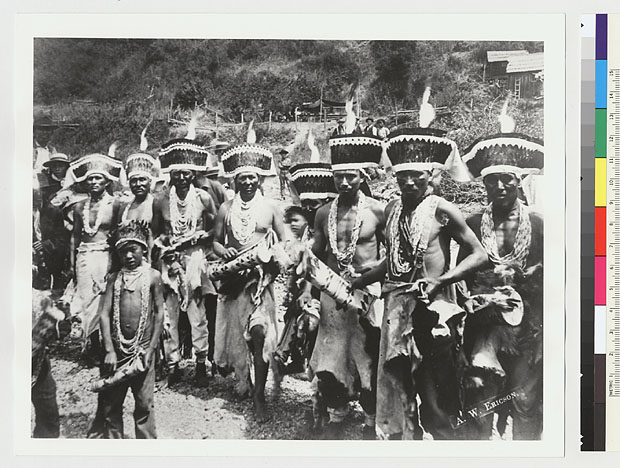
The regional ecology shaped both the aboriginal technologies and the population densities. The North Coast ranges were probably the richest environments and the cultures reflect that. The Yurok, at the mouth and lower Klamath River had virtually unlimited access to sea mammals, littoral shellfish, salmon, deer and elk and acorns (especially tan oak acorns, the most highly prized in CA). The Yurok had high population densities on the coast and along the rivers as did the surrounding tribes.
The Yurok and surrounding tribes were wealthy and shared a complex and rich culture with the evidence of the wealth manifested in linguistic, ritual and material diversity. They were so affluent that they seem to have spent a significant amount of their time collecting wealth items, bickering and litigating disputes.
Looking at other tribes in the North Coast Ranges one finds a number of tribes similar to the Yurok in the north and farther south, the Pomo and a number of other tribes that while using coastal and anadromous resources were more keyed on the upland resources of acorns, manzanita and other berries, grass seeds and upland game mammals. They lack the plank houses of northern tribes but had community "round houses" in which they held a number of rituals. They were an affluent group evidenced by their ornate feather decorated baskets (check this or this out) and their abundant regalia and ritual life. The southern North Coast Ranges tribes had high population density and complex culture, perhaps only slightly less than the northern tribes.
That is just a little snapshot of a single environmental zone and a little about the culture.
If you compare that to Northeast California, you will observe a remarkable contrast. Here in the marginal volcanic uplands adjacent to the arid Great Basin the species diversity and richness is extremely low. The cultures were more similar to the Plateau where subsistence relied primarily on root crops and terrestrial mammals. Take a look at the Modoc, for example, who pale in comparison to the coastal tribes in ecology, economy and virtually all aspects of culture. Population estimates reflect some of the lowest population densities in the State. These were poor people, extremely susceptible to seasonal shortages and had virtually no evidence of affluence or spare time save for some rock art.
So I just focused on resource availability, cultural complexity and affluence. But if you start connecting the dots you will find that there is a high correlation between vegetation zone, geology and culture.
Confessions and disclaimers: as an archaeologist and anthropologist my interests tend toward subsistence systems and I am knowingly susceptible to many aspect of environmental determinism.
See: Martin Baumhoff "Environmental Background", in Handbook of North American Indians, Volume 8, California, Smithsonian Institution, Washington
Alfred Kroeber, Handbook of California Indians, 1928. Bureau of American Ethnology, Bulletin 78, Washington