I just watched Dracula Untold and well, he looks like a oldachool badass.
There has been a question about Vlad the Impaler not long ago which I answered. I'm still reading Ray Porter's the Historical Dracula on the Internet. This answer will be based on my personal knowledge of the subject ( thankfully, my English teacher who made us read Stocker's Dracula was passionate by the subject and I kept good memories of her lessons ) and Ray Porter's work.
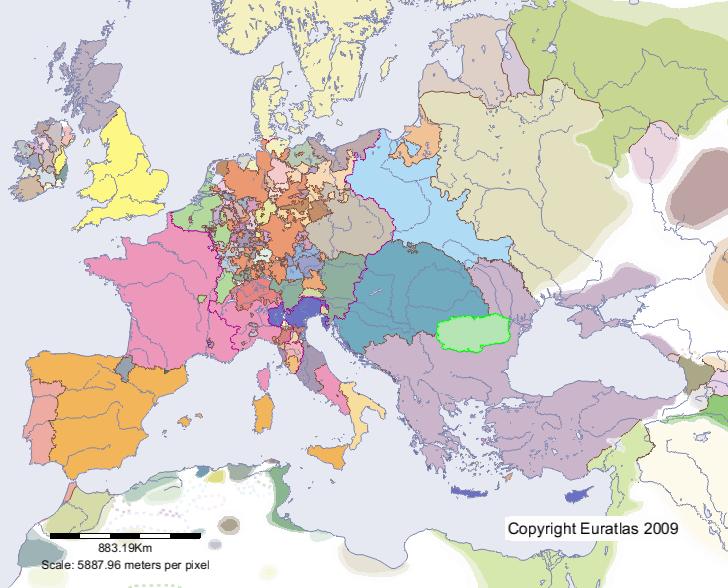
First, if you haven't done it already, I suggest you take a look at a map of Wallachia and its surroundings of period. This one from around 1500 should do as well as this one from the 1400s.
As you can see, Wallachia was a small state stucked between the gigantic Ottoman Empire and Hungary and had to play with mostly these two powers. The Ottomans were on a time of conquests in the Balkans and Hungary was a big wall in Eastern Europe to stop them from advancing more.
The Princes of Wallachia always had to play and deal with their two powerful neighbours in order to keep their land's independance. However, many princes of Wallachia had been officially vassals of Hungary while at the same time paying a tribute to the Ottomans. The Impaler's father, Vlad II Dracul was one of the princes that experienced the fact that Wallachian politics were often linked to the Ottoman's and Hungarian's own politics.
Vlad II tried to remain neutral in the early 1440s but when the Sultan was defeated, Hungary sought revenge against Vlad, deposed him and placed a relative on his throne. Vlad himself sought revenge and allied with the Ottomans in 1443 and when victorious regained his position. The Ottomans wanted to keep Wallachia as an ally and in order to assure Vlad's loyalty asked him to regularly sent some of his people to fight for the Ottomans. Add to that, Vlad II sent two of his own sons as hostages including the future Vlad III ( the Impaler ). Soon after, Hungary launched a campaign to drive the Ottomans out of Europe and with the Pope they asked Vlad II to fulfill his role as a member of the Order of the Dragon ( a Christian order ) to fight against the Muslims. Vlad II tried to find a middle ground, betting on the Sultan's good faith and will to spare his sons' lives even if he did not fight alongside with them.
The Hungarian campaign reached its highest point at Varna with the Christian forces being defeated. The Sultan did kept the Wallachian princes alive but the Hungarian king certainly plotted Vlad II's murder.
In 1447, Vlad II was killed with his eldest son. The Ottomans released their captives and Vlad became Vlad the Third. Barely a year after his accession to the throne, Vlad III was deposed by a Hungarian puppet called Vladislav II. After a while Vlad III exiled himself and finally sought shelter in Hungary. The puppet on the Wallachian throne did not remained under Hungarian's directives for long and became closer to the Ottomans' good graces.
Hungary accepted to once again depose the Wallachian prince and put back Vlad on the throne should he pay allegiance to Hungary. Vlad accepted and while waiting to take back Wallachia, was given lands in Hungary. In 1453, Constantinople fell in Ottomans' hands and Hungary, acting as a Christian kingdom, prepared an invasion of the Balkans which started in 1456. The Hungarian king pushed the Ottomans from Serbia while Vlad invaded Wallachia, killed Vladislav and took back his throne. As the Hungarian monarch died shortly after, Vlad III's position was weak since he had lost all kindness from the Ottomans.
Until 1462, Vlad III remained at the head of Wallachia. But his realm was small and far from being as wealthy as the Ottoman Empire. However, for some 15 years Vlad kept his place while fighting fiercely and very skillfully, earning a terrifying reputation. In 1462, Vlad was defeated was the Ottoman forces and forced to flee in Hungary. The king of Hungary refused to help him and even took him prisoners. The new ruler of Wallachia was named Radu, the younger brother of Vlad. Radu's pro-Ottoman policies upset the Hungarians who were close to put back once more Vlad on the throne. In addition to his cruel reputation in battle, Vlad also liked to torture small animals during his captivity in Hungary and there was an episode where he beheaded or executed an Hungarian officer who broke into Vlad's house while trying to catch a thief.
Vlad was killed in battle in 1476 while trying to get back to power with some allies and loyal men. However these loyal men were few and many abandoned him to face the Ottomans with a small army only. For his nickname of the Impaler ( Tepes ), it is good to note that this was given to him after his death and not during his lifetime. Impaling was one of the method of execution and Vlad's favourite. Dying impaled is a slow and extremely painful death ( at best several hours of agony but it could take days ) and Vlad had methods of making the suffering long so his enemies and/or victims did not die too quickly.
There was an episode where 30,000 men and women were impaled. These people were merchants and boyars ( boyars being aristocrats and feudal lords in Romania, Bulgaria and other nations ). These mass impalings have divided historians and researchers on the why of these horrors. Vlad III was a fierce and fearless warrior, quite clever and ready to do almost anything for political reasons. You have to recall that Vlad's father ( Vlad II ) and older brother were killed by boyars. Some episodes say that in one place Vlad could impale 30,000 men and later 10,000 in other cities. I really can't tell anything about these numbers that seem enormous, maybe it could also be due to Ottoman or Bulgarian propaganda after Vlad's death but there is almost no doubt that he committed atrocities, maybe in a mix of political reasons and killing pulsions.