When searching for American Civil War photographs only images like these come up, http://tinyurl.com/mwkwbej http://tinyurl.com/mqky8gp http://tinyurl.com/k6qsomo and the only actual battle depictions are paintings.
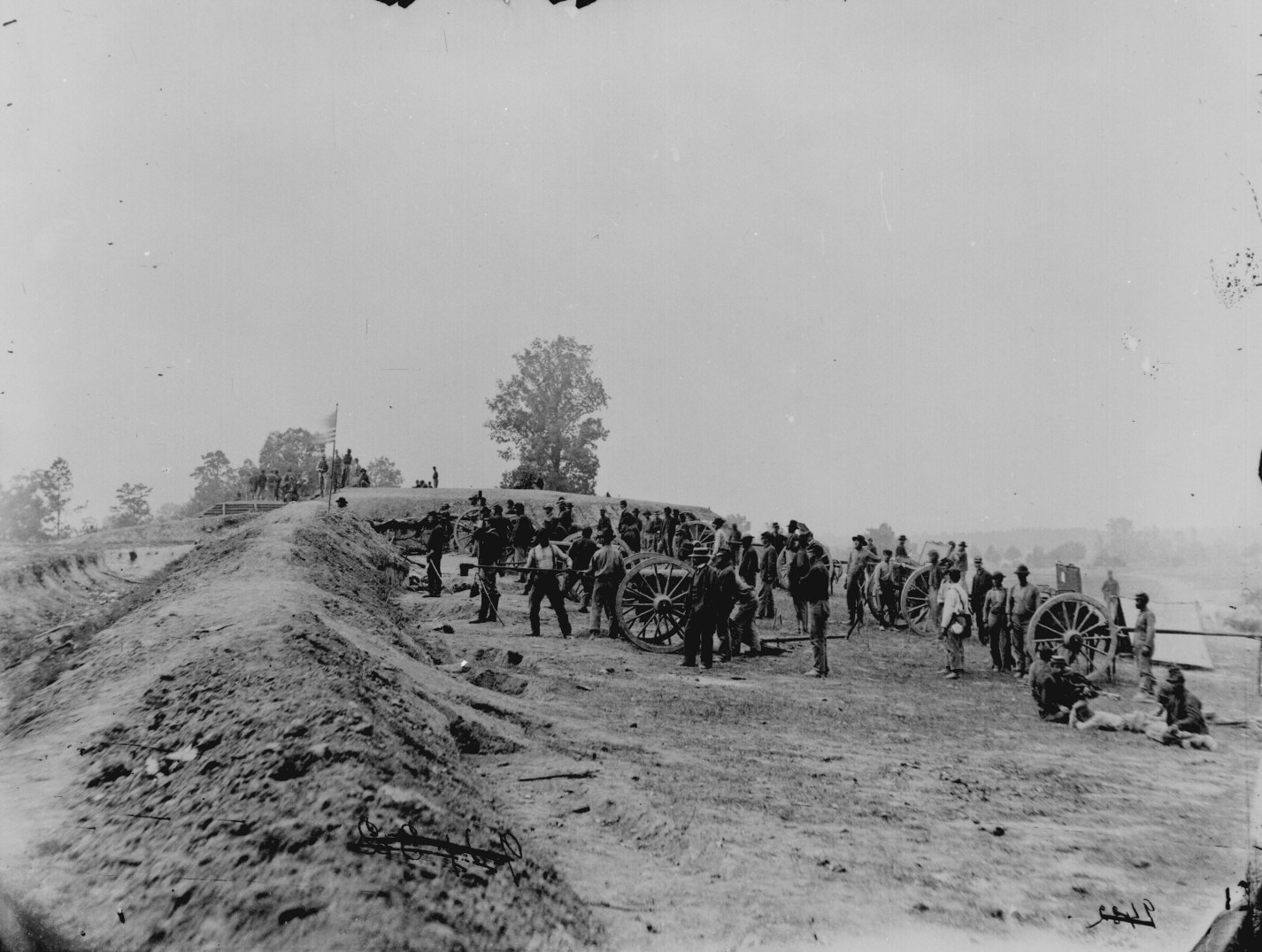
It's a bit tricky to answer in general. If you take a look at this photograph of famed Civil War photographer, Mathew Brady during a firing drill (Here's Brady, in the straw hat), you'll notice that all the men & armaments are nice and exposed, whereas the flag, isn't. Obviously the flag isn't a sentient object so it's not really able to say 'Cheese' and stay still for the photographer, of course, which leads it to be blurred in the final exposure. Here's another photograph from the Civil War that purports to show a battery being fired upon; Story goes, Brady, Standing here, had gotten permission to snap this photo, and as the men in the company set up the battery, the Confederates on the other side saw the battery being set up, and began firing, but they look far too relaxed in my opinion to be receiving artillery fire
Exposure time around this era (the 1860s) had dropped significantly with the invention of the Daguerreotype in the 40s and the wetplate collodion in the 50s, but it still took a few seconds, even up to 20 seconds at times to capture a photograph, depending on the conditions you were in; Sunny, overcast, rainy, etc. One of the biggest factors in why combat was never photographed was the travel time and the time spent away from your studio. There's stories of instantaneous exposures dating as far back as '53, but really these would've been specialized lenses, chemicals (Very sensitive ones at that, too, not like the ones used in the collodion process), and, very inventive, processes, one even describes using static electricity in a jar to produce an instant exposure!
In any case, consider that we're dealing with glass plate negatives here. Fragile glass plates. Glass plates that were meticulously prepared in a photographer's wagon (or a tent), and then brought to the camera in a lightproof box, inserted in, and then exposed for 5-20 seconds. It'd be pretty hard to lug a big wooden box on a tripod around with a sensitive glass plate inside in the heat of battle with cannons roaring and bullets whizzing past your head - not only that, with the more durable chemicals in the process that Brady's photographers used (He took very few images himself, if you'd like to know more, feel free to ask), the exposure time would be at least a few seconds every time, as I mentioned in the start of this post, meaning the entire battlefield would have to freeze for a few seconds in order to be adequately captured, i.e. - not very likely I'm afraid. We can only 'enjoy' the aftermath, such as (nsfw) this photograph of bodies on the Antietam battlefield, as well as this photograph from the Second Opium War in 1860.
There are 2 photographs from the Franco-Prussian War, though, that definitely shows soldiers firing, but whether it's at enemy positions or even during combat is really hard to say, this is the first one, and it's not that big I'm afraid, you're still able to see casualties littering the road as well as puffs of smoke rising from the guns, and here you can really see some detail. The house in the foreground to the right is riddled with bullets, there's what appears to be blood running from the house, there's more guys lying in the street now, even what looks like one falling, but all in all, it looks pretty real, but I can't speak to the authenticity of it.
The two main photographic technologies of the civil war era were the Daguerrotype and the newer wet plate collodion 'tin type'. The bulky nature of these cameras meant they had to be taken to location by wagon and required a lengthy set up time.
When the equipment was finally set up the exposure time could take anything up to several minutes. If you're familiar with modern long exposure photography, you'll be aware that it has the effect of blurring any objects in motion while clearly capturing anything still.
On an active battlefield, even if you were courageous enough to stand amidst enemy fire while setting up the equipment, your resulting images would be largely a blur. That's why the majority of civil war photographs we see are either portraiture - where the subjects were asked to stand motionless, or of corpses or other still aftermath imagery.