They're a relatively small group of people in the Eastern Mediterranean, yet they managed to colonize much of the Western Mediterranean and form some powerful states throughout, and have their language be immensely influential. So what gives?
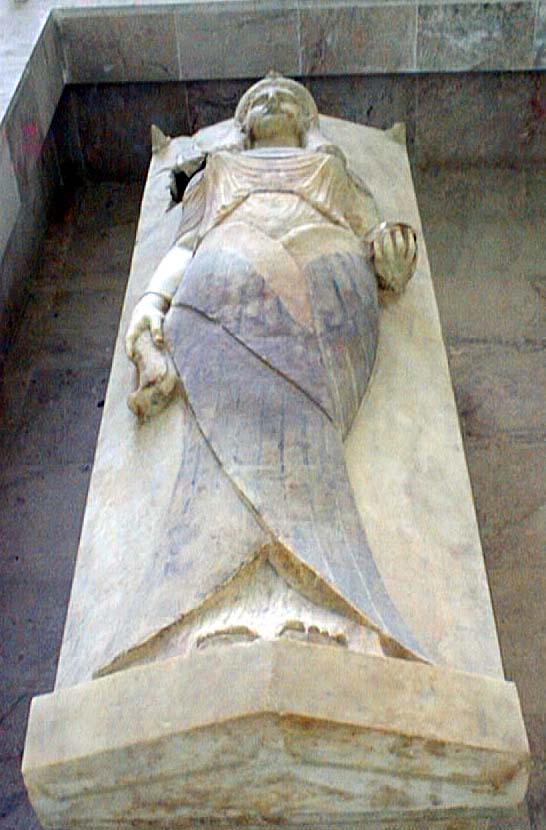
The most proximate cause would have been political and social factors that allowed them to adapt to different cultural environments. This is a feature well seen in Phoenician art, which could engage in subtle blending of Egyptian and Mesopotamian elements, and it also carried into the Carthaginian period, which could incorporate Greek influences (note the Hellenic style yet very non-Hellenic elements such as the dress). So undoubtedly much credit must go to them being voracious cultural consumers.
However, to a point this doesn't really answer the question, so perhaps the best answer is to rely on simple geography. Phoenicia, modern Lebanon, was blessed with excellent quality timber in the form of its famous ceder forests. This was a highly desirable material such that it was exported all across the Eastern Mediterranean far back into the Bronze Age. Khufu's ship, for example, was largely made from ceder. This gave it a major advantage in boat building, as well as made trade an important part of their society early on. This would also be reinforced by their coastal location that stood at the interface of many cultural areas and as a major gateway to the Mediterranean from Mesopotamia.
Awesome question! This is not my area of expertise, but I've recently been knee deep in literature on Indian ocean, North African, and Sub-Saharan trade routes (~1 - 1600 AD) and how Islamic culture and religion spread so far across the African continent. Phoenician city state culture is very similar to the political structure of these regions. One thing I've found, and this may be relevant to the Phoenician trading world, is that when wealthy merchants or traders enter a region they are often idolized by the ruling elite. In many cases across Africa, Islamic traders were highly regarded as representatives of a vibrant and wealthy foreign culture, and developed close relations with the local elite. Sometimes leaders converted to Islam and their cities - like Kano, Timbuktu, or Zimbabwe - became part of the greater Islamic trading world. As Tiako suggests, one can therefore conclude that the success of a trading empire is its ability to enter a region and not disrupt the local political/cultural climate. Rather build strong relations and eventually the two cultural traditions will synthesize, especially when one, like the Phoenicians, was that of a wealthy trade empire. Intermarriage helps too, the Hadrami of Yemen were big fans of trading diasporas. They would marry into local populations in order to foster local contacts. Hope that helps. Sorry if it was off topic. ^[1] ^[2]