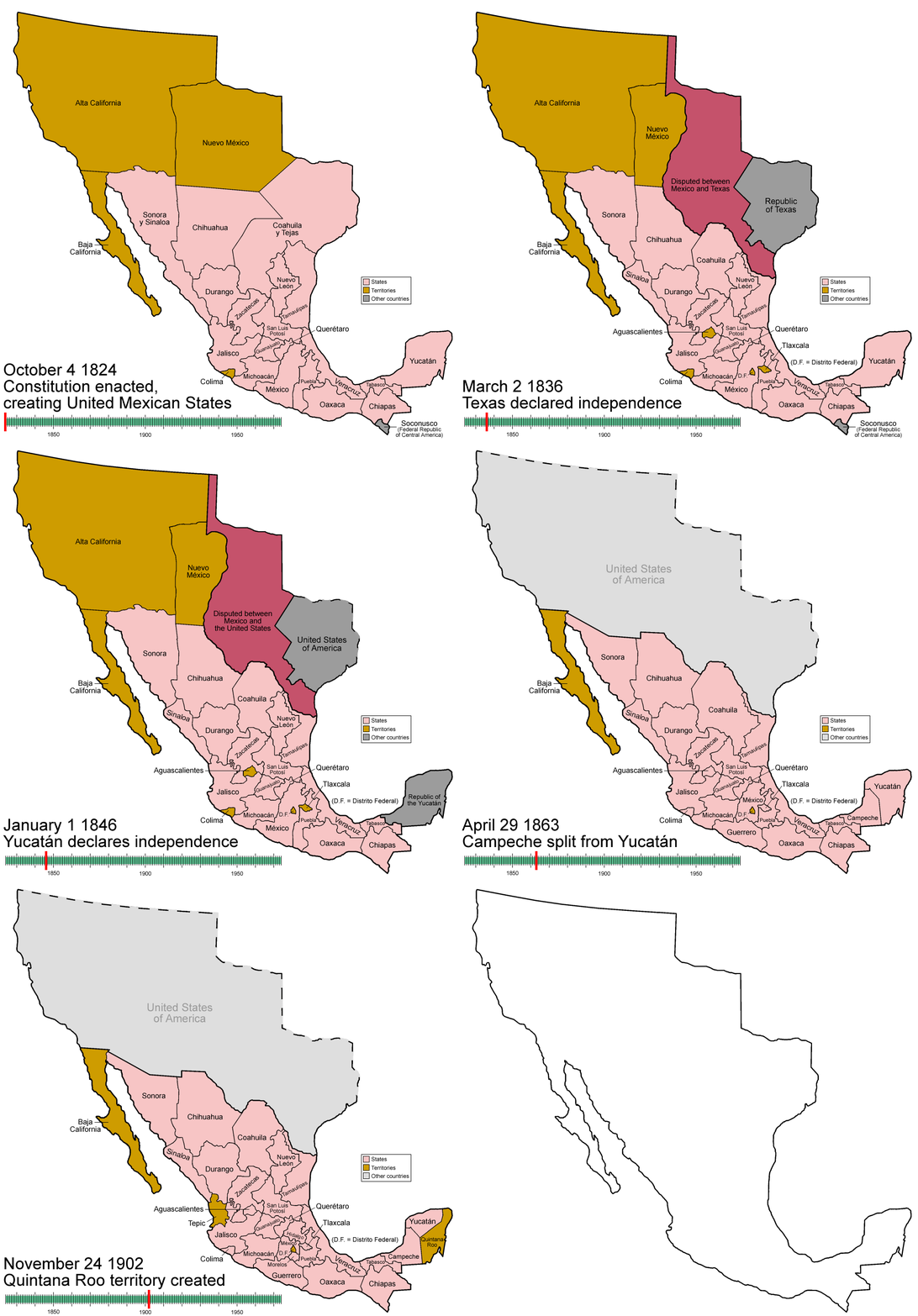
i can speak to what happened in california, but not in the rest of the mexican cession.
pre-1848 california was thinly populated and owed few loyalties to the central government in mexico city. between its declaration of independence in 1810 and 1876, mexico was in a near-continuous state of war: first, between the mexican rebels and the spanish colonial government, then between the supporters of emperor augustin I and the republican rebels, followed by a near-continuous period of civil war.
in addition to the internal warfare over control over the government, major portions of the country tried to secede. while the republic of the rio grande and the republic of yucatan never really got off the ground, texas managed to successfully beat back the mexican army and gained its independence in 1836.
california was not excluded from this political turmoil, and several mexican governors ended up getting being violently removed-- california governors micheltorena, gutierrez and victoria were all deposed by violent revolt. mexico was doing so badly at the time that multiple former mexican governors of california actually were in favor of being annexed by foreign powers. the relative stability brought by the americans was welcomed by a significant portion of californio society, including mariano vallejo, the richest man in california. many of the rest, like former mexican governors andres pico and pio pico, ended up staying on after the switch to american control and remaining prominent citizens. (andres pico, for instance, was elected to the california legislature and served in the state militia after the americans took over.)
Part of the Treaty was that the Mexicans who stayed became full American citizens: full property rights, full civil rights, and religious freedom. However, in practice, these were largely empty promises.
Especially in California, but to some degree in the rest of the Mexican Cession, those that did stay were pushed out and mistreated by the influx of Anglos due to the Gold Rush. The Californios, who represented a majority of the 8,000 population of California in 1845, soon became the minority of the 220,000 that were there by 1852. Although many Californios were able to benefit in the short term from the Gold Rush (they taught Anglos mining skills, sold mining supplies, etc.), they were often pushed out by the vigilantism present in a lot of the "mining camp codes." When California officially became a state, they added a foreign miner's tax of $20, which technically Californios were not required to pay... as you can probably tell from the 'technically,' many were forced to pay the tax anyways. So, those that did stay saw a very extreme demographic, political, and economic shift from 1845-54.
Throughout the Mexican Cession, there is a long history of mistreatment of Mexican-Americans in terms of property rights. Many claims that were legal in Mexican law were unacceptable in American law. Many Americans would also just squat on a Mexican's land and wait for it to be declared public. In most territories, Mexicans had to send in appropriate paperwork within a year or two in order to keep their claim. Those who did not were forced to fight legal battles, which would really pile up the lawyer fees. Many lawyers ended up winning the land for themselves, as the Mexicans who were short on cash would occasionally promise the land to the lawyer. In these ways and others, Mexicans were assimilated less than their land was.
Unfortunately, I don't have a direct answer to your final two questions, but hopefully this sheds a bit more light on the situation.
Source: Ochoa, George and Smith, Carter. Atlas of Hispanic-American History. 2009.