I was going through this thread and came across this picture of a statue of Guan Yu.
Wikipedia says this of Guan Yu's appearance:
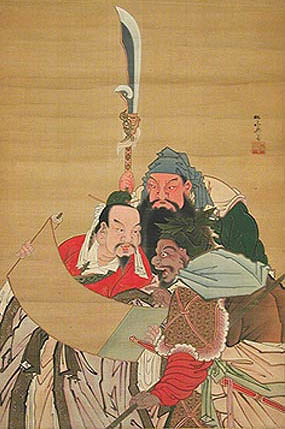
No descriptions of Guan Yu's physical appearance exist in historical records, but his beard was mentioned in the Sanguozhi. Traditionally, he is portrayed as a red-faced warrior with a long lush beard.
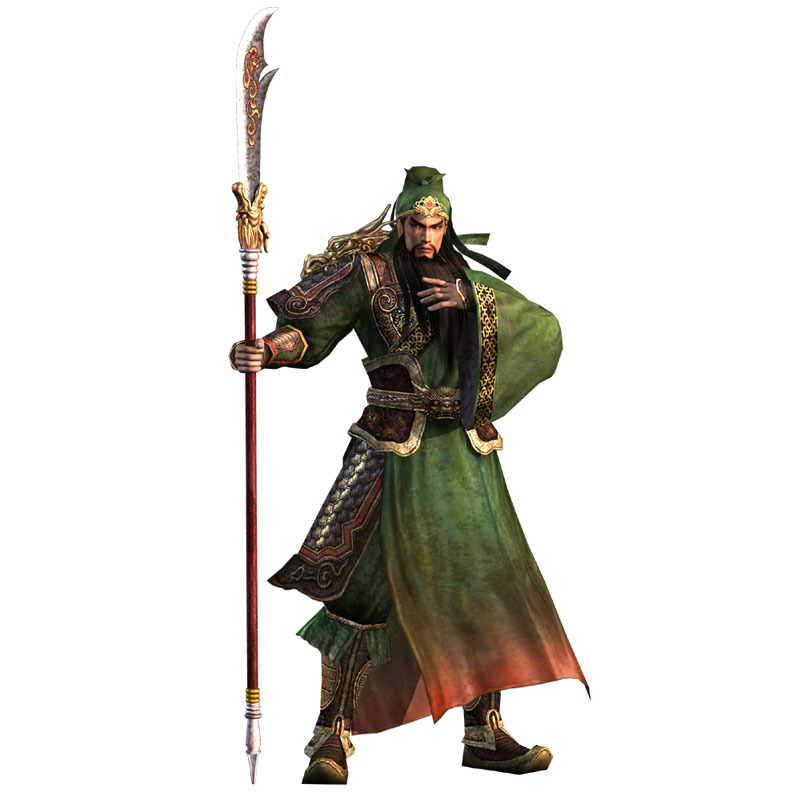
Most historical depictions depict him like this. For reference, this, this, and this is the typical artwork of Guan Yu from Omega Force/Koei, the creators of the video game series Dynasty Warriors. This is the look of Guan Yu that I've come to recognize instantly in many modern day depictions of him. Everything I'm finding in modern media from stuff pre-2000 doesn't share the same looks.
So my question is this:
I know this may be blurring the lines of the "no past 20 years rule" as part of this concerns modern art, but I want to know if this modern day depiction of Guan Yu is influenced by something historical or if it is a recent creation.
There is a Chinese Television show from 1994 [that has a version of Guan Yu that looks more or less like the Koei version.] (https://www.youtube.com/watch?v=rmAo4DjTMis&t=24m35s) So we can definitely say that this image of Guan Yu predates the 1997 Dynasty Warriors game. There are a few pre-1997 Koei Romance of the Three Kingdoms games, with at least some portrait art as well, but I don't think these have been as influential as Dynasty Warriors.
There is also some Japanese anime from the 1980s that has a look very similar to the dynasty warriors look and this may have influenced the Japanese video game artwork more than the Chinese television version. The anime in turn, may be based on a manga version.
This is still a huge break from a more stylized chinese opera depiction which might look something like this http://finestrabiertaeng.blogspot.com/2013_08_01_archive.html and the religious depictions in statues also show a rather more middle aged and less athletic figure.
I'm not exactly sure when this break occurred either. It's seems to be a Pan-Asian phenomenon with Japanese and Chinese depictions influencing each other. Perhaps it can be chalked up to the more open economic exchange between Japan and China in the late 80s and afterwards.