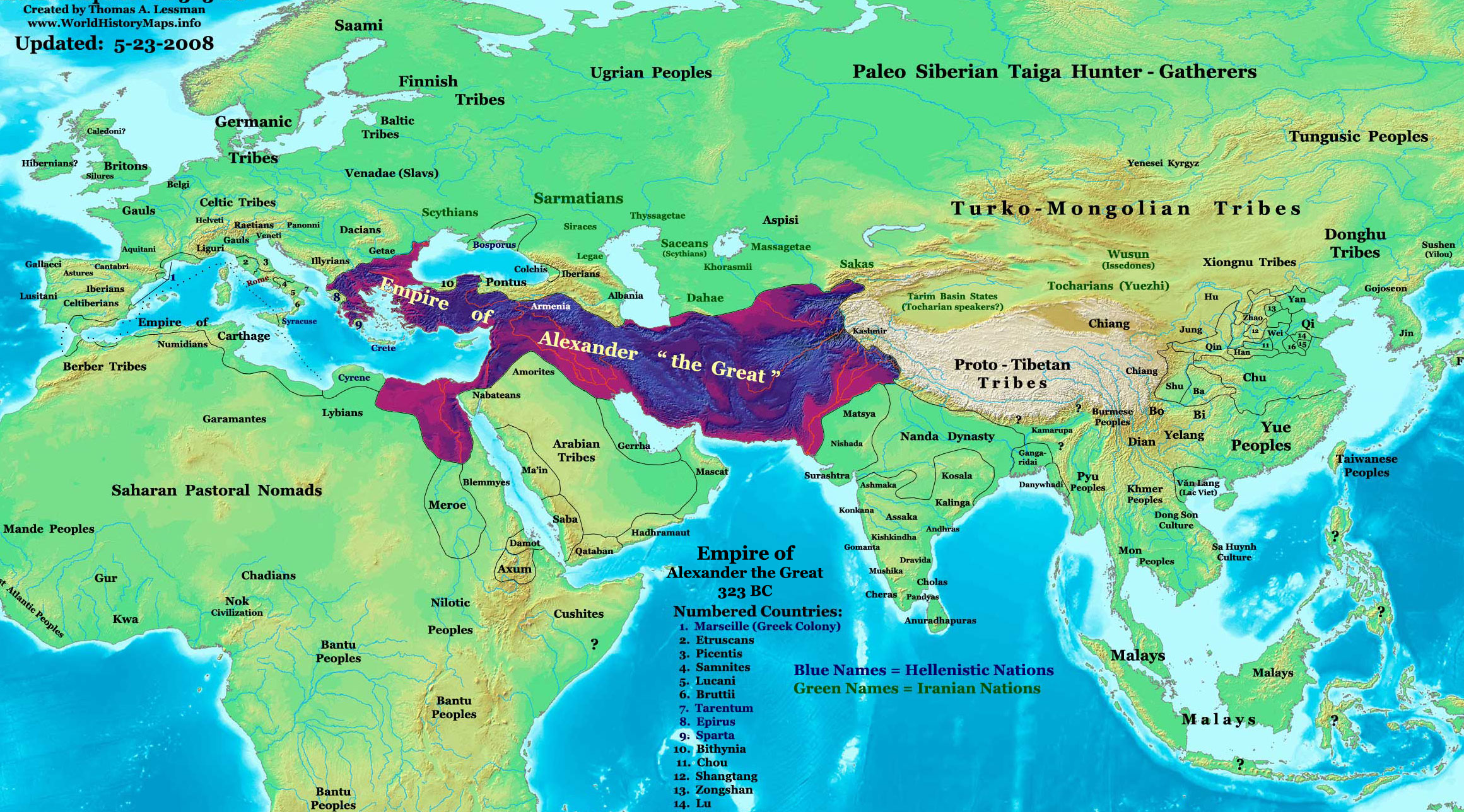
According to this image Epirus and Sparta weren't a part of Alexanders Empire at its greatest extent. Why not?
http://upload.wikimedia.org/wikipedia/commons/6/6a/Alexander-Empire_323bc.jpg
Epirus was a rich trading state with client states in Sicily and southern Italy. The ruling dynasty of Epirus was closely aligned with that of Macedon; Philip II married a member of the kingdom's royal family and when Alexander the Great invaded Persia, his uncle Alexander was king of Epirus.
Sparta waged war against Alexander while his main army was engaged in Asia, but the city-state was defeated at the Battle of Megalopolis in 331 BC. After Sparta's defeat (which cost it a quarter of its citizen army), the city was forced to join the Macedonian-dominated League of Corinth, a federation of Greek states. As with many other Greek cities, the Macedonians chose to impose a loose federal control rather than deal with endless revolt - even this loose leash was enough to spark a series of rebellions.
So even though neither of these states was ruled directly by Macedon, both were part of the empire's orbit. Had he lived longer, it's likely that Alexander would have been drawn into Epirus' campaigns in Italy and central control of the League of Corinth would have tightened.
Epirus was never really part of direct Macedonian control and was independent from many of their geopolitical ambitions. However, the Epirote kingdom is intrinsically linked with the rise of Macedon under Philip II.
Alexander's mother was Olympia who was the sister of the king of Epirus, confusingly called Alexander I. She was married to Philip for an alliance between the two kingdoms when Macedon became a military and economic powerhouse. Alexander I was put on the Epirote throne with Philip's backing and supported them against the Thracians and Illyrians.
Relations between the Argeads and the Mollosians were good as Philip had arranged a marriage between King Alexander I and his daughter Cleopatra of Epirus (Yes, she had married her uncle). This marriage was in response to Philip disowning Olympia and her son, preferring to his new bride Cleopatra Eurydice (Greeks and their creative names, amirite), the niece of one of his generals.
After Philip was assassinated, ironically at the end of Alexander I and Cleopatra's wedding, Alexander the Great took control of his father's empire and fought a short but bloody war with the rebelling Greeks and Thracians. This ended with the submission of all the city-states and the end of Thebes as a city. This is why you see Greece as part of the Macedonian empire, Alexander was the head of the Corinthian League and so was the overall hegemon of all of the city-states with the exception of Sparta who was never part of it.
Epirus remained independent politically because they backed the Argeads and did not cause trouble to Macedon. Philip was a shrewd strategist and knew that it would pay well to have a friendly allied state with mutual goals.