I highly recommend checking out this site:
Suffice to say, it will depend largely upon their method of travel. Traveling by boat, if they made consistent pace every day and the ships were ready as soon as they arrived to port.
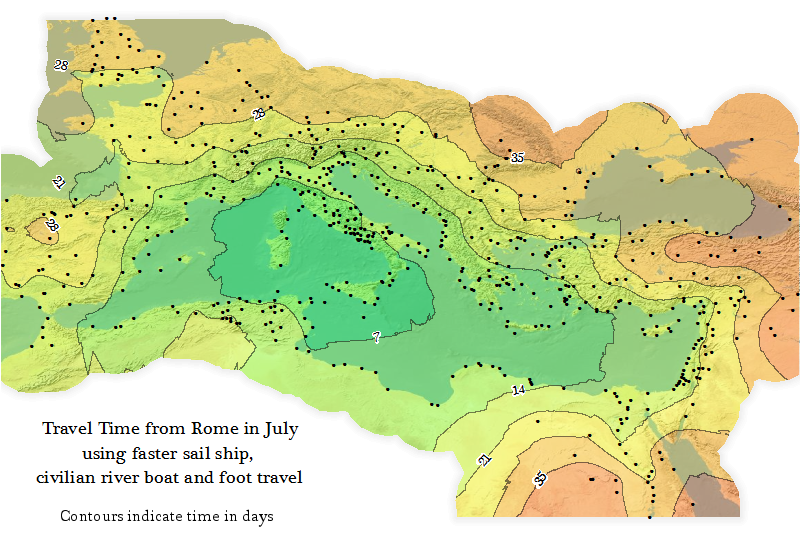
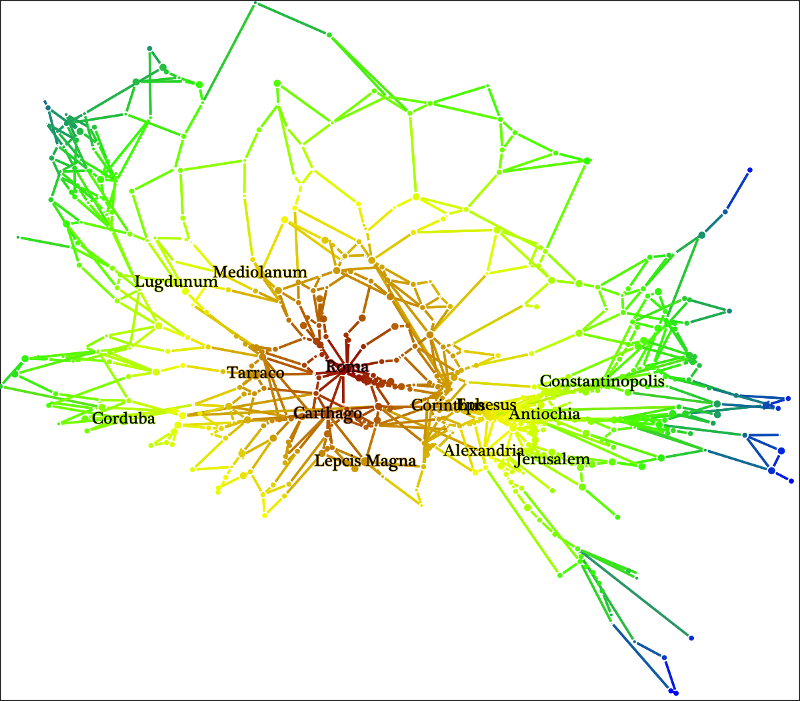
For example, compare these two maps:
http://orbis.stanford.edu/images/gallery/tfr_800.png
http://orbis.stanford.edu/images/gallery/dur_all_800.png
The first represents the travel time in a countoured fashion, while the second is a a more abstract. Finally, compare the second map, with this third map, which is the second without sea travel:
http://orbis.stanford.edu/images/gallery/dur_road_800.png
You can see how the road networks are still pretty good, but definitely affect travel time.
At any rate, if the legion was moving at a good pace, with fast ships, we could expect it to take in, in theory, in the neighbourhood of two to three months. However, there is a difference between travel time and actual total time it takes between the decision to march and the arrival time.For example, in the Year of the Four Emperors, it took almost two months for the Danubian legions to organize and march into Italy, and probably around three months for them to get to Rome itself after a couple of battles, a distance less than half the way between even the closest Rhine legion and Damascus. The legions from Damascus itself were also on the march to Rome at this time, but did not arrive in time to take part in the battles in Italy. These legions were, of course, also marching into hostile territory and thus could have been more cautious in their marches.