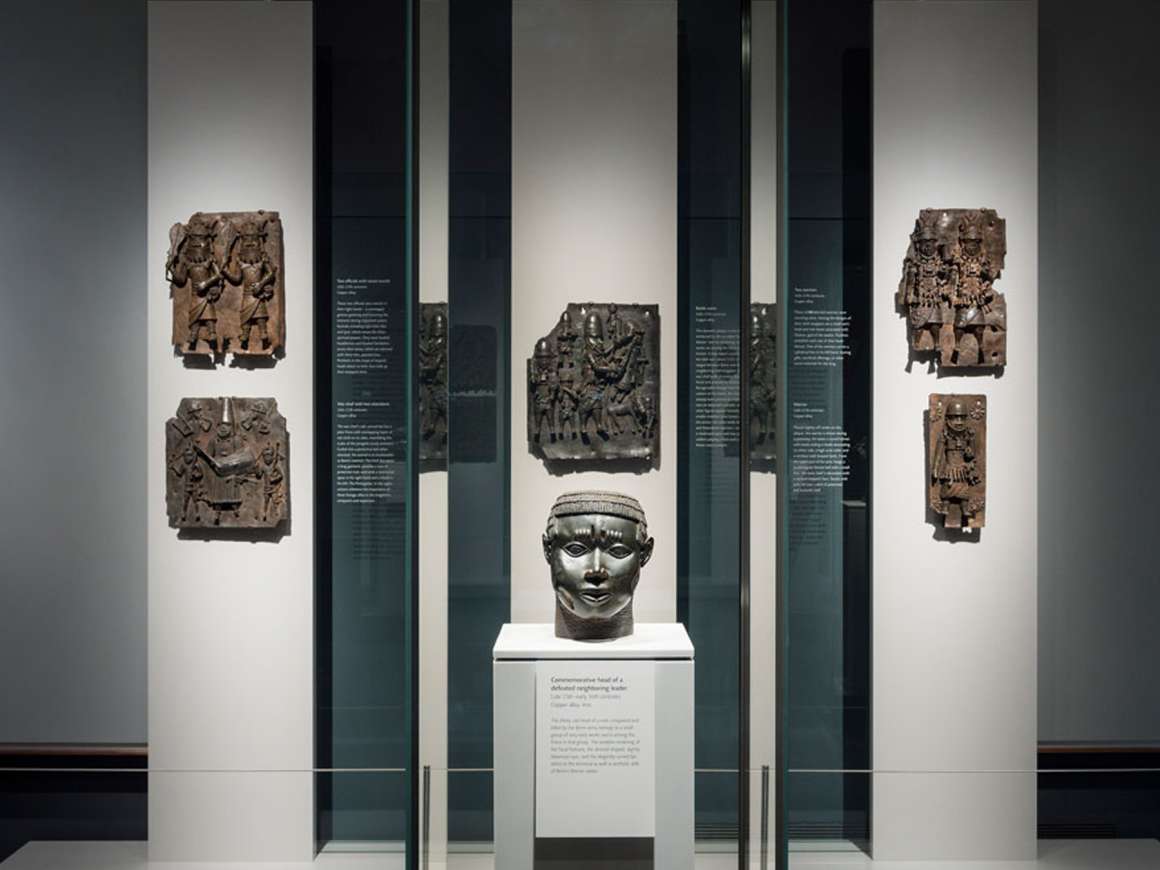
Recently watched Lost Kingdoms of Africa and it amazed me how a few of these complex societies operated. Especially the Asante Kingdom in tropical West Africa being able to move manpower to clear forests for agriculture, extract gold to conduct trade, transport slaves, etc. with seemingly no archival methods.
Surely, someone was doing some kind of physical recording somewhere, no? How did these empires and kingdoms know how much in taxes they needed to keep the operation going? How did they know everyone (generals, soldiers) got paid?
Follow up question: Why is it so hard to get any info about the history of sub-saharan Africa? Is it simply unpopular, destroyed, or not available in English? What is going on?
Hey /u/Qolx ! Hope this answers some questions!
My dad was pretty excited to answer these (mods, I can provide evidence of my dad if necessary).
The Asante kingdom and the Benin kingdom: Benin was a city and empire in southern-central Nigeria.
The Asante kingdom existed central Ghana, to the west of Benin .
Language:
In lieu of written recordings, events, conflicts, myths, people and traditions were depicted in bronze art and wood panel carvings.
They did not lack a language, though it was not a "written" one:
Asante people spoke, and continue to speak, a form of the Akan language. (thank you /u/commustar, missed that)
Though it was not written or "recorded" per se, it was carried on through its use in speaking and oral traditions. If you grew up never learning to read or write, you would still know a language by speaking it, so the lack of written word did not determine the fate of the language.
West African kingdoms logistics of governance:
The Benin Kingdom had a history of a hierarchical nature, and an ancestry line traced by male blood relation. The "oba" held supreme power and authority, often justified through religious ideology, not unlike European royalty in some aspects. Oba ruled through an assembly of governors/chiefs and advisors representing various villages, usually related to the oba by blood.
How were taxes collected, resources requisitioned and allocated, remuneration distributed:
However, much of the "political structure" was first built around communal village societies (~900 to 1300 C.E.), and preceded the city-state structure above. Their primacy source of trade was through agriculture products, especially yams. The purpose of the slash/burn deforestation was to use the ash as fertilizer for crops. Wives were also traded for other goods/animals/etc at the marketplace in the village. It was a barter society, instead of the exchange of currency such as coins or shells. As everyone contributed their resources and labor towards the village on a voluntary basis as a whole, they did not have what we would consider "taxes".
Transport slaves:
There is a long history of slavery within West Africa. Raiding parties would be sent inland to raid other ethnic groups and take slaves for labor or trade. However, slaves were considered to be a part of the community, and in some cases, part of the families with whom they lived, and though they lacked certain rights, they were treated very well (this is in comparison to the later slave treatment).
With first contact with Africa (the arrival of Portuguese mariners in 1486), they established good trade relations with the Europeans- brass bracelets, known as manillas, to exchange for pepper, ivory, slaves and other goods.
However, the major boom of European slave trade didn't start in the early 16th century. Some Benin leaders abstained from and prohibited the export of male slaves during the 16th and 17th centuries- not all tribes supported the slave trade during that period.
West African slave trade peaked on a massive scale in the 18th century, then used as a "commodity" for more manufactured merchandise normally unavailable to them to satisfy the massive demand for slave labor in the United States. This increased the frequency of raiding of other inland groups, and led to competition, conflict, war, and eventual economic collapse.
How did they know everyone (generals, soldiers) got paid?
They did not have organized free-standing armies, police, or military. That was the Zulu and Xhosa of 1600's Southeastern/Eastern Africa, nomadic herding groups with conscripted, trained and highly effective armies (think strategic formations). They developed short stabbing spears, or "asegai", and used shields, and basically decimated other groups, as they lacked the advanced weaponry and strategy to defend themselves or fight effectively.
Edit: Please do not hesitate to correct anything here if he was off, he went through it quickly
Edit 2: Thank you /u/commustar, I messed up on the during the transcribing process.