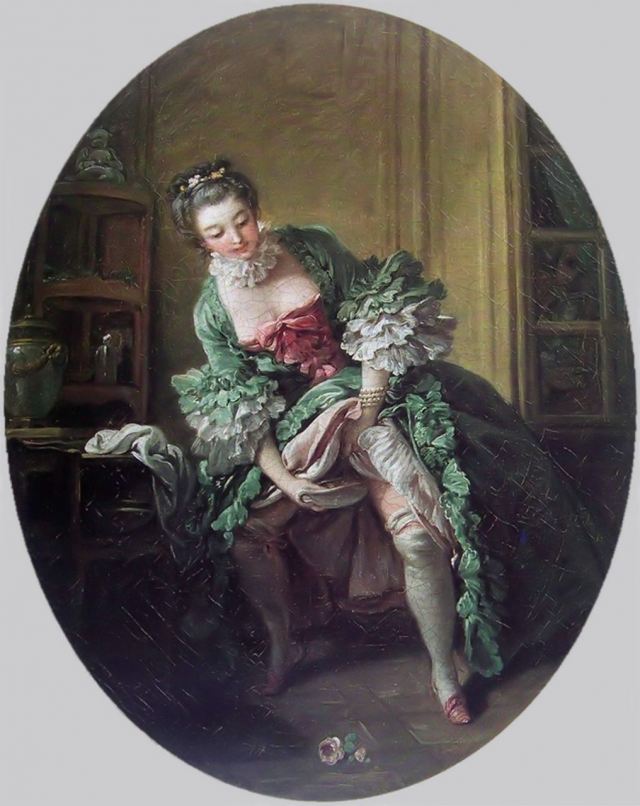
I don’t mean to sound rude but with the elaborate fashion and the lack of a flushable toilet…
Speaking to the difficulties with the fashion, it really isn't a problem. They weren't wearing underwear like we are accustomed to. Their undergarment was a shift, a loose, calf-length linen garment that keeps the outer clothing and person clean. The hoops worn under the formal gown required for a court event will keep the skirts out and away from the body, only the skirts of the shift are close and no other undergarment is worn. This means all one has to do is squat over a chamber pot or use a bourdaloue for relief. There are toilets akin to latrines and in those cases the skirts are fairly easy to lift up high enough to keep out of the way, as you can see in the previous link as well.
You're right about fashion making things difficult, especially if there are no maids around to help. So women would use something called the Bourdaloue. It's essentially an elongated, slightly curved chamber pot, with flattened sides that can be gripped by the thighs, kind of like one would do when riding a horse to stay on. A maid would help a woman get it in place, or she could do it herself. (Warning, that last one is a bit risque). Then she would be able to relieve herself, either standing or squatting, without too much trouble and the maid would help take it out from the skirts and deal with the refuse.
The name Bourdalou (supposedly, although I doubt it's true) comes from a Jesuit priest of the same name, who was at Versailles. He was especially long winded, although people were loath to miss any part of his sermons by leaving to relieve themselves. So women supposedly would sit in the pews with this special pot between their legs. This is probably false for two reasons:
As a bonus, here's a clip from History of the Home from Lucy Worlsey, who is the chief curator at the Historic Royal Palaces in England. The beginning shows her using a Bourdaloue without showing anything too NSFW.
The important thing to remember about 18th century fashion is that women wore no underpants. The basic order of clothing was: a linen shift, next to the skin; stays, the boned* undergarment that would later be called a corset; a hooped petticoat, wire hoop frame, or pocket hoops (one on each side); petticoats; gown. No woman of that era took off clothes in order to use the facilities, because she had free access to her undercarriage.