I'm not really too familiar with the history behind the empire, since we never really studied it in school apart from the assassination of the Archduke before WWI. I'm not sure what the right word here is, but I think it's interesting that Austria has become a "successful" first world country while Hungary has not.
This is sort of a complicated question simply because Austria did not become a successful country after the Empire's crumble.
Hyperinflation ran rampant, what would've bought you a mansion in 1914 couldn't even cover your daily food needs in 1922 and the slow economic recovery that started in the mid 1920s ended quickly with the stock market crash of 1929, not to mention several major financial scandals uncovered over the ten-year period before the Anschluß.
Politically, Austria saw a massive polarisation with a rise of Bolshevism fuelled by the huge amounts of unemployed (up to a third of the whole working-aged population in 1933), politically represented by the Sozialdemokraten, opposed by Christian conservative reactionaries, the Christlichsozialen.
That polarisation went so far that those two political camps led to the formation of paramilitary organisations associated with each, the reactionary/fascist Heimwehr and the socialist Republikanischer Schutzbund.
When, in 1927, a clash between those two organisations at a demonstration in a little village called Schattendorf turned violent and led to the death of a child and a veteran but the perpetrators were subsequently found innocent, riots broke out. And not little ones, the enraged masses actually turched down the Supreme Court (Justizpalast) and stormed police stations. Faced with such an uncontrollable riot, Chief-of-Police Johann Schober ordered the use of firearms... by which I mean firing randomly into the crowd. Resulting not only in 89 deaths and 1057 wounded but also a subsequent steady increase in Heimwehr membership.
Eventually in 1933 chancellor Engelbert Dollfuß managed to play the political situation to his advantages, abolishing parliament, introducing censorship and other fun things and essentially established a fascist dictatorship modelled after Italy that would last until Hitler crossed the border in 1938.
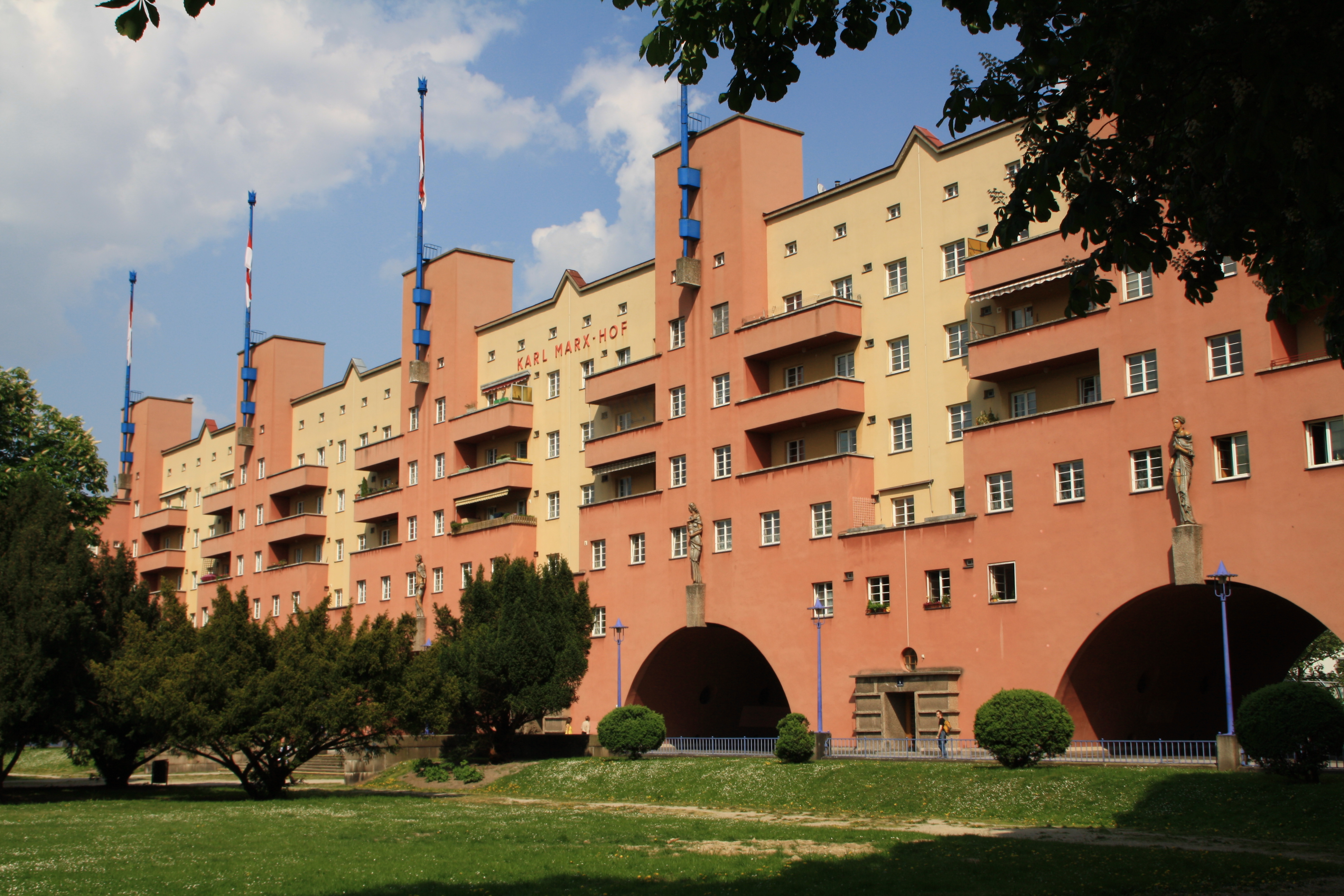
Civil War in protest of this coup did not just end bloody but with Dollfuß actually bringing in the military and having revolutionary strongholds, most notably the Karl-Marx-Hof (a massive low-income housing project), shelled by artillery, regardless of civilians living there, until the barricaded revolutionaries surrendered. Just to illustrate the Dollfuß principles.
So during the First Republic (1918-1938) nobody would've really considered Austria "successful". Well, maybe Mussolini who was quite fond of his little fascist neighbour but that guy doesn't really count...
If you want to talk about success it is really only the product of political maneuvering of the Second Republic (1945 onwards) during the Cold War, using the neutrality as a base to establish good (but not too good) relations with both sides, allowing Vienna to act as a neutral ground in between spheres for such things as US-USSR meetings or a safe seat of the UN.