In terms of technology and innovations. I guess my main question is, were the indigenous people of North America shockingly anachronistic considering the era? (Not in contrast to the European explorers, just in general)
This is something of a difficult question to respond to because of how heavily it's rooted in cultural preconceptions of technology and "advancement". In terms of control over their environment, the native groups of the Americas were nothing like their prehistoric ancestors.
Water Control
Perhaps the most impressive works of Precolumbian Americans were their numerous constructions to manage water. The canal systems of the Hohokam in Central Arizona were the largest irrigation system in the world. When they lost that title, it was to the Inca rather than anyone in Europe. Not only that, but the Sonoran desert their successors inhabited was and remains the driest area to ever support rainfall agriculture.
Roads
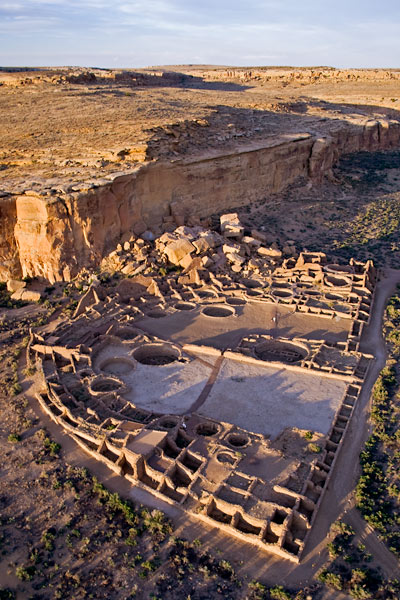
American cultures were quite adept at constructing monumental road networks spanning hundreds of miles in any direction. Most famously, the Inca roads and inns enabled messengers to quickly travel to and from any part of the empire. The Chacoans of Northwest New Mexico also constructed roads. Some of these roads could reach upwards of 10m wide and stretched for many miles to the continental divide, where trees were harvested for construction in Chaco Canyon. You can see the remains of these roads and trails all across the Colorado Plateau today in the rock carved steps left behind.
Construction
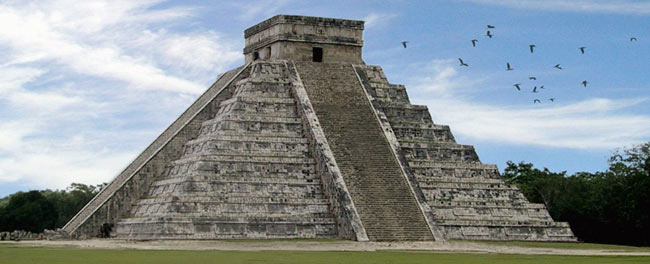
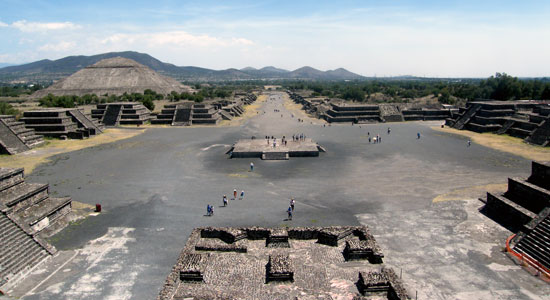
Precolumbian Americans were honestly quite good at construction. There are far too many excellent examples of construction for me to list more than a few. The Mayan and Teotihuacan pyramids are well known examples. Pueblo Bonito was one of the largest residences on Earth, containing over eight hundred rooms. A related group to the East decided that was too small and constructed residences approaching fifteen hundred. By the time the Spanish showed up, their descendants had begun to construct fortress-cities on the mesa tops. American accounts at the siege of Taos Pueblo indicate that artillery and sieges were found to be ineffective. Cannons were brought in to breach the walls, which withstood 10 direct hits. Spanish accounts of the Acoma Pueblo record much the same problem and the same solution.
However none of this should be taken to suggest that groups I haven't mentioned are any less innovative. Every precolumbian group was as modern as these groups clearly were. The examples I've given are simply the most obvious demonstrations. The Inuit for example had tremendous technological innovations over the Dorset cultures they replaced. The groups of the West Coast were spectacular seaman. The snowshoes of the Great Lakes groups far outclassed anything ever created in Eurasia. The environmental management of the Plains and Amazonian basin groups is an achievement academics have only recently come to terms with. Each of these cultural groups was as modern in their time as the Europeans they were meeting. European and American settlers often simply did not understand what they were observing.