There's actually a wonderful article on this: Leon Trilling, "Styles of Military Technical Development: Soviet and U.S. Jet Fighters — 1945-1960," in E. Mendelsohn, et al., eds., Science, Technology and the Military (Springer, 1989).
It has been a long time since I read it but the basic thesis is that both the US and USSR targeted certain types of similar performance ceilings, because they were developing weapon meant to counter one another, but that the production system in the US favored extremely expensive, bleeding-edge sorts of technologies, whereas the Soviet system favored easier-to-produce, easier-to-repair, easier-to-integrate-into-their-overall-system technologies. So the end result, more or less, was that the Soviet fighters didn't have quite as good stats as the US ones, but they had other advantages on the manufacturing sides of things.
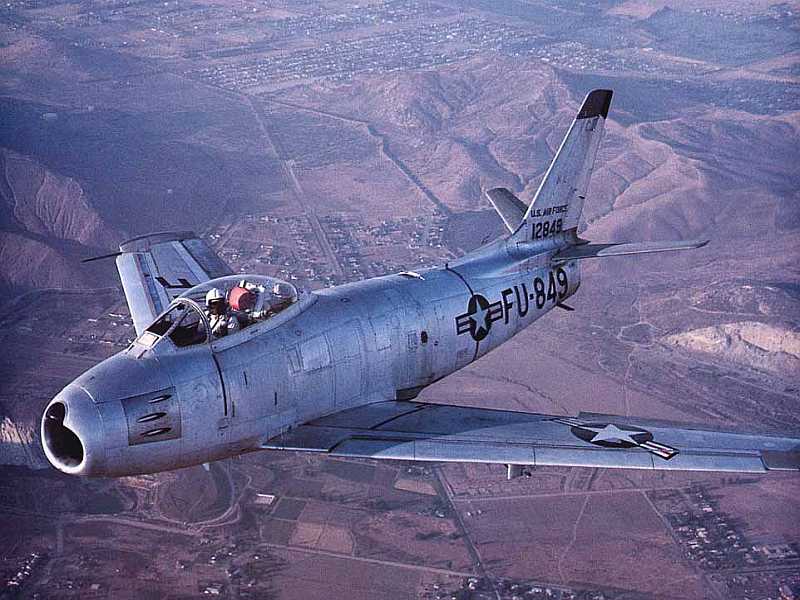
Post-WWII, Soviet fighters tended to have their cockpits set lower in the fuselage, with the pilot at shoulder lever with the bottom of his canopy, like [this.] (http://relojdeavion.es/IMAGENES/M15/mig15porta.jpg) The result of this is that Soviet pilots had a smaller field of view, making them more reliant on the Intercept Controller for situational awareness and control in fights. Here you can see the F-86 cockpit being raised slightly higher, giving its pilot a better view, and slightly more independence, though still beholden to an AIC.
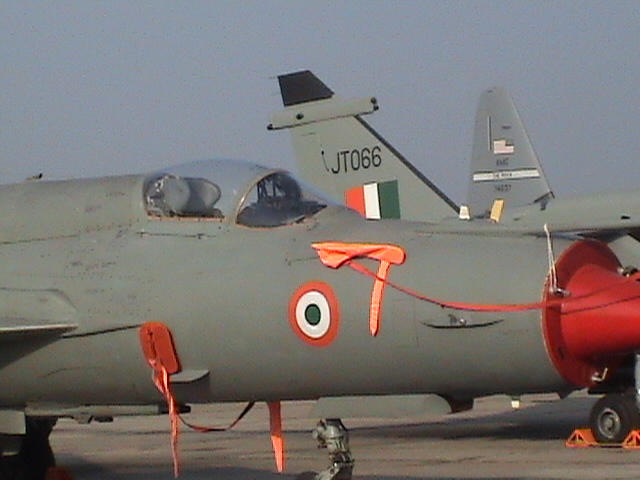
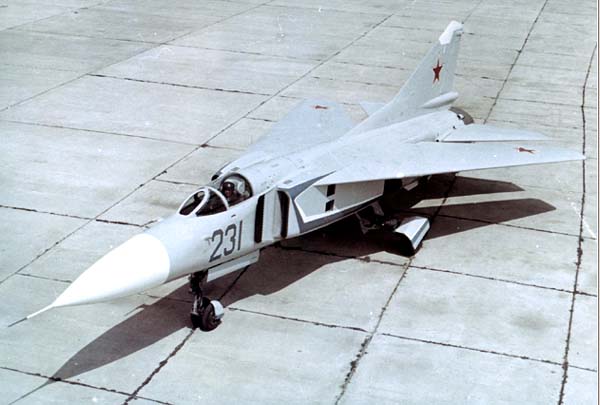
3rd Gen: F-4 and Mig-21
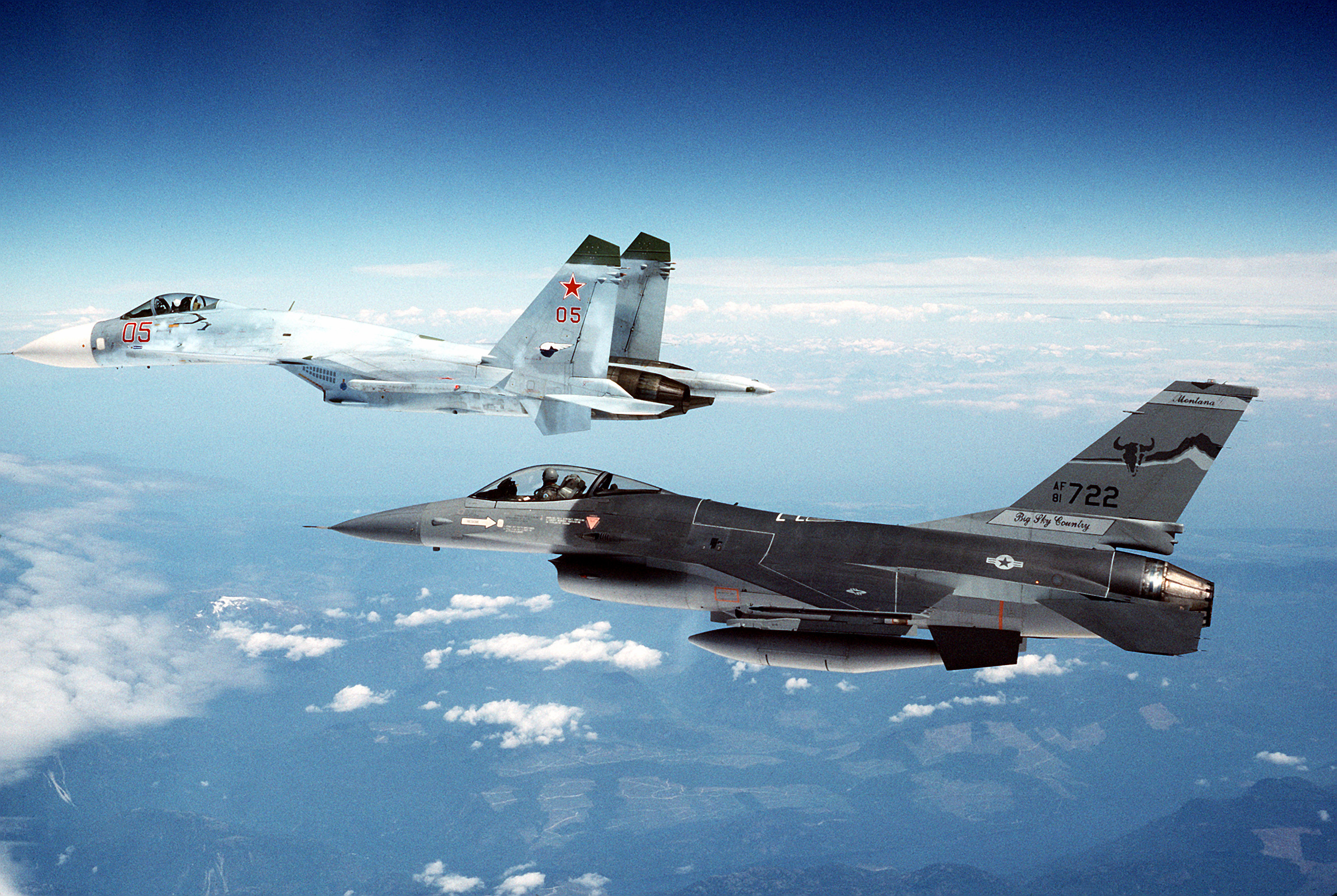
4th Generation Fighters: Su-27 vs F-16
Soviet fighters were almost always smaller than their American counterparts during this period. Generally there was less technology involved. A former Pakistani MiG-17 pilot told me that the most advanced thing on his jet was a "radio compass," which I assume was some kind of ADF. Soviet jets also used cheaper engines - centripetal compressors instead of the more expensive and higher performing axial compressors in American designs.
here's a GE J-47 axial turbojet from an F-86 Sabre
here's a Klimov VK-1 with a centripetal compressor from a MiG-17
Note that the MiG engine is vastly simpler. In general, Soviet fighters were made to operate form the austere conditions of the forward base of a revolutionary country, with less maintenance and simplified operations. In Operation Have Doughnut, the US acquired a MiG-21 for testing purposes from Israel, where its original pilot had defected to.
Of the things noted about this MiG, its poor visibility, good manuverability, and poor engine response were included as significant characteristics.
Sources: Those linked. The rest comes from my memory.