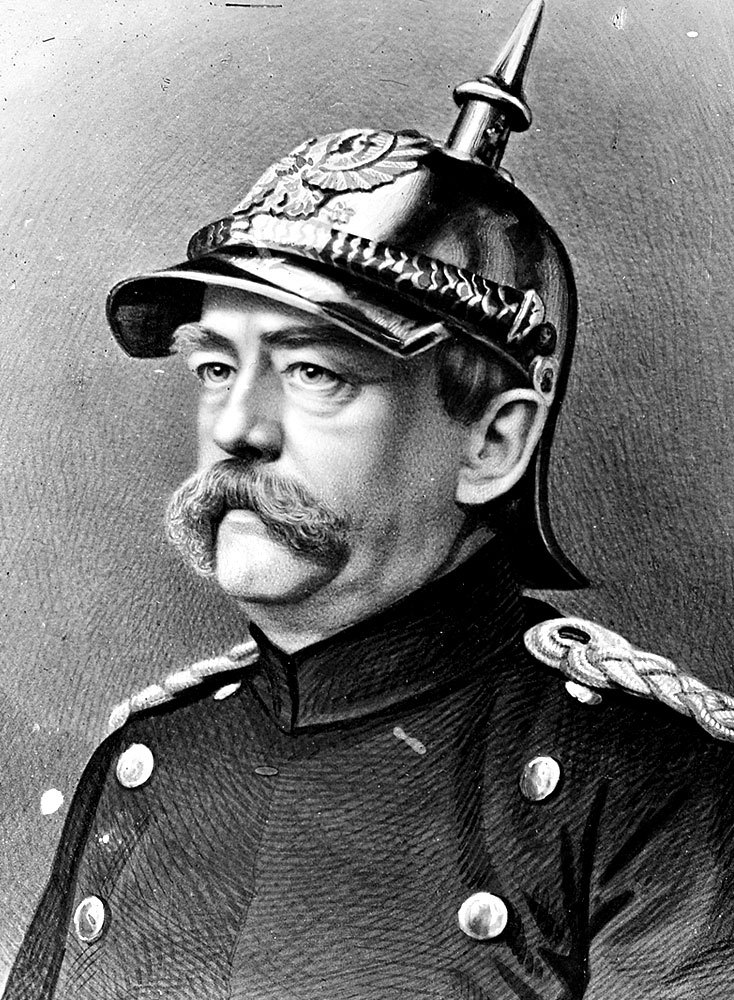
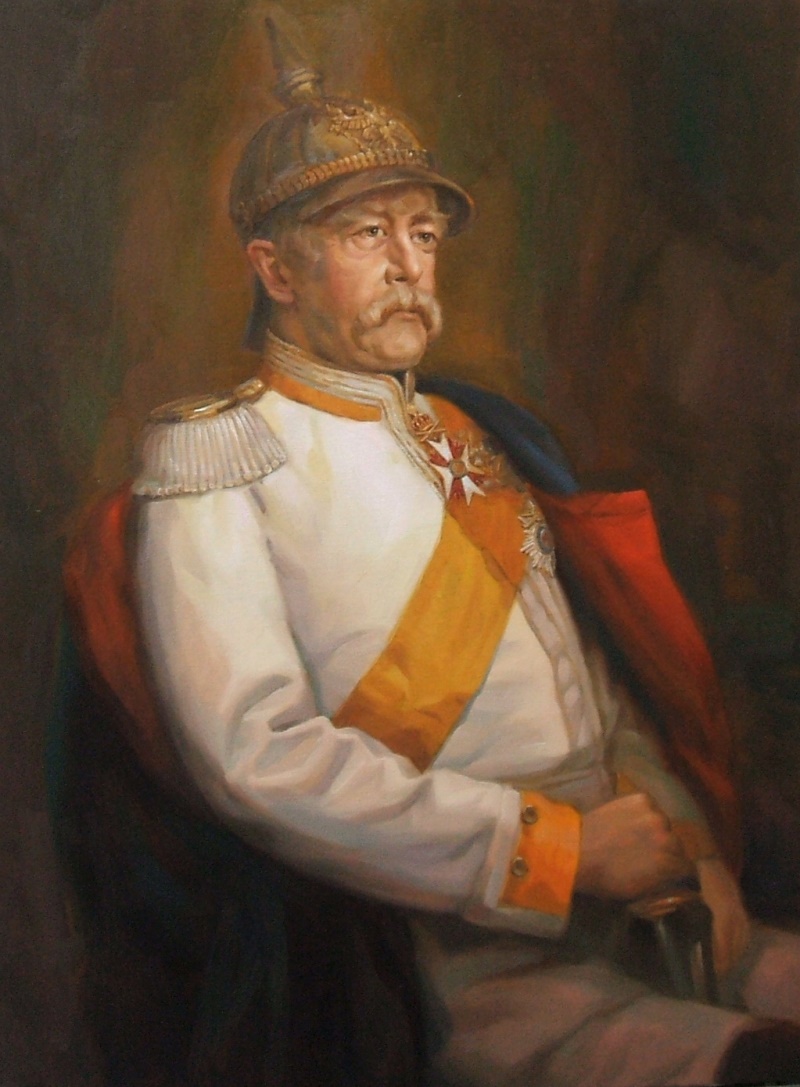
I know he had a short one year long stint in the reserves in his youth, but how did he justify wearing the Prussian military uniform complete with a pickelhaube? Would this be a "stolen valor" sort of thing? And was he ever criticized on it? http://40.media.tumblr.com/3dd748104a7aac85a17d6e0b484706b8/tumblr_mxq5y29p2u1rwjpnyo2_1280.jpg http://orientalreview.org/wp-content/uploads/2014/12/Portrait-Of-Otto-Von-Bism-007.jpg http://www.oel-bild.de/Bilder/Reichskanzler-Otto-Fuerst-Bismarck.jpg http://www.wwnorton.com/college/english/nael/images/20thc/Bismark.jpg
Haha! This is a great question.
You are not the first person to notice this. Bismarck had a brief and unwilling stint as a reservist, as you correctly noted.
Early in his career he wore a Cuirassier's uniform but with the rank-signifying epaulets of a Major. As his influence grew he would adopt more prestigious (and silly) uniforms.
At the beginning of the Franco-Prussian [war], Bismarck showed up on 31 July in the Headquarters of the King at Mainz kitted out in the uniform of a Major General of the reserve, a spiked helmet of the heavy cavalry and huge leather hip boots, a ridiculous and unmilitary figure.
Why did he do it? Rank was important in aristocratic culture, especially Prussian Kultur which placed penultimate importance on the military. Bismarck was a civilian involved in grand affairs and surrounded by powerful men decked out in the fanciest clothes of their day. Also, he was likely more than a little vain.
And yes, everyone noticed. von Moltke's staff officers mocked him as "the civil servant in the cuirassier jacket." It was a private joke among the Junkers and officer corps
Source: Jonathan Steinberg - Bismarck: A Life
The answer is quite simple - he wasn't actively serving in the military but held an "a la suite" rank (appointed in 1868, various promotions throughout the years up to if I remember it correctly, Colonel General and regimental chief upon his dismissal as chancellor in 1894), which came with the permission/expectation to publicly wear the uniform of the corresponding regiment, in Bismarck's case the 7th (Magdeburg) Cuirassiers.
An additional bit of info on what I think you perceive as a confusingly short military service record: While Bismarck was never a professional/career soldier, he still completed his mandatory service time after finishing his law degree. He served with various Jäger (Ranger) units for his year of active duty, passed his officers examination and was retired as a reserve officer, as was the norm -
In Prussia, military service was mandatory for all able-bodied males between 17 and 45 years of age. The very basic principle was that you either volunteered (which brough certain incentives) or received your draft letter anywhere between the ages of 17 and 20, served either two or three years (depending on branch) in active service and then got retired to one of several tiers of reserves. There you had to report for an accumulated 8 weeks worth of military training /wargames annually, until you had accumulated a total of 7 years of service when you were retired from the military for good.
Those with enough money and/or the prospect of entering higher education could shorten their active duty time to one year and delay entry until after graduation from university etc.. Bismarck was one of those people.
Which is (to add a little to /r/walgreenslatino) one of the reasons - his general character and position as chancellor being others - why the career officers of the General Staff weren't very keen on having this comparatively physically unfit military layman in their midst during the Wars of German Unification, constantly talking their royal supreme commander's ear off, interfering in military business for the sake of politics.
tl;dr no stolen valor here, as Bismarck was given a honorary military position for his political achievements and was expected to fulfill this role by representing "his" regiment through (among other things) the wearing of their uniform. The "professional soldiers" were annoyed with Bismarck the politician tagging along during campaign and meddling in "their business", not Bismack the Ranger reservist wearing the uniform (and a high brevet rank) of a prestigious senior cavalry regiment.