I understand that the culture in Japan was extremely passionate about winning the war and keeping a Pacific empire. The people of Japan, as I understand, were armed to the teeth and many were very angry about the outcome of the war. Did the Japanese people attempt to stop the occupation? Was it dangerous for American soldiers?
No, the occupation was generally calm.
There were two principal reasons for this, which I'll call pressure from below and pressure from above.
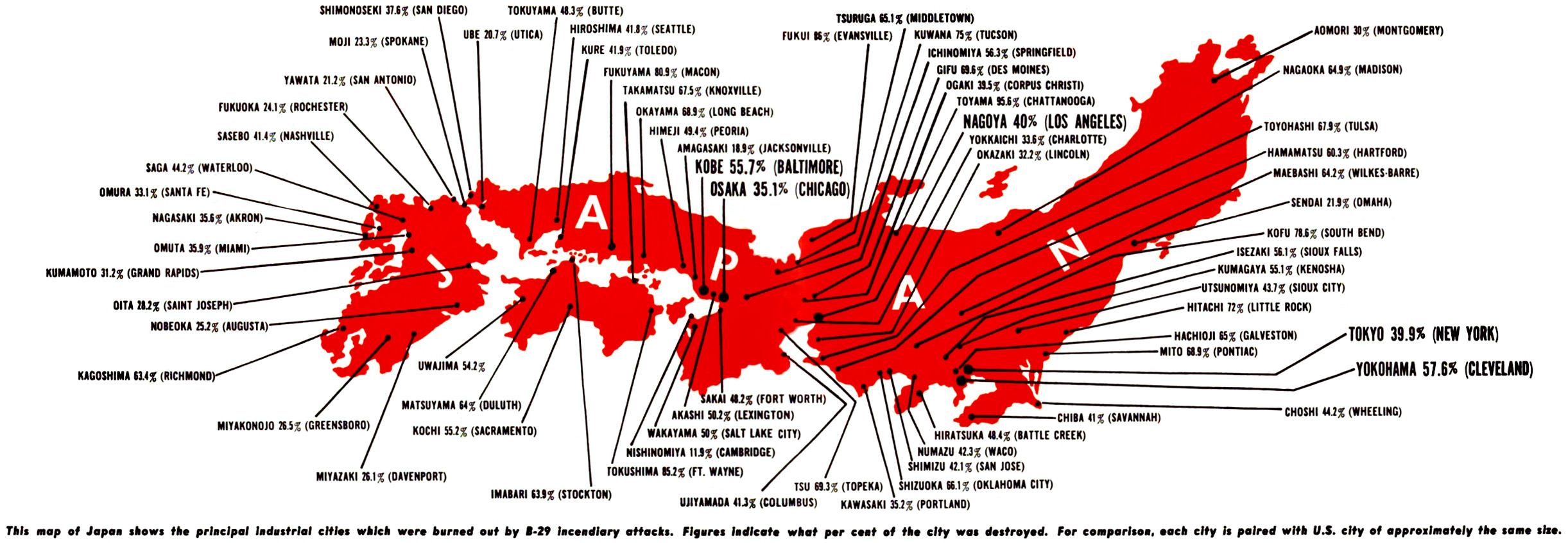
First, think of Japan's situation in 1945. /u/Restricteddata has a good post on his blog that covers the sheer and unrivaled devastation that was levied on Japan by the end of the war. Follow that link, and you'll see this lovely little map which tallies how much of Japan's principal cities were destroyed, and the map compares each of those cities to an American city of similar size (in 1945).
Although there were plenty of people determined to fight on, the situation in Japan was such that when the decision to surrender was made, it was completely obvious why it was being done. The country was months from starvation, it had been gutted from aerial strikes, and the sheer fact that women and children were being trained to fight with spears said much about its ability to resist further.
"We knew we were losing the war," said Akira Miuri, one of the voices in the Pulitzer Prize-winning The Good War. "At first it was hush-hush. Nobody dared express his doubts. We knew that life was getting more and more miserable. We didn't have enough to eat. We didn't even have rice."
Now, let's look at pressure from above.
In his address to the nation, the emperor asked Japan to "endure the unendurable." The Gyokuon-hōsō was the first time the Emperor of Japan had spoken to the common people. It was a big freaking deal, even if the recording was scratchy and some people needed to have it explained to them.
"He was using all kinds of highfalutin' expressions to make things sound vague," Miuri said, "but at the same time we both had a tremendous sense of relief. We felt we had suffered enough and that things had to change."
With Japan on the verge of starvation, the United States sent mountains of food aid. It wasn't enough to meet every need, and it didn't come quickly in all instances, but it did more than anything else to ensure that the peace would last after the initial shock of surrender passed.