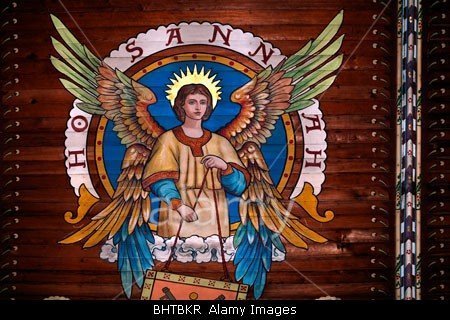
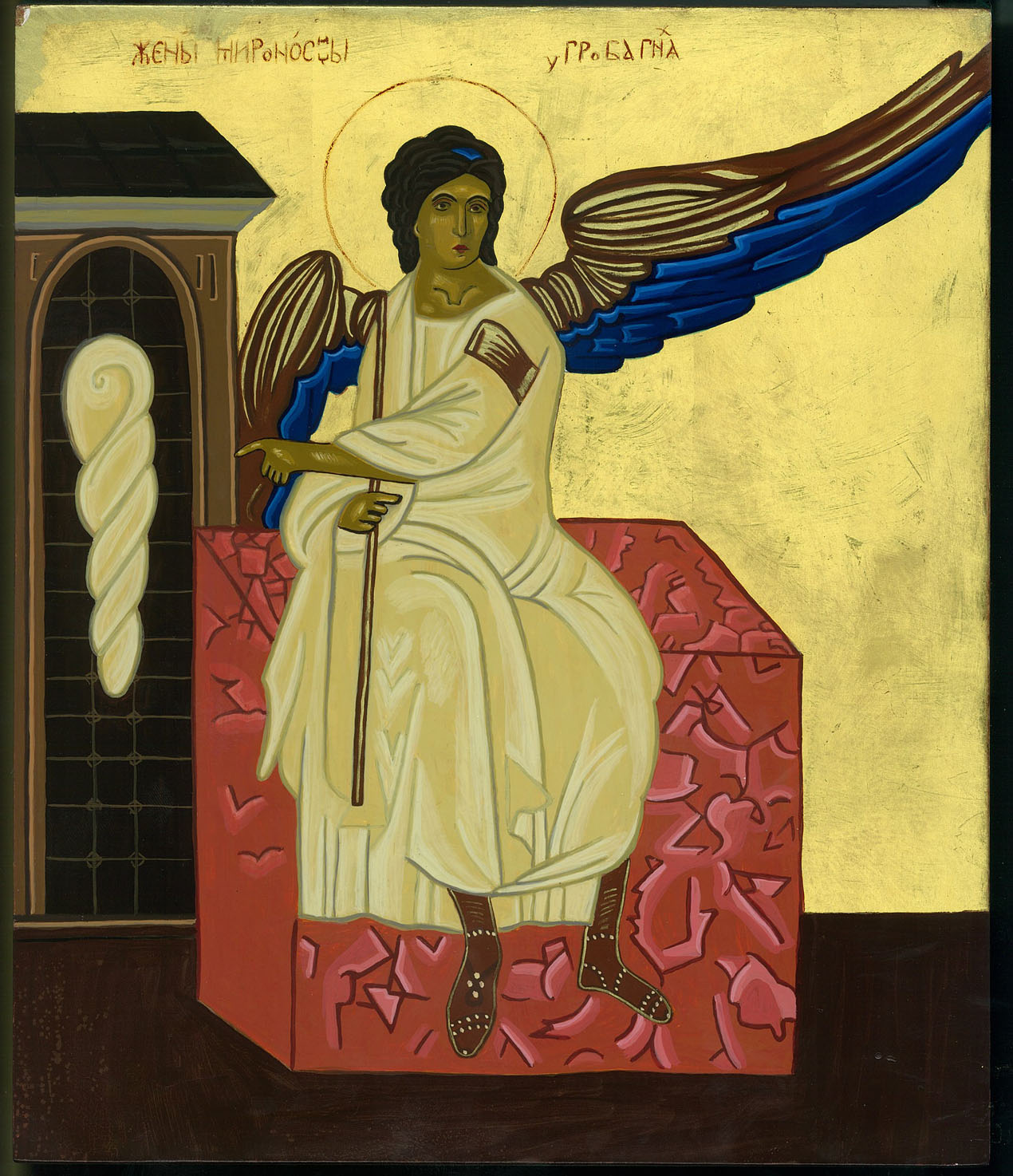
For clarity's sake, something like this angel from England or this angel from 13th century Serbia has colourful wings. However, this painting from 17th century Spain has white wings. Was this difference based on geography? Time? Why is there a difference in wing depictions? Why do we now almost universally see white wings? Is there some significance to each colour?
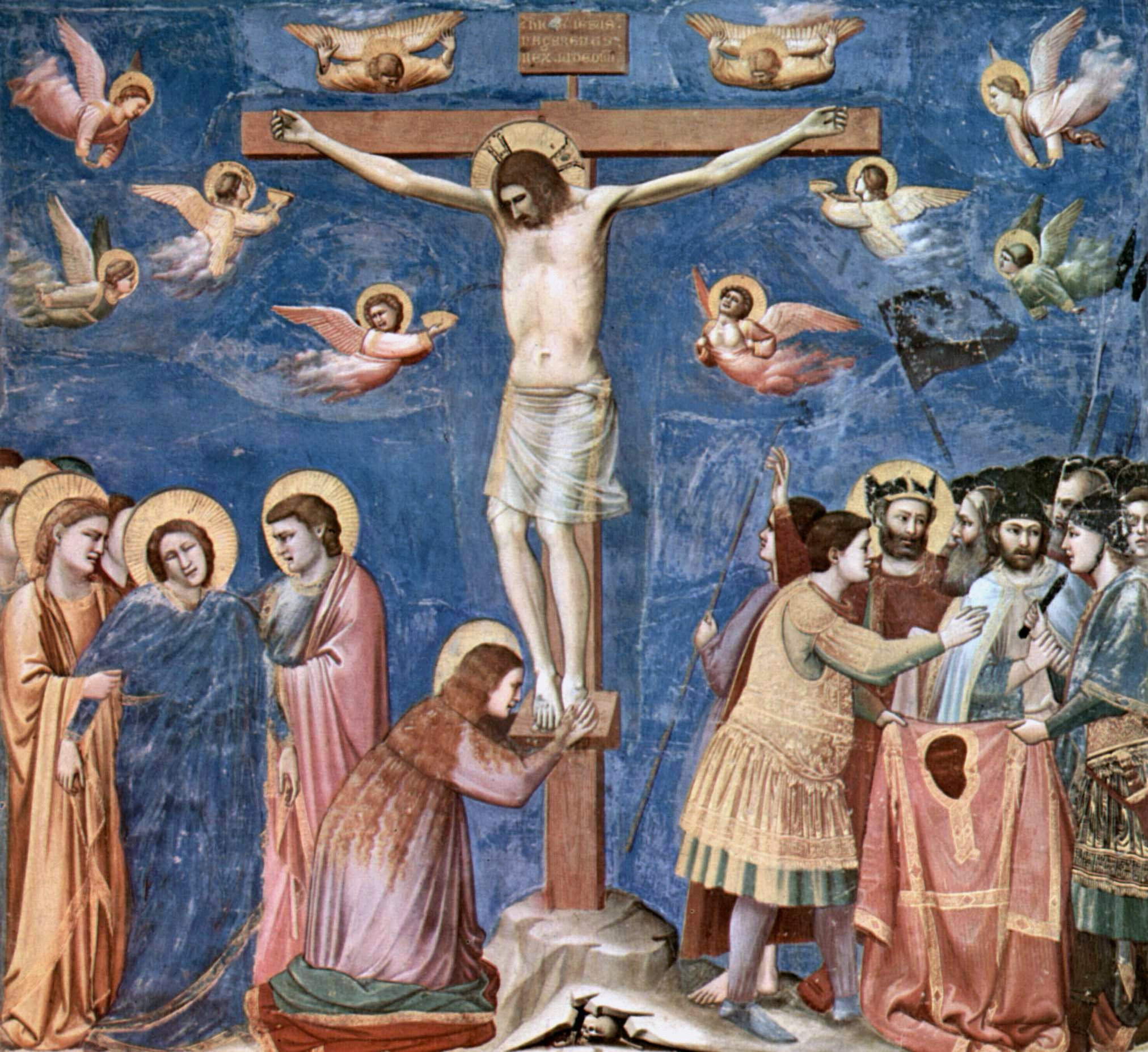
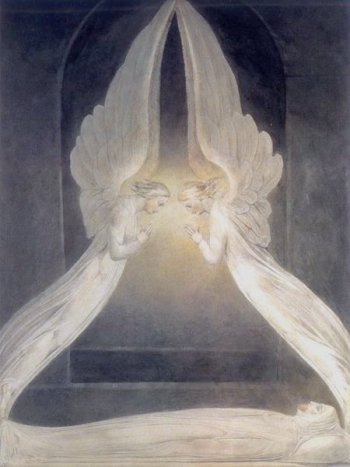
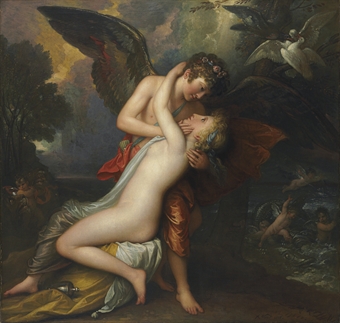
I can't give a total answer to this, but I can make some observations which may help. Firstly, the habit of depicting angels with colourful wings has never actually been fully abandoned. Here is a mural from 17th century Italy. Here is a French painting of the 19th century, and a 20th century Irish stained glass window. At the same time, here is Giotto's fresco of the crucifixion from around 1300, which depicts quite plain-winged angels. Personally, I suspect that local traditions and the artist's own imagination and resources were a large part of it, rather than set tradition. William Blake, for example sometimes depicts angels with iridescent wings, sometimes with white. You can see a similiar range of approaches with non-Christian winged figures as well, for example Cupid. See an 18th century British take on Cupid and Psyche, and a 17th century Dutch rendering. The colours of angels wings are (to my knowledge) not explicitly mentioned in the bible, though some artists have, I believe, associated certain meanings with various colours. For instance, there is a certain tradition of depicting the seraphim wearing red, and possibly with red wings. I unfortunately don't have a copy of Hall's Dictionary of Subjects and Symbols in Art to hand, but that might be a good place to start looking for more information.