I can't speak to paintings, but it's been common throughout history for people to pad themselves with clothing to simulate more body mass, the desired areas of padding have changed though.
A major example of belly padding is the peascod belly fashionable for wealthy men throughout the 1600s. At this time women's waistlines moved higher and more fullness was added in the bust and the skirt. In the renaissance it was also popular at various times to pad the shoulders and arms, chest, calves, and codpiece (which began as a way to hold separate pant legs up and evolved into a statement piece). Every century and region has something they pad up in the name of looking higher-status. Into the 20th century there is still shoulder and chest padding in suits, push-up bras, butt padding, and plastic surgery used to add to body mass.
This blog also does a good job of illustrating how the Victorians and Edwardians used padding to create the illusion of thinness as well.
I know I really jumped through a lot of time, if there's anything specific you'd like to know I'm happy to dive deeper.
There is a picture of Bernardo Bellotto depicting the city of Dresden including a carriage with the current duke. The carriage is closed, so you cannot see the people in there, but it is tilted to one site.
The audio guide in the museum said that is because the duke was known for being very heavy and the tilted carriage was a compliment from the painter to the duke who ordered the image.
Would it even be possible to know if all we have left depicting them is a few pictures?
Interesting question. This sometimes comes up when paintings undergo conservation. Conservators will use IR spectroscopy or x-ray fluorescence to see what's underneath the surface layers of paint down to the underpainting. This often reveals changes the artist made during the course of painting.
Offhand I can't think of any paintings in which the artist made the final figure fatter than in the underdrawing, but there are cases where the sitter wanted to look thinner. This painting of Don Pedro de Barberana is one example; the top layer of beigeish paint had started to become transparent (typical with certain oil paints as they age), and some of the underpainting started to show through, so the conservators were able to see that first version was noticeably fatter than the final image.
It's also worth bearing in mind that although pre-modern standards of beauty didn't emphasize thinness to the same extent that we do today, they also didn't glorify obesity. For example, Leon Battista Alberti, the Renaissance architect and humanist, writes that " a woman [should] be neither thin nor very fat. Those laden with fat are subject to coldness and constipation and slow to conceive," and should be neither too fat nor too lean. So yes, being a little fat implied that you were wealthy, but being too fat was a sign of immorality and lack of self-control.
While I can't attest to such instances in European Art, I do know that, in his portraits, the early American painter John Singleton Copley would often have his sitters wear pads on their torsos to have them appear larger than they actually were. He did this most evidently in his portrait of Nicholas Boylston (John Singleton Copley, Nicholas Boylston, 1767), a thin, somewhat meek Boston merchant and benefactor of Harvard University. In his portrait, Copley would tie pads to Boylston's stomach, upper arms, and upper legs to give him a corpulent, and thus noble, appearance, a characteristic seen throughout Copley's oeuvre.
Source:
Not exactly answering your question, but something interesting along these lines:
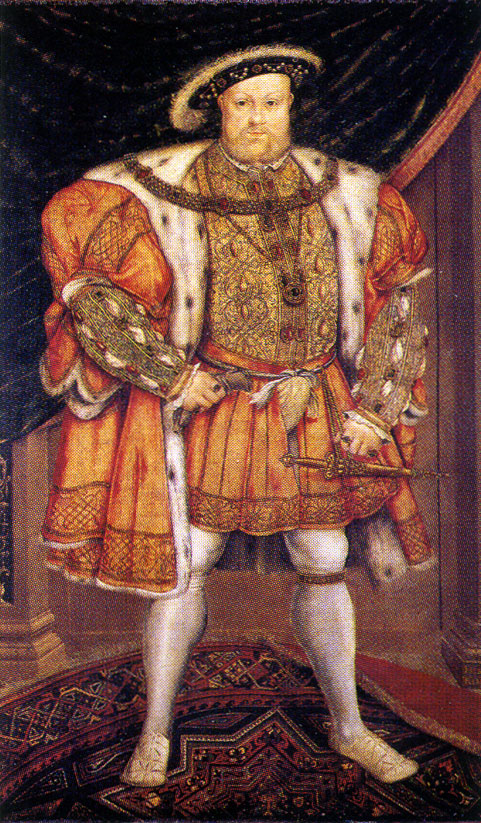
I was told [this] (http://www.luminarium.org/renlit/henry8parham.jpg) famous portrait of Henry VIII was made when he probably weighed 300+ pounds, but the artist was very careful to swap most of that weight to his upper body with thick clothing - making him look like a modern American football player, as opposed to the obese king he became in the years following his jousting accident.
Im an expert on this subject in no way, but I read a book on the the great famine in Finland in 1695-1697, and during that time Sweden, which Finland belonged to, was ruled by the king Charles XI. Well, Charles XI had cancer and because of it he couldn't eat and was described to looking like "a skeleton" on his final days. After his death he was to be painted laying dead on his bed, but instead of looking skinny and malnourished, he looked healthy with fat cheeks in the painting.
Now, I don't know if those who had the painting done had Charles XI of Sweden look relatively fat in the painting to hide the king's illness, or if it was thought to show the king in the times' fashionable way.
Sorry for the bad English.