Medieval drawing look nothing like reality, for example, in opposition to later pieces. How did people react ? Did they realy think it was good ?
Also, I think Da Vinci is the one that "discovered" perspective and set it up into paintings. How did that change the world, and how did people react to the first "prespective" painting/drawing ?
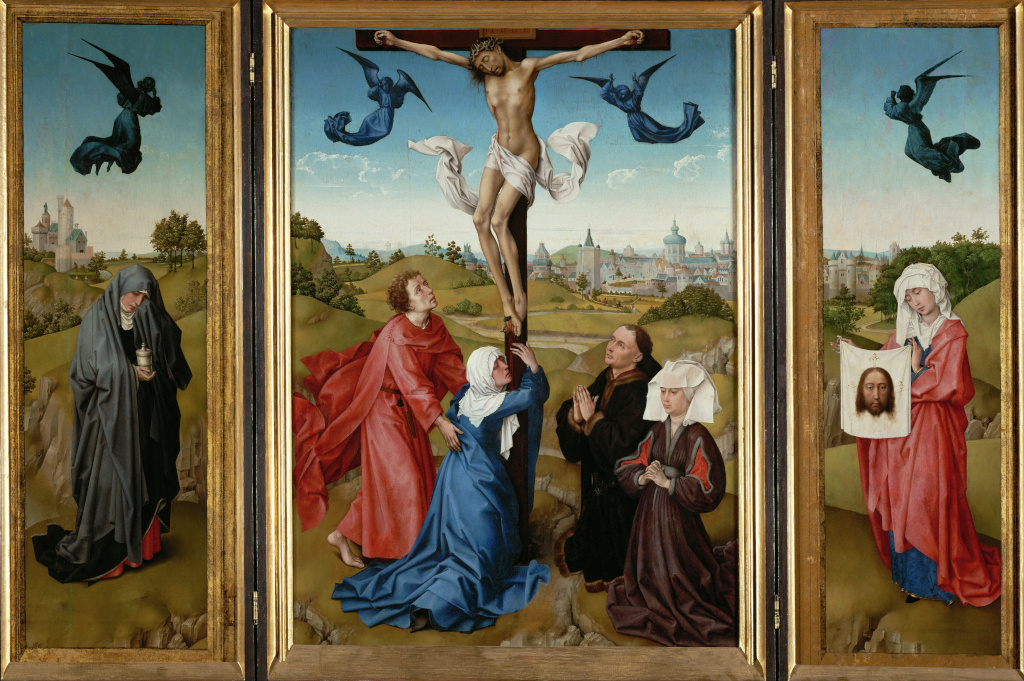
They knew their art looks nothing like reality the same way Picasso is well aware of his paintings are nothing like reality. For you art is synonymous with naturalism, however that was not the point of art for many people, including Medieval artists. The vast majority of Medieval art were religious themed and those art are for religious devotions rather than pleasing the eyes. Many people were illiterate, the Church needed to find a way to teach people about religion. Religious subjects were purposely made to look unhuman because they are suppose to be above mortal beings.
According to James Snyder's Northern Renaissance Art, one example of this would be this concept of devotion images (Andachtsbilder) that are meant to evoke great pain and discomfort to the viewers as aids for prayer or contemplation. Here's an example of Andachtscilder in the form of a booklet. It's simply a show and tell book on how Jesus and his followers were tortured and killed. Despite the lacking in artistic skills the booklet serves its purpose by letting more people learn about Biblical stories.
This changed during the Renaissance with the rise of the idea of humanism, artists wanted to create the image of Mary who is more like an everyday human being. She lives in normal dwelling, capable of great emotions and shows great empathy. In addition, as the economy grew more prosperous non-religious art that are purely decorative became popular as well.