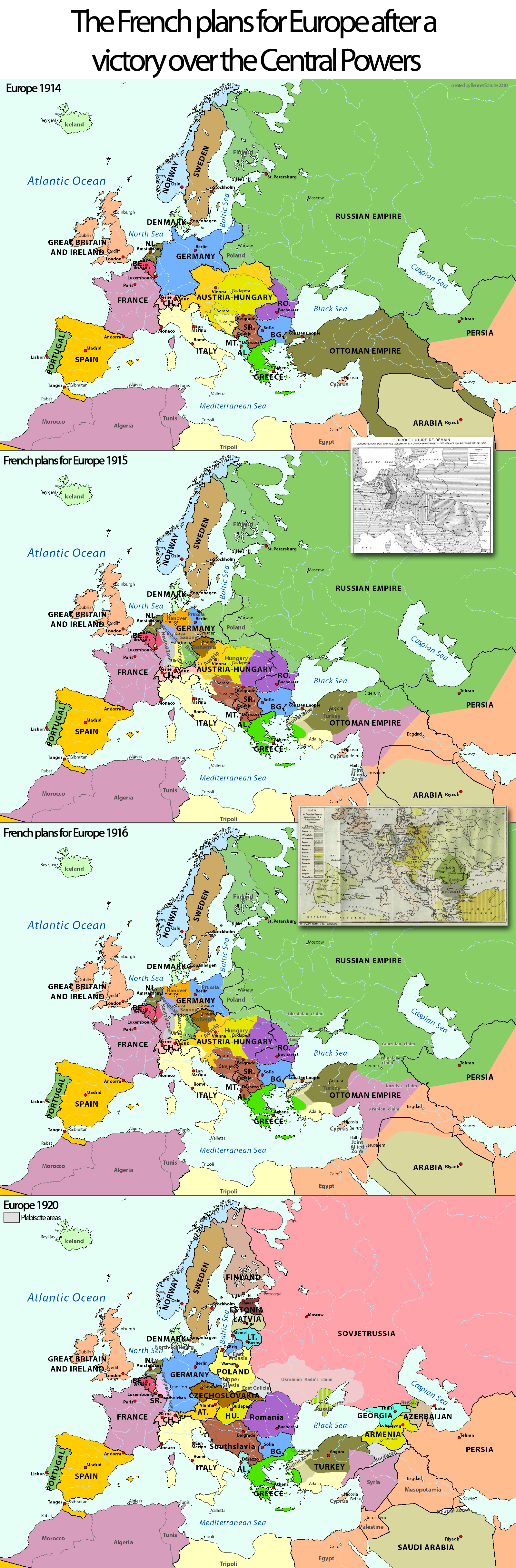
It's too hard to say why something didn't happen in history. Why didn't John Adams eat an apple on the 35th day of his 42nd year of life? Who knows and the more broad we get the more difficult these types of questions get. I don't know any direct sources talking about this at the time for reasons why or why not but it should be noted these types of plans were deliberated seriously.
Why did they decide against it? Ultimately because a fractured German state would lead to more issues than it was worth. Doing so would have been purely spite. The war destroyed the French economy; their most industrious and coal/iron rich areas were occupied for the entire four years on top of the financial damages. A unified, centralized Germany allowed reparation payments to be near guaranteed.
On top of that there were philosophical considerations; the war was seen as spreading democracy and granting ethnic peoples rightful lands. You'll notice most of the land Germany lost was not ethnically German majority, many times the people even had a vote! However most of Germany was, well, ethnically German and self identifying as German unlike the Austro-Hungarian Empire which was...not quite. Breaking up Germany would have sent it back into what was considered "feudal" aristocratic control and would have led to petty infighting. This comes with the added bonus of stopping the spread of Communism. This wasn't as huge a deal as it would be in in 1945 but it was still a consideration; Germany was being rampaged by revolutionaries which would still be fought into 1920. Bavaria would secede as a Soviet Republic. Berlin was in the hands of radical socialists. A fractured Germany means a Germany which, in their minds, "succumbs" to Bolshevism. Again that's not nearly as major a reason as it would be in 1945 but it was still one.
Ultimately the French and British weren't idiots; continental stability above all else had to be ensured. They sacrificed some of that once it became clear Austria Hungary and the Ottomans were fracturing but Germany was the leading GDP power in Europe even throughout their post-war economic troubles. Keeping them together was beneficial both for French reparations and the world economy as a whole, especially the British economy though.
/u/elos_ hit the nail on the head (as usual), but I'll also add that the Western Allies were not in a position after WWI (unlike after WWII) to disassemble Germany.
Now, I will warn people, this does NOT, repeat, DOES NOT mean that the Stab in the Back Legend was right, that Germany wasn't really defeated. Germany's situation in 1918 was one of reaching rock bottom, and preparing to plumb the depths. Their Armies in the West were falling back in a humiliating retreat, with soldiers surrendering alongside officers; Austria-Hungary and Bulgaria were out, so the French Army of the Orient (along with the Serbs) was advancing up from Serbia, with Italo-British forces pouring towards Trieste, so Germany's southern flank was wide open; 2 million American troops had yet to see combat, and would be ready to fight; people at home were dying from starvation, and if they weren't starving to death, Influenza would do the trick; finally, there were revolutions in Berlin and the North Sea ports, with the High Seas Fleet having 'gone walk about', essentially. Germany was most certainly defeated; unlike in WWII, the leaders of Germany weren't stupid enough to continue fighting on until the country was in ruins.
In 1945, the British, Americans and Soviets were much stronger, more united, in a much more favourable position, and had no intention of allowing the Germans to start another World War, not after this one and the last. In 1918, the will to continue fighting on, and the ability to do so simply wasn't there, without the Allies involved suffering further damage.