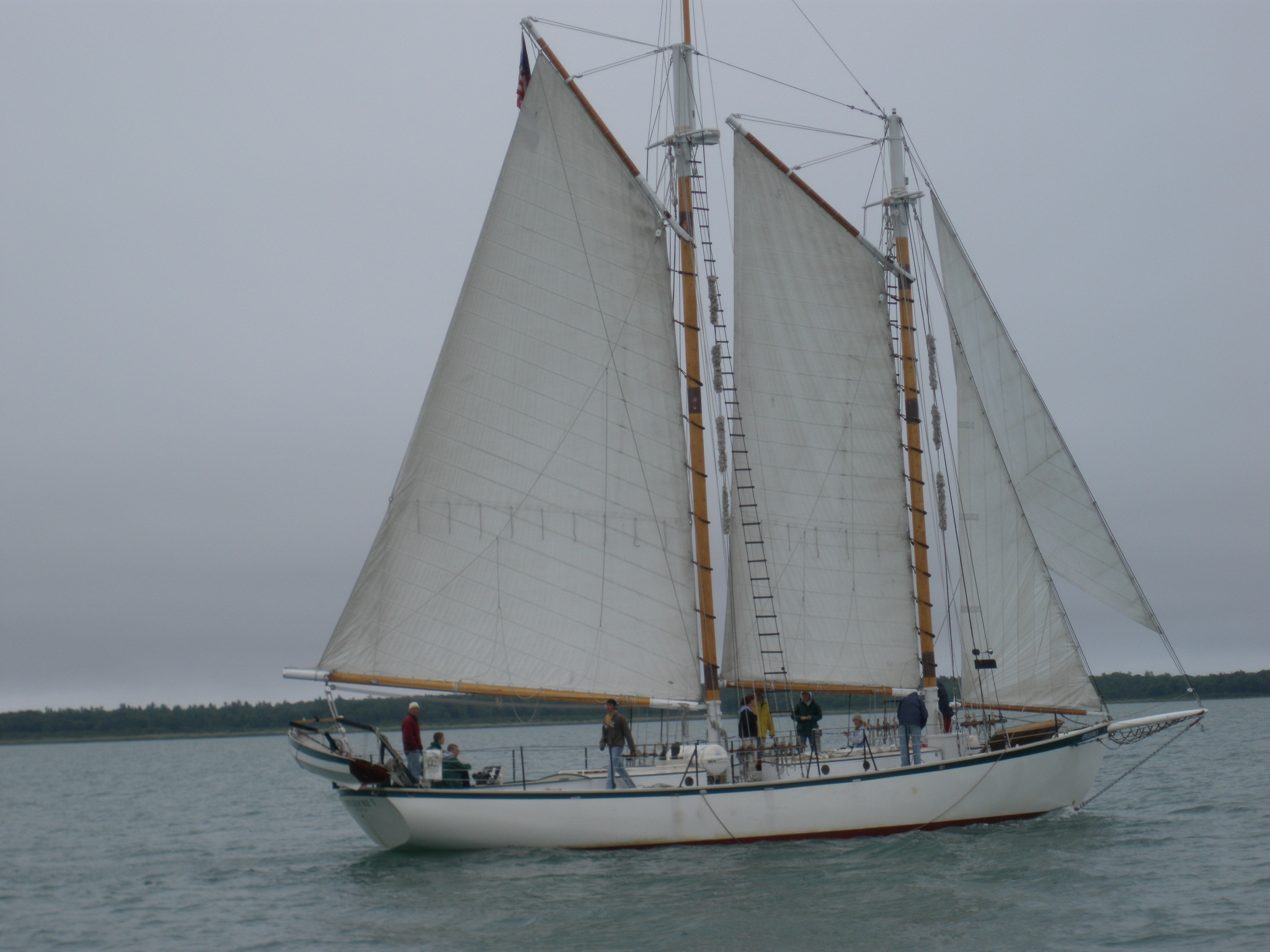
My home of Bermuda is famous for a few things: shorts, that 2spooky4me eponymous triangle, and tax avoidance. But the biggest mark our tiny archipelago has made in the history books can be found in every marina across the globe: the Bermuda Rig.
The rigging allowed us, and subsequently the world, to sail upwind with precision around the reefs that claimed so many ships in years gone by. The design was so transformative, within a few decades of its popularisation, King Charles II would soon be sailing one.
A poem published by John H. Hardie in 1671 described Bermuda's boats such:
With tripple corner'd Sayls they always float, About the Islands, in the world there are, None in all points that may with them compare.
I've always been curious to know what the wider implications of the Bermuda Rig were in the world of sailing, beyond piracy and competition. Did the ability to sail upwind alter shipping routes, or naval war strategy?
I'd love to learn more about my island's sailing heritage, especially with the America's Cup World Series coming to our shores this October.
Well, the Bermuda rig is definitely an interesting invention, but I will probably have to to burst your bubble and say that it's more evolutionary than revolutionary. The Bermuda rig is a more efficient way to set sails than what you'd find from, for example, a gaff-rigged schooner, but it developed out of that concept mixed with the idea of lateen sails and leg-of-mutton sails, both traditional in the Indian Ocean and the Levant, which then spread to the Mediterranean and on to the Caribbean via the Dutch.
Long story short, the early Bermuda-built ships had a triangular sail, doing away with the gaff (the boom angled upward at the top of the sail), with raked masts. We see raked masts as well in some of the early lateen-rigged ships, and particularly in the Polynesian sailing canoes that independently developed the lateen (I wrote about the lateen here, along with /u/tiako).
But in any case, the major thing that the Bermuda rig did was to dispense with the lateen yard (which would have to be wrapped around the mast to tack) by hanging the sail on the raked mast; then, by lessening the rake of the mast, they boomed the sail at the bottom, rather than bottom and top like a gaff-rigged ship. And then added a jib that was usually extended with a very long bowsprit, to add more upwind drive.
The trick in all this is, all other things being equal, a gaff-rigged ship with the same height of mast as a Bermuda-rigged ship will set more sail (because the gaff extends the area of the sail). To make the Bermuda rig work, you have to have very tall masts to extend the area of the sail upward and long booms to extend it sternward. Bermuda cedar helped this, by being a sturdy but light mast-building material. The rig really came into its own as the "standard" sailing rig with the advent of metal masts, which are strong and light and can carry a large press of sail. The hollow metal masts also allowed the masts to be set nearly vertical or completely vertical.
Now, to some of the individual claims.
The rigging allowed us, and subsequently the world, to sail upwind with precision around the reefs that claimed so many ships in years gone by.
and
Did the ability to sail upwind alter shipping routes, or naval war strategy?
Weeeeelllll ... The Bermuda rig increased the efficiency of sailing upwind, but it did not create the ability to sail upwind. Even square-rigged ships of war in the 1650s-1680s (when we presume the Bermuda rig was being invented) had the ability to sail upwind, although they couldn't point as high into the wind as a small Bermuda-rigged ship could. It would have been impossible with a one-piece wooden mast to have a ship of the line be Bermuda-rigged (and inefficient, but I'll get to that). But a small Bermuda-rigged ship would have been much more efficient upwind than a similarly-sized traditionally rigged ship (a gaff schooner, etc.). So, the Bermuda rig was particularly useful in outfitting small, weatherly ships that could evade larger ships and be more nimble at darting in and out of creeks, coves and the like. This would have been particularly efficient for pirates and smugglers, but by the time the rig was in wide use, in the 1820s or so, those days were mostly over.
The great secondary advantage of the Bermuda rig is its simplicity: you essentially have to raise the sails, then move the sheet from one side of the boat to another to maneuver. You can easily do this with a minimal crew of 1-2, which is why they're popular on modern boats.
Now, to the disadvantages of the Bermuda rig: It is efficient sailing on a tack or on a reach (with the wind over the boat's quarter), but it is not particularly efficient sailing downwind. To counter that downwind, various large jibs have been devised, often boomed to one side -- the spinnaker, gennaker and genoa are (larger to smaller) examples of that. Also, because the boom has to move when resetting sail (rather than simply switching the clew for the tack on a square-rigged ship) you have to be very careful when gybing a Bermuda rig, lest the boom whip suddenly across the deck to the detriment of the crew.
tl;dr: The Bermuda rig is very important in the development of small sailing and particularly racing ships; not as much in grand strategy.