I assume that something similar to the printing press would have been used (although with just a tonne more blocks of type) But how would typing have worked? Would there have to have been a handwritten copy to be sent to publishers? Was a Latinized version of Mandarin/Cantonese/Wu/Min/Hakka used with western typewriters? Or some other option?
I assume that something similar to the printing press would have been used
Yes. The blocks themselves would be placed into a frame. After that it would get inked, and then the paper goes on top like in the printing press. The main difference between this system and the printing press that you probably have in mind is that instead of the mechanical press being lowered down onto the paper, the printer (person) would apply pressure themselves.
(although with just a tonne more blocks of type)
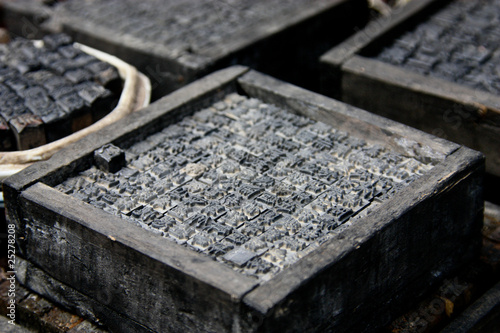
Yep. Quite a lot. The blocks that were used originally were carved wood like this. Each character needed to have a block, and common characters needed to exist multiple times. The problem with wood is it wears down quickly. This is a big reason why metal block printing soon followed.
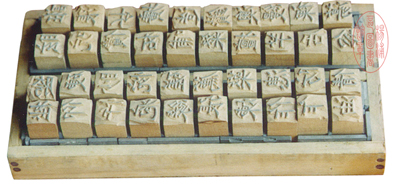
For things like title pages which would be more stylised and not really possible with the tiny blocks, there's this sort of thing which still gets used in the same way but would be carved specifically for a given text.
Would there have to have been a handwritten copy to be sent to publishers?
Yes, but I assume this is what would happen in the West as well.
Was a Latinized version of Mandarin/Cantonese/Wu/Min/Hakka used with western typewriters?
This is much much closer to the modern era that this question applied. Later when missionaries were coming in, well after printing was solidly established, that's when the romanisation systems were coming into play. But they weren't primarily used by the Chinese printers.
But typewriters are another issue, and aren't really something that took off in China. They were cumbersome and not easy to use, and while lots of people tried to create different typewriter designs that would be able to get a wider audience, none really caught on.
This is another factor in the early pushes to move Chinese toward an alphabet in the 20th century, as well as the various instances where the various governments created phonetic writing systems to work in concert with characters.
There's an incredibly interesting book called 《活字-記憶鉛與火的時代》that is equal parts photos and description, and shows the whole process that's still being done in a couple print houses in Taiwan, including forging their own type blocks. If you (or anyone here) is ever in Taiwan it's definitely worth taking a look at.
Hope that helps. Let me know if you want anything expanded on. I had more pictures and explanation in this originally but ended up having to rewrite my whole comment when my browser crashed.