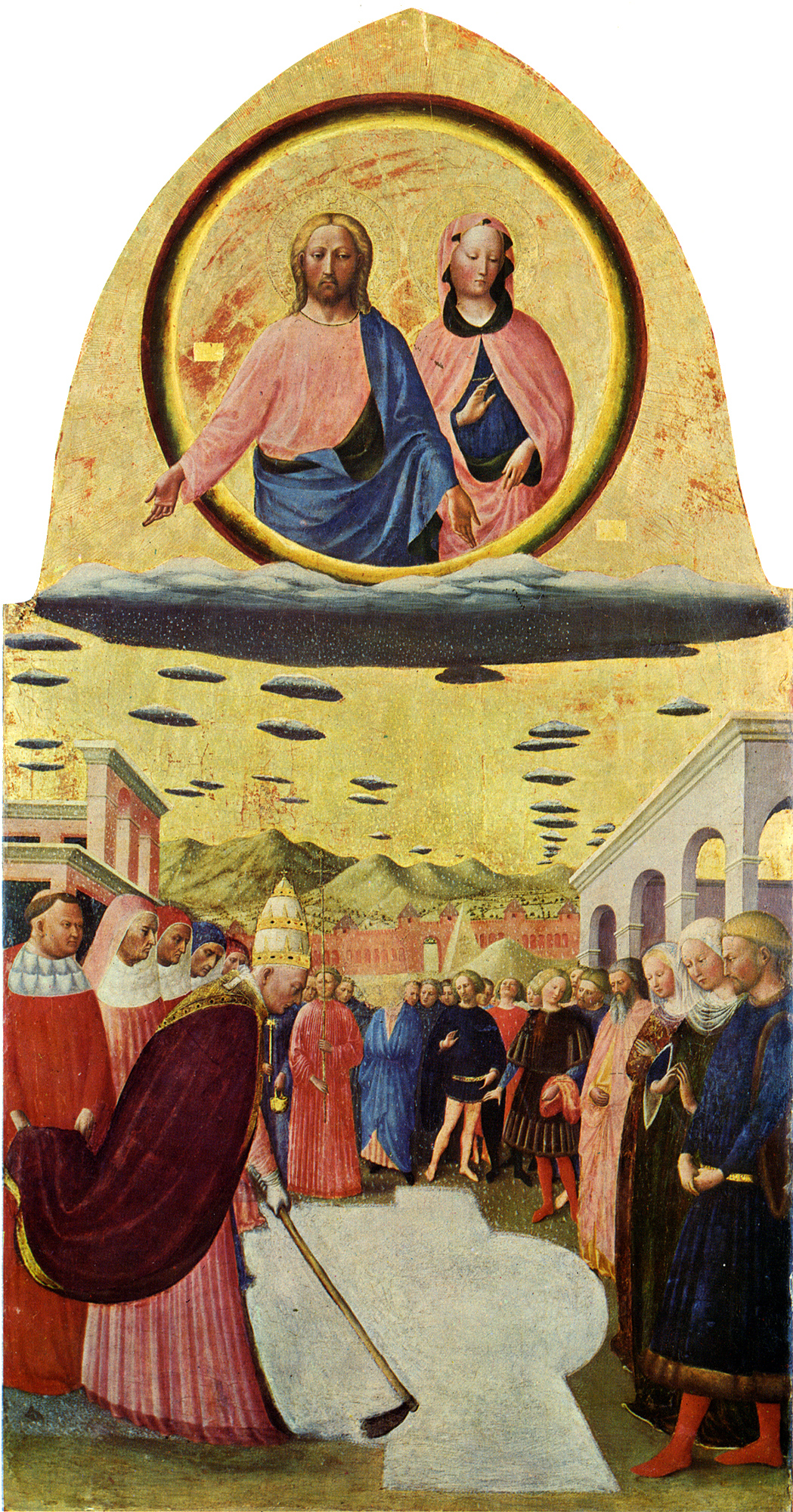
It seems that Western Europe, in this period at least, has noticeable examples of population and (skilled) workforce moving. Examples can be found of both cities increasing populace (meaning immigration from rural areas into cities) and individual people moving from one city to another, in most cases related to going to university, merchant and banking opportunities, getting a job or invited to court in another city or state (it does not seem to make any difference if the destination is in another country) Often these cases include people exiled from their home city because of politics or debts, but is not limited to that.
I am now interested how would that work legally, bureaucratically, and in practice.
Today to move to another political entity, you need a passport, a visa or work permit (to get which you usually need a lot of your origin country paperwork also). Upon arriving you need to register at the police, tax office, get some kind of local ID, health insurance, etc.
So the questions are:
An interesting book with a lot to say on this subject is Robert Bartlett's The Making of Europe: Conquest, Colonization, and Cultural Change, 950-1350.
It is best read alongside R. I. Moore's The First European Revolution, c. 970–1215.
But in short, the answer is: it depends. It depends on the person (i.e. their birth/legal status) and the places they were moving to and from. It depends on the types of institutions in the new place (if any), the languages spoken, the receptiveness of the ruling class to immigration. It depends on whether they knew anyone already in the new place, and whether they were migrating to a new (unsettled) area.
It just isn't possible to give Europe-wide answers to these kinds of questions.
I can only speak from the perspective of Medieval Art, and even more narrowly only from a case study that I wrote on the early 15th century workshop partnership between the two Italian Renaissance painters Masolino da Panicale and Masaccio. Please let me know if my response leaves any unanswered questions.
Both Masolino and Masaccio were rising artistic celebrities in the early Quattrocento. Masolino had garnered renown for his sophistication as a court painter in Hungary*. Masaccio, born and raised in the great city of Florence, championed the metropolitan style that had become characteristic of Florentine painting. After working for separate patrons with their own independent workshops for the earlier part of their careers, in 1423 both painters appeared to have jointly begun work on the [St. Anne altarpiece](https://en.wikipedia.org/wiki/Virgin_and_Child_with_Saint_Anne_(Masaccio) in Florence.
But this begs the question of why Masolino moved to Florence and became close partners with a painter who produced art in a completely different visual style. While Masolino was trained in the more conservative International Gothic style, Masaccio was obsessed with the scientific perspective and accurate depiction of light that had become a staple of Florentine art.
So why did Masolino leave Hungary, move to Florence, and begin a partnership with Masaccio?
To put it simply: necessity. Masolino's patron in Hungary may have recently died, and Florence was the closest and most reliable source of artistic patronage for sculptures and painters.
The workshop of Masolino and Masaccio had most likely formed as a temporary economic partnership, legally called a compagnia, in which both painters pooled their funds together and divided their profit (or losses) after completing a commission. This was a common practice among artists in the Quattrocento. Partnerships provided a tax loophole for experienced artists who were not already established in Florence. Secondly, many guild leaders in Quattrocento Florence were convinced that allowing foreign artisans within the walls of the city would prove to be economically fatal. To combat outside competition, the painter’s guild placed restrictions and extremely high fees on the opening of new, unaffiliated workshops.
Despite a lack of documentation on his first forty years, Masolino most likely spent much of his early life outside of Florence. Although Masolino joined the painter’s guild a year after his arrival in Florence in 1422 , he probably would not have been accepted into the guild nor been able to obtain any commissions were it not for his brief partnership with the Florentine painter Francesco d’Antonio.
A master—an artist who was offered a commission by a patron—was responsible for paying the costs related to working on a commission. These included paying taxes to the city of Florence, fees to the guild, rent to a landlord for the workshop, salaries to the skilled craftsmen and unskilled laborers within the workshop, and the cost of all the materials and equipment used by the workshop. This hazard was remedied with the practice of compagnia, where two artists working side-by-side could increase the speed of work on a commission or allow one artist to pick up the other’s slack. Masolino frequently traveled across southern Europe to work for various patrons, thus, knowing that he would not remain in Florence for long, he may have seen a partnership with Masaccio as a kind of insurance.
One of the few personal links between the two painters shows how strictly professional their partnership was. Later, when leaving Florence to attend a commission back in Hungary, Masolino gave the Florentine banker Antonio Piero Benizzi authority over his finances in the painter’s absence. Benizzi had also assisted Masaccio’s mother in matters related to debt several years earlier.
TL;DR At least in the case of Italian Quattrocento craftsmen who produced luxury goods and managed workshops, travel for professional purposes was heavily restricted by local guilds. However, the geographic separation of nobility required makers of luxury goods to embark on the costly journey to their patron's court. Compagnia with members of local guilds allowed foreign craftsmen to pay for any expenses such as travel, materials, housing, and apprentices not covered by the commission fee charged to their patron.
*(There is no documentation of Masolino's life that survives prior to his partnership with Masaccio, so I am conjecturing that since Masolino later went to work at the court of mercenary Pipo di Ozora in Hungary, he may have spent his early years there as well. We at least know that Masolino did not work on any commissions in Florence prior to 1422, since he was not a member of the painters and apothecaries guild.)
As for sources, Harriet McNeal Caplow's essay "Work in Progress: Workshops and Partnerships" in Verrocchio and Late Quattrocento Sculpture ed. Bule, Phillips, and Giofredi is a short, easy explanation of compagnia. Carl Strehlke's The Panel Painting of Masolino and Masaccio is the best book to look at in terms of the two painters' work relationship.
Are you talking about just any layman, or more specifically someone like a craftsman who may be part of a guild?
Additional question: I'm from a part-Jewish and part-Roma background on my dad's side, and my family moved around a lot. Would it have been any different for them than for a Christian peasant?
In 15th-17th century Venice glassblowers were banned from leaving the Venice. And in 1592, in order to meet this new market growth, the Venetian authorities allowed the glass factories to once again expand beyond Murano to many of the other islands in the lagoon of Venice, but in turn the ban on glass makers emigrating outside of Venice was extended to cover the whole Republic.
I just want to state that in English, "High Middle Ages" refers to the eleventh, twelfth and thirteenth centuries. You mean the Late Middle Ages.
But be careful, because in languages like French and Italian, haut Moyen Âge or Alto Medioevo refer to what in English we call the Early Middle Ages.
Just like the Upper Paleolithic is older than the Lower Paleolithic. We might even say that Jurassic Park is a film of the High 1990s whereas Titanic represents the Low 1990s.