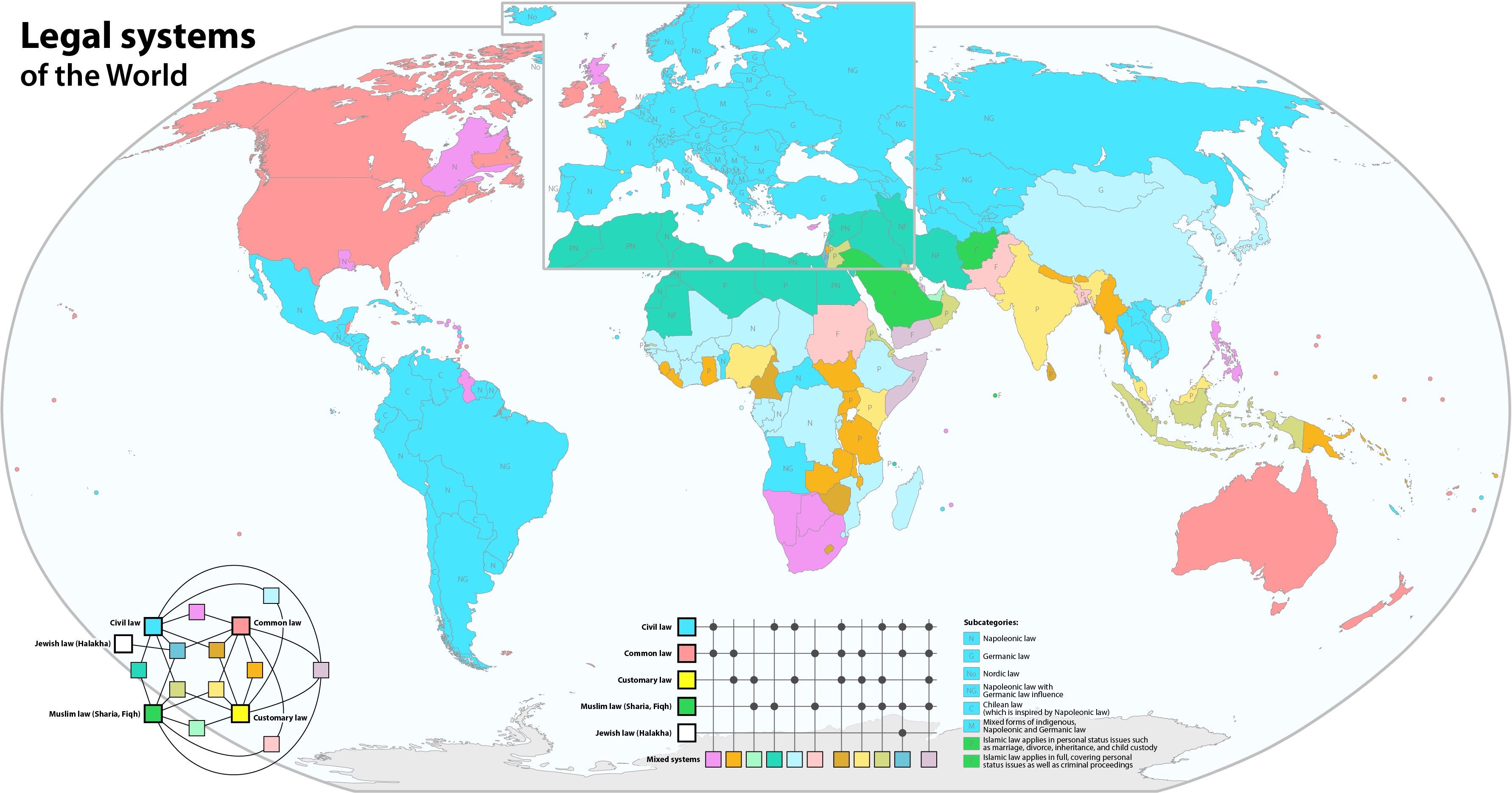
I am not a historian, but an international lawyer. Actually, looking at the Wikipedia article you cited gives you a very solid outline on a very complex topic. In short, common law is generally law based through the interpretation and application of judicial precedents; while civil law is based on codes and elaboration through commentary. There are also distinctions in criminal investigations where common law tends to be more adversarial and civil law tends to be more inquisitorial.
A US lawyer is often shocked when they see a French Cour de Cassation opinion for the first time simply due to the latter's brief length.
One of the primary reasons that civil law is dominant on the continent of Europe is due to Napoleon and the French Revolution's reforms. Law in France prior to the Revolution was highly fragmented even with an absolute monarchy (some code, some customary law, internal tariffs etc). The Napoleonic code streamlined and rationalized the French legal system and then this system could be imported to other legal systems influenced by either Napoleon or the Revolution as it did not depend on local, customary practice. German legal scholars (and others) significantly adapted and developed this model over time.
So where England was influential legally or culturally, we see the common law. Where France and Germany had such influence, we see the civil law predominate.
The common law can be more flexible but we even see some rationalizing projects in the United States legal system where state law varies (to the sadness of practitioners), from the Uniform Commercial Code to the Restatement of Law published by the American Law Institute.
That said, in the globalized world I think we are seeing more hybrids. A lot of picking and choosing. International arbitration to international criminal law are blending both together in interesting ways.