I know the Greeks worked it out quite early, but the concept didn't catch on China until the Ming dynasty received Western missionaries, around the 16th century. Were any New World peoples aware of the shape of the Earth before contact?
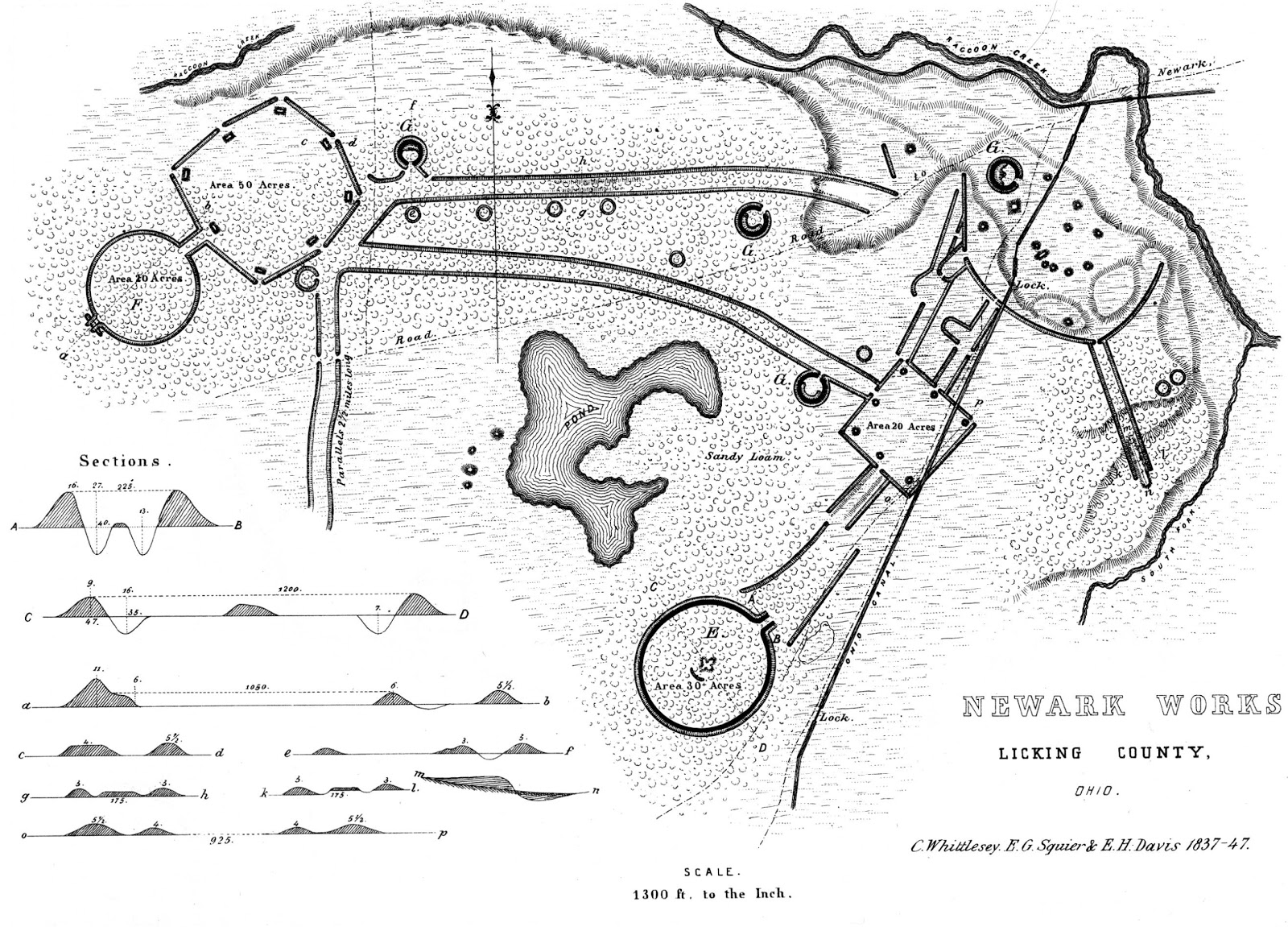
Focusing just on the Pre-Columbian cultures in my region, the Scioto Hopewell (~100 BCE to ~400 CE) might have known that the Earth is significantly curved (I can't say whether they extrapolated that curvature to theorize that the planet was round). The evidence for this comes from two Hopewell lunar observatories. These observatories take the form of a linked circle-and-octagon earthworks. The observatory that's part of the Newark Earthworks survives to this day in Newark, Ohio, but the observatory that was part of the High Banks Earthworks near Chillicothe, Ohio, has since been destroyed.
Though the two sites are separated by about 60 miles, they are linked. On the survey map of the Newark Earthworks, you'll notice a feature labeled "Parallels 2 1/2 miles long" extend south from the Octagon. Those lines form the northern terminus of the Great Hopewell Road, which extends toward Chillicothe, the epicenter of the Scioto Hopewell culture, though the specific southern terminus hasn't been found yet.
The two observatories are set to track the 18.6 year cycle of lunar standstills. For Newark, the observatory's major access aligns with the northern maximum rising standstill. Based off the surviving survey information for the High Bank observatory, the major axis is close aligning southern maximum rising standstill (whether the survey is wrong or whether the site itself was off is uncertain). The other seven standstills align with various other points around the observatories. In designing these two observatories, the Scioto Hopewell had to account for the the curvature of the earth over the ~60 north-south miles between the two sites. If they just plopped the design for one down in the other spot (from other sites, we know the Scioto Hopewell had standard units of measure and repeated modular designs over and over), rotating it just enough to realign it with the desired maximum rising standstill, they would have found that the observations were wildly inaccurate. The sites had to be individual calibrated. Whether this was done by separate periods of observations over the course of the 18.6 year cycle, or whether the Scioto Hopewell were able to do the calculations necessary to make the adjustments from prior data (again, from other sites, we know they were sophisticated geometers). Regardless of the exact methods, it would have been quite remarkable if such observant and precise astronomers and geometers didn't notice that the lunar alignments at these two sites differed in how they aligned with the cardinal directions. That relationship between the lunar alignments and the cardinal directions raises questions that lead ultimately to a discussion of the shape of the earth. How far the Hopewell pursued those questions is unknown.