How did substitution work during the draft, particularly if someone was offering to go to war in a sibling's stead?
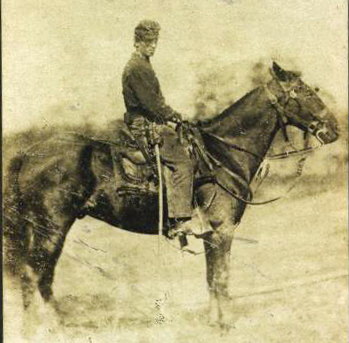
What would a cavalry lieutenant in 1862 likely be carrying on his person? Would one of those things include a pistol? I know that carbines and sabers were typically carried by the cavalry and not pistols, but would it be common enough for them to carry them? If so, what kind of pistol was the most common? Edit: and seriously, what other items? I want to know what this guy's toting around in his pockets. Pocketwatch, maybe? A little bit of food? Balls, powder and wadding for his rifle? His commission papers, probably. What else?
What kind of saddles and typical riding tack were used in the cavalry? I know a good bit about horses and modern tack, but I'm pretty sure I won't know much about anything unique they may have used in 1862.
In 1862, how well fed were Rebel soldiers, particularly officers? Any difference in their supplies at Sharpsburg?
What were the sexual morals of the 1860s? And like most hormone-crazy teenagers, did teenagers of that day and age run around and get laid? Were they just quieter about it if that's the case, and no one really found out about it or talked about it? And what about stuff like oral sex and full nudity even between husband and wife? I've read somewhere that a lot of wives would blow out the lamp and just lay there and wouldn't even let their husbands do more than hike their skirts up to do the deed. Was this commonplace? Or was this kind of prudishness a rarity?
Thank you very very much to anyone that takes the time to answer these questions!
What's fantastic about this is not only are these questions pretty great, but there's going to be a Civil War AMA tomorrow with several of our dedicated flairs! You'll have a fantastic opportunity to get answers from a variety of sources and views (Myself included :) So while i'm not saying they shouldn't be answered today, you'll have a much better chance of getting them answered in great detail tomorrow
Howdy! I'm not sure if your questions were answered during the AMA, but I'll answer a few.
The most common saddle of the Civil War was the 1859 McClellan saddle.
https://en.wikipedia.org/wiki/McClellan_saddle#/media/File:McCellan_Saddle_Fort_Kearny_2006_B.jpg
The McClellan saddle was kind of a hybrid of a few different types of European and American cavalry saddles. The Confederates used a mix of military and civilian saddles, depending on what they could find.
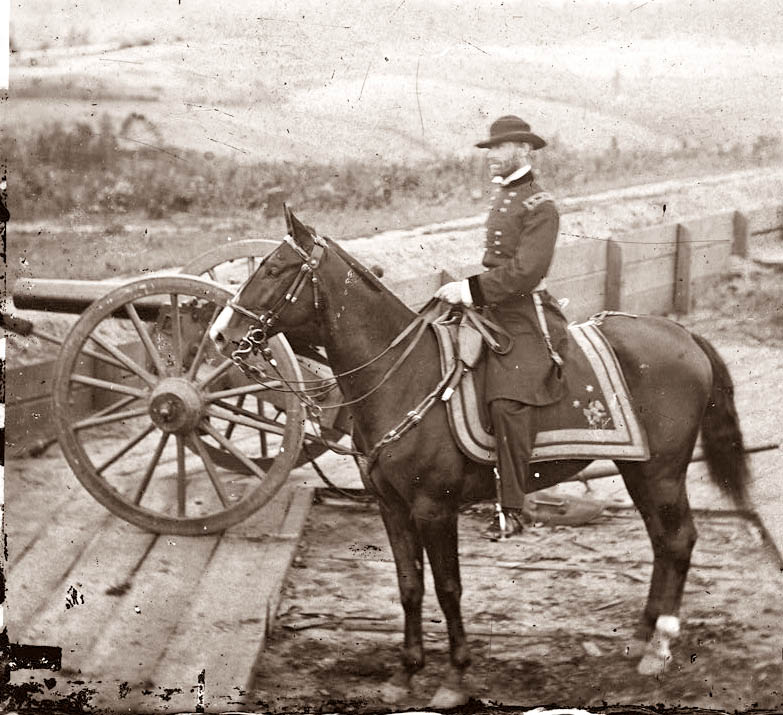
Cavalry mounts also typically had a fair amount of hardware on them. The average Union cavalry horse wore a crupper, a breast collar, a running martingale, a bridle, and a Model 1859 Curb Bit.
You can see what this looks like here: http://www.forensicgenealogy.info/images/comanche_general_sherman.jpg
Some troopers had a slightly different assortment of tack. They might not have a crupper (the usefulness of which was somewhat debated by leading European cavalry experts [see Francis Dwyer's book, "Seats and Saddles"), and they might have had a standing martingale attached to a halter that was underneath the horse's bridle. In that circumstance, the bridle would have been worn without a noseband or cavesson.
http://hglanham.tripod.com/uscavalry/4664a.jpg
Stirrups were kind of a mixed bag. Some saddles had large fenders with big, wooden stirrups with toe caps. Others, like General Grant's saddle, had basic "English" style irons and leathers.
As for saddle pads, most troopers were issued a thick wool blanket, entirely similar to the modern day style western saddle blanket.
And of course, saddles were equipped with a variety of bags and scabbards for rifles, carbines, sabers, equipment, and whatever else the trooper was issued and decided to keep.
Really, the tack they used then isn't too different from modern equipment. If you were to take a look at a tack room from 1860, you'd be able to identify almost everything there without issue.